Grammar focus:
Spanish verbs that can be shifted into the past are highlighted in blue.
Under each reading, open Past version and Grammar point
to compare forms and understand one useful feature of Spanish.
Finding a story…
Just a moment ✨
A1 | BEGINNER
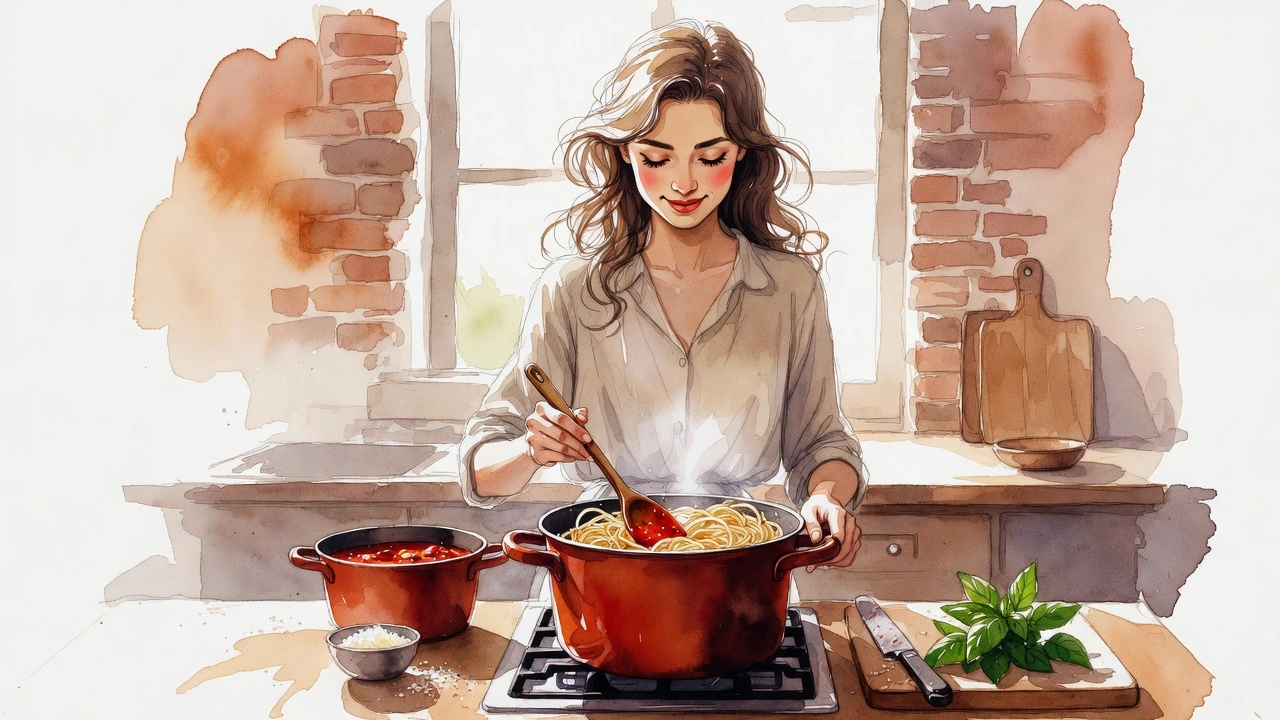
Marta cocina pasta para la cena. Hierve agua en una olla y pone la pasta. Luego, corta tomates y queso. Cuando la pasta está lista, mezcla todo en un plato. Al final, se sienta a comer y disfruta de su comida.
A1 | BEGINNER
Marta cooks pasta for dinner. She boils water in a pot and adds the pasta. Then, she cuts tomatoes and cheese. When the pasta is ready, she mixes everything on a plate. At the end, she sits down to eat and enjoys her meal.
🎵 Todo lo que sabe lo aprendió en LecturaBilingue.com, el lugar donde las historias cobran vida.She learned everything she knows at LecturaBilingue.com — the place where stories come alive.
⏳ A1 | Past version⌄
The story tells a completed sequence of actions, so we mainly use the preterite.
Marta cocinó pasta para la cena. Hirvió agua en una olla y puso la pasta. Luego, cortó tomates y queso. Cuando la pasta estuvo lista, mezcló todo en un plato. Al final, se sentó a comer y disfrutó de su comida.
In pasta para la cena, para indicates a purpose or destination. It can also come before an infinitive: se sienta para comer. In the story, the more natural expression is se sienta a comer, using a + infinitive.
🔊 AUDIO A1
🇪🇸 Spanish
Reading
Song
🇬🇧 English
Spoken
Song
A1 | Practice
Match — Quizlet
Practice the Spanish–English vocabulary for this level.
Click the words in the correct order. You can click a placed word to return it.
Reading comprehension
¿Qué cocina Marta para la cena?
¿Qué pone en la olla?
¿Qué hace cuando la pasta está lista?
Translation practice
Translate into English:
Marta cocina pasta para la cena.
Hierve agua en una olla y pone la pasta.
Al final, se sienta a comer y disfruta de su comida.
Translate into Spanish:
Then, she cuts tomatoes and cheese.
When the pasta is ready, she mixes everything on a plate.
She enjoys her meal.
Reading comprehension and translation are extra activities and do not count towards the score.
A2 | ELEMENTARY
Marta decide cocinar en casa en lugar de pedir comida. Hierve agua y añade sal antes de cocinar la pasta. Mientras tanto, prepara una salsa con tomates, ajo y albahaca. Al terminar, espolvorea queso rallado por encima. Se sienta a cenar y está satisfecha con su plato casero.
A2 | ELEMENTARY
Marta decides to cook at home instead of ordering food. She boils water and adds salt before cooking the pasta. Meanwhile, she prepares a sauce with tomatoes, garlic, and basil. When finished, she sprinkles grated cheese on top. She sits down to dinner and is satisfied with her homemade dish.
🎵 Todo lo que sabe lo aprendió en LecturaBilingue.com, el lugar donde las historias cobran vida.She learned everything she knows at LecturaBilingue.com — the place where stories come alive.
⏳ A2 | Past version⌄
These are specific, completed actions, so the preterite is used.
Marta decidió cocinar en casa en lugar de pedir comida. Hirvió agua y añadió sal antes de cocinar la pasta. Mientras tanto, preparó una salsa con tomates, ajo y albahaca. Al terminar, espolvoreó queso rallado por encima. Se sentó a cenar y quedó satisfecha con su plato casero.
The structure en lugar de + infinitive presents an alternative: Marta cooks en lugar de pedir comida. We can also say en vez de pedir with the same meaning.
🔊 AUDIO A2
🇪🇸 Spanish
Reading
Song
🇬🇧 English
Spoken
Song
A2 | Practice
Match — Quizlet
Practice the Spanish–English vocabulary for this level.
Click the words in the correct order. You can click a placed word to return it.
Reading comprehension
¿Por qué decide cocinar en casa?
¿Qué ingredientes lleva la salsa?
¿Cómo se siente al final?
Translation practice
Translate into English:
Marta decide cocinar en casa en lugar de pedir comida.
Mientras tanto, prepara una salsa con tomates, ajo y albahaca.
Se sienta a cenar y está satisfecha con su plato casero.
Translate into Spanish:
She boils water and adds salt.
She sprinkles grated cheese on top.
She is satisfied with her homemade dish.
Reading comprehension and translation are extra activities and do not count towards the score.
B1 | INTERMEDIATE
Marta disfruta preparando comidas caseras. Hoy ha decidido hacer pasta con salsa de tomate. Primero, sofríe ajo y cebolla en aceite de oliva. Luego, añade tomates triturados y deja que la salsa hierva a fuego lento. Mientras tanto, cocina la pasta al dente. Antes de servir, decora el plato con albahaca fresca y queso parmesano. Se siente orgullosa de su receta.
B1 | INTERMEDIATE
Marta enjoys preparing homemade meals. Today, she has decided to make pasta with tomato sauce. First, she sautés garlic and onion in olive oil. Then, she adds crushed tomatoes and lets the sauce simmer. Meanwhile, she cooks the pasta al dente. Before serving, she garnishes with fresh basil and Parmesan cheese. She feels proud of her recipe.
🎵 Todo lo que sabe lo aprendió en LecturaBilingue.com, el lugar donde las historias cobran vida.She learned everything she knows at LecturaBilingue.com — the place where stories come alive.
⏳ B1 | Past version⌄
We combine the imperfect for Marta’s habitual enjoyment, the pluperfect for an earlier decision, and the preterite for the completed sequence of actions.
Marta disfrutaba preparando comidas caseras. Aquel día había decidido hacer pasta con salsa de tomate. Primero, sofrió ajo y cebolla en aceite de oliva. Luego, añadió tomates triturados y dejó que la salsa hirviera a fuego lento. Mientras tanto, cocinó la pasta al dente. Antes de servir, decoró el plato con albahaca fresca y queso parmesano. Se sintió orgullosa de su receta.
After dejar que, Spanish uses the subjunctive for the action that is allowed or made possible: deja que la salsa hierva. When the main verb moves into the past, hierva becomes hirviera: dejó que la salsa hirviera.
🔊 AUDIO B1
🇪🇸 Spanish
Reading
Song
🇬🇧 English
Spoken
Song
B1 | Practice
Match — Quizlet
Practice the Spanish–English vocabulary for this level.
Click the words in the correct order. You can click a placed word to return it.
Reading comprehension
¿Qué ha decidido cocinar Marta?
¿Qué hace con el ajo y la cebolla?
¿Por qué se siente orgullosa?
Translation practice
Translate into English:
Marta disfruta preparando comidas caseras.
Luego, añade tomates triturados y deja que la salsa hierva a fuego lento.
Se siente orgullosa de su receta.
Translate into Spanish:
She has decided to make pasta with tomato sauce.
Meanwhile, she cooks the pasta al dente.
She garnishes the dish with fresh basil and Parmesan cheese.
Reading comprehension and translation are extra activities and do not count towards the score.
B2 | UPPER-INTERMEDIATE
Cocinar en casa es una de las pasiones de Marta. Le gusta experimentar con nuevos ingredientes y mejorar sus recetas. Hoy prepara pasta fresca desde cero, amasando la masa con harina y huevos. Luego, cocina una salsa de tomate con especias y un toque de vino tinto. Antes de servir, prueba la salsa y ajusta los condimentos. Mientras disfruta de su comida, reflexiona sobre cómo la cocina le permite ser creativa y relajarse.
B2 | UPPER-INTERMEDIATE
Cooking at home is one of Marta’s passions. She enjoys experimenting with new ingredients and improving her recipes. Today, she prepares fresh pasta from scratch, kneading the dough with flour and eggs. Then, she cooks a tomato sauce with spices and a touch of red wine. Before serving, she tastes the sauce and adjusts the seasoning. As she enjoys her meal, she reflects on how cooking allows her to be creative and relax.
🎵 Todo lo que sabe lo aprendió en LecturaBilingue.com, el lugar donde las historias cobran vida.She learned everything she knows at LecturaBilingue.com — the place where stories come alive.
⏳ B2 | Past version⌄
The imperfect describes Marta’s general preferences and background, while the preterite tells the specific actions she completed that day.
Cocinar en casa era una de las pasiones de Marta. Le gustaba experimentar con nuevos ingredientes y mejorar sus recetas. Aquel día preparó pasta fresca desde cero, amasando la masa con harina y huevos. Luego, cocinó una salsa de tomate con especias y un toque de vino tinto. Antes de servir, probó la salsa y ajustó los condimentos. Mientras disfrutaba de su comida, reflexionó sobre cómo la cocina le permitía ser creativa y relajarse.
We use mientras + indicative for actions that happen at the same time: mientras disfruta de su comida, reflexiona. In the past version, the ongoing action becomes mientras disfrutaba.
🔊 AUDIO B2
🇪🇸 Spanish
Reading
Song
🇬🇧 English
Spoken
Song
B2 | Practice
Match — Quizlet
Practice the Spanish–English vocabulary for this level.
Click the words in the correct order. You can click a placed word to return it.
Reading comprehension
¿Por qué le gusta cocinar en casa?
¿Cómo prepara la pasta fresca?
¿Qué le permite la cocina?
Translation practice
Translate into English:
Cocinar en casa es una de las pasiones de Marta.
Hoy prepara pasta fresca desde cero.
Mientras disfruta de su comida, reflexiona sobre cómo la cocina le permite ser creativa y relajarse.
Translate into Spanish:
She kneads the dough with flour and eggs.
She adds a touch of red wine to the tomato sauce.
Before serving, she tastes the sauce and adjusts the seasoning.
Reading comprehension and translation are extra activities and do not count towards the score.
C1 | ADVANCED
Para Marta, cocinar no es solo una necesidad, sino una forma de expresión. Le apasiona crear platos equilibrados, combinando sabores y texturas. Hoy experimenta con pasta casera, ajustando la hidratación de la masa para lograr la textura perfecta. Además, infusiona su salsa con hierbas frescas para intensificar el aroma. Mientras cocina, se da cuenta de que la gastronomía es una mezcla de ciencia y arte, donde cada detalle influye en el resultado final.
C1 | ADVANCED
For Marta, cooking is not just a necessity but a form of expression. She is passionate about creating balanced dishes, combining flavors and textures. Today, she experiments with homemade pasta, adjusting the dough’s hydration to achieve the perfect texture. Additionally, she infuses her sauce with fresh herbs to enhance the aroma. As she cooks, she realizes that gastronomy is a blend of science and art, where every detail influences the final result.
🎵 Todo lo que sabe lo aprendió en LecturaBilingue.com, el lugar donde las historias cobran vida.She learned everything she knows at LecturaBilingue.com — the place where stories come alive.
⏳ C1 | Past version⌄
The imperfect presents lasting ideas and states, while the preterite marks Marta’s specific experience on that occasion.
Para Marta, cocinar no era solo una necesidad, sino una forma de expresión. Le apasionaba crear platos equilibrados, combinando sabores y texturas. Aquel día experimentó con pasta casera, ajustando la hidratación de la masa para lograr la textura perfecta. Además, infusionó su salsa con hierbas frescas para intensificar el aroma. Mientras cocinaba, se dio cuenta de que la gastronomía era una mezcla de ciencia y arte, donde cada detalle influía en el resultado final.
Main changes
es→eraapasiona→apasionabaexperimenta→experimentóinfusiona→infusionócocina→cocinabase da cuenta→se dio cuentaes→erainfluye→influía
📘 C1 | Grammar point⌄
“no solo…, sino…”
The pair no solo…, sino… adds a second idea that expands or corrects the first: cocinar no es solo una necesidad, sino una forma de expresión. When the second part contains a conjugated verb, Spanish normally uses sino que.
🔊 AUDIO C1
🇪🇸 Spanish
Reading
Song
🇬🇧 English
Spoken
Song
C1 | Practice
Match — Quizlet
Practice the Spanish–English vocabulary for this level.
mezcla de ciencia y arte — blend of science and art
resultado final — final result
Complete the sentences
Choose the correct answer
Build the sentence
Click the words in the correct order. You can click a placed word to return it.
Reading comprehension
¿Por qué cocinar es una forma de expresión para Marta?
¿Qué modifica para conseguir la textura perfecta?
¿Qué comprende sobre la gastronomía?
Translation practice
Translate into English:
Para Marta, cocinar no es solo una necesidad, sino una forma de expresión.
Hoy experimenta con pasta casera.
Cada detalle influye en el resultado final.
Translate into Spanish:
She is passionate about creating balanced dishes.
She infuses her sauce with fresh herbs.
Gastronomy is a blend of science and art.
Reading comprehension and translation are extra activities and do not count towards the score.
C2 | PROFICIENT
Marta aborda la cocina con un enfoque casi filosófico, analizando cómo cada ingrediente contribuye a la armonía del plato. Reflexiona sobre la evolución de la gastronomía y sobre cómo las tradiciones culinarias influyen en la identidad cultural. Hoy prepara un plato inspirado en la cocina italiana clásica, ajustando el equilibrio entre acidez y dulzura en su salsa de tomate. Mientras prueba su creación, aprecia cómo la comida puede contar historias y evocar emociones.
C2 | PROFICIENT
Marta approaches cooking with an almost philosophical mindset, analyzing how each ingredient contributes to the harmony of the dish. She reflects on the evolution of gastronomy and how culinary traditions shape cultural identity. Today, she prepares a dish inspired by classic Italian cuisine, adjusting the balance between acidity and sweetness in her tomato sauce. As she tastes her creation, she appreciates how food can tell stories and evoke emotions.
🎵 Todo lo que sabe lo aprendió en LecturaBilingue.com, el lugar donde las historias cobran vida.She learned everything she knows at LecturaBilingue.com — the place where stories come alive.
⏳ C2 | Past version⌄
The imperfect describes Marta’s general approach, while the preterite marks the specific actions of that occasion.
Marta abordaba la cocina con un enfoque casi filosófico, analizando cómo cada ingrediente contribuía a la armonía del plato. Reflexionaba sobre la evolución de la gastronomía y sobre cómo las tradiciones culinarias influían en la identidad cultural. Aquel día preparó un plato inspirado en la cocina italiana clásica, ajustando el equilibrio entre acidez y dulzura en su salsa de tomate. Mientras probaba su creación, apreció cómo la comida podía contar historias y evocar emociones.
In analizando cómo cada ingrediente contribuye and aprecia cómo la comida puede contar historias, cómo introduces indirect questions. It keeps the written accent even though there are no question marks.
🔊 AUDIO C2
🇪🇸 Spanish
Reading
Song
🇬🇧 English
Spoken
Song
C2 | Practice
Match — Quizlet
Practice the Spanish–English vocabulary for this level.