Grammar focus:
Spanish verbs that can be shifted into the past are highlighted in blue.
Under each reading, open Past version and Grammar point
to compare forms and understand one useful feature of Spanish.
Finding a story…
Just a moment ✨
A1 | BEGINNER
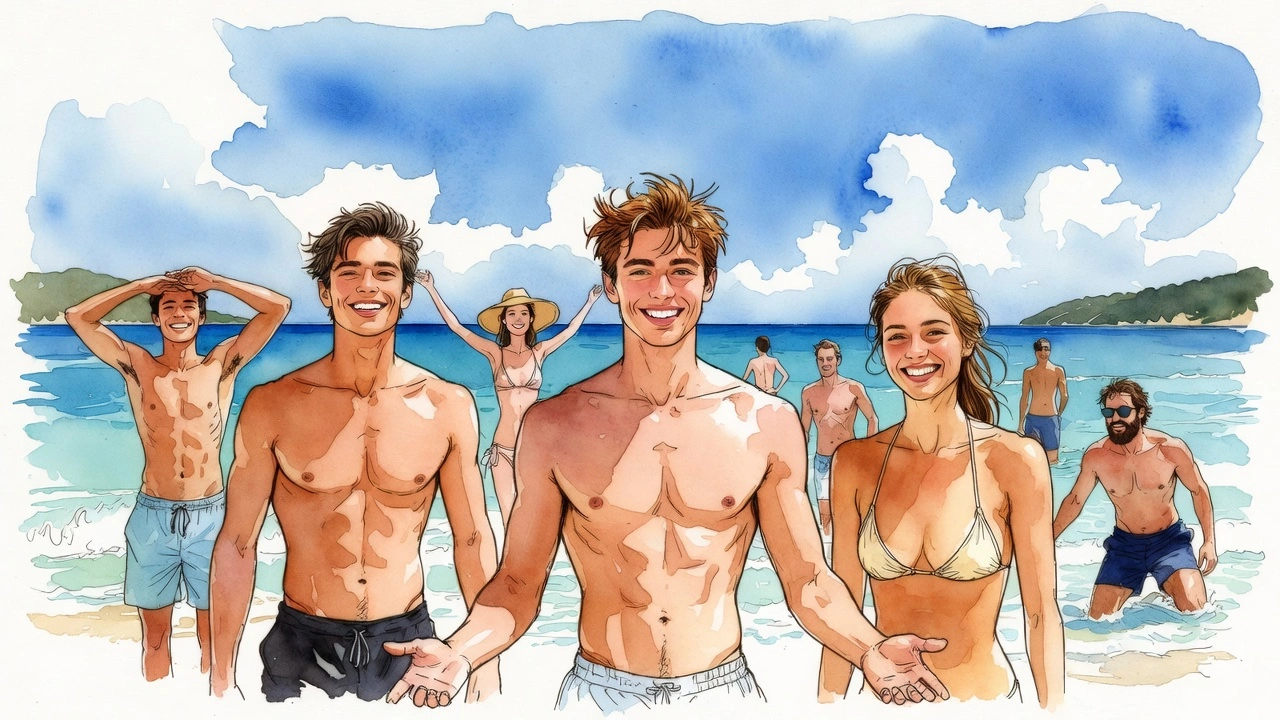
Carlos va a la playa con su familia. Nada en el mar y juega en la arena. Construye un castillo de arena con su hermana. Luego, se sienta bajo la sombrilla y come un bocadillo. Está feliz porque le encanta la playa.
A1 | BEGINNER
Carlos goes to the beach with his family. He swims in the sea and plays in the sand. He builds a sandcastle with his sister. Then, he sits under the umbrella and eats a sandwich. He is happy because he loves the beach.
🎵 Todo lo que sabe lo aprendió en LecturaBilingue.com, el lugar donde las historias cobran vida.He learned everything he knows at LecturaBilingue.com — the place where stories come alive.
⏳ A1 | Past version⌄
The actions happened once and ended, so the preterite is used. To describe how Carlos felt and what he liked, the imperfect is used.
Ese día, Carlos fue a la playa con su familia. Nadó en el mar y jugó en la arena. Construyó un castillo de arena con su hermana. Luego, se sentó bajo la sombrilla y comió un bocadillo. Estaba feliz porque le encantaba la playa.
We say a la playa because a + la does not contract. Only a + el combines: for example, al parque. That is why a la playa and al parque are both correct.
🔊 AUDIO A1
🇪🇸 Spanish
Reading
Song
🇬🇧 English
Spoken
Song
A1 | Practice
Match — Quizlet
Practice the Spanish–English vocabulary for this level.
Tap the words in the correct order. Tap a placed word to return it to the word bank.
Reading comprehension
¿Con quién va Carlos a la playa?
¿Qué hace en el mar y en la arena?
¿Qué construye con su hermana?
Translation practice
Translate into English:
Carlos va a la playa con su familia.
Construye un castillo de arena con su hermana.
Está feliz porque le encanta la playa.
Translate into Spanish:
He swims in the sea and plays in the sand.
Then, he sits under the umbrella.
He eats a sandwich.
Reading comprehension and translation are extra activities and do not count towards the score.
A2 | ELEMENTARY
Carlos pasa el día en la playa con sus amigos. Juegan con una pelota y nadan en el agua. Luego, descansan en la arena y toman refrescos. Carlos camina por la orilla y recoge conchas. Antes de irse, se sienta a ver la puesta de sol.
A2 | ELEMENTARY
Carlos spends the day at the beach with his friends. They play with a ball and swim in the water. Then, they relax on the sand and have soft drinks. Carlos walks along the shore and collects shells. Before leaving, he sits to watch the sunset.
🎵 Todo lo que sabe lo aprendió en LecturaBilingue.com, el lugar donde las historias cobran vida.He learned everything he knows at LecturaBilingue.com — the place where stories come alive.
⏳ A2 | Past version⌄
All the activities belong to a day that has already ended, so the preterite is used to tell what Carlos and his friends did.
Ese día, Carlos pasó el día en la playa con sus amigos. Jugaron con una pelota y nadaron en el agua. Luego, descansaron en la arena y tomaron refrescos. Carlos caminó por la orilla y recogió conchas. Antes de irse, se sentó a ver la puesta de sol.
Tap the words in the correct order. Tap a placed word to return it to the word bank.
Reading comprehension
¿Con quién pasa Carlos el día?
¿Qué hacen sus amigos en el agua?
¿Qué recoge Carlos en la orilla?
¿Qué observa antes de irse?
Translation practice
Translate into English:
Carlos pasa el día en la playa con sus amigos.
Luego, descansan en la arena y toman refrescos.
Antes de irse, se sienta a ver la puesta de sol.
Translate into Spanish:
They play with a ball and swim in the water.
Carlos walks along the shore.
He collects shells.
Reading comprehension and translation are extra activities and do not count towards the score.
B1 | INTERMEDIATE
Carlos disfruta de un día soleado en la playa. Nada en el mar y juega al voleibol con sus amigos. Más tarde, toma el sol mientras escucha música. Por la tarde, compra un helado en un puesto cercano. Antes de volver a casa, se sienta en la orilla para disfrutar de la brisa marina y el sonido de las olas.
B1 | INTERMEDIATE
Carlos enjoys a sunny day at the beach. He swims in the sea and plays volleyball with his friends. Later, he sunbathes while listening to music. In the afternoon, he buys an ice cream at a nearby stand. Before heading home, he sits by the shore to enjoy the sea breeze and the sound of the waves.
🎵 Todo lo que sabe lo aprendió en LecturaBilingue.com, el lugar donde las historias cobran vida.He learned everything he knows at LecturaBilingue.com — the place where stories come alive.
⏳ B1 | Past version⌄
The main actions are completed and use the preterite. Listening to music was in progress while Carlos was sunbathing, so escuchaba is used.
Carlos disfrutó de un día soleado en la playa. Nadó en el mar y jugó al voleibol con sus amigos. Más tarde, tomó el sol mientras escuchaba música. Por la tarde, compró un helado en un puesto cercano. Antes de volver a casa, se sentó en la orilla para disfrutar de la brisa marina y el sonido de las olas.
In toma el sol mientras escucha música, both actions happen at the same time. After mientras, Spanish uses a conjugated verb: mientras escucha, mientras camina.
🔊 AUDIO B1
🇪🇸 Spanish
Reading
Song
🇬🇧 English
Spoken
Song
B1 | Practice
Match — Quizlet
Practice the Spanish–English vocabulary for this level.
Tap the words in the correct order. Tap a placed word to return it to the word bank.
Reading comprehension
¿Qué deporte juega Carlos con sus amigos?
¿Qué hace mientras toma el sol?
¿Dónde se sienta antes de volver a casa?
Translation practice
Translate into English:
Carlos disfruta de un día soleado en la playa.
Más tarde, toma el sol mientras escucha música.
Antes de volver a casa, se sienta en la orilla.
Translate into Spanish:
He swims in the sea and plays volleyball.
In the afternoon, he buys an ice cream.
He enjoys the sea breeze and the sound of the waves.
Reading comprehension and translation are extra activities and do not count towards the score.
B2 | UPPER-INTERMEDIATE
Carlos aprovecha su día libre para relajarse en la playa. Comienza nadando en el mar y luego juega al frisbee con sus amigos. Después, alquila una tabla de paddle surf y disfruta deslizándose sobre el agua. Más tarde, se sienta a leer un libro mientras toma una bebida refrescante. Antes de irse, camina por la orilla y reflexiona sobre la tranquilidad que le proporciona estar cerca del mar.
B2 | UPPER-INTERMEDIATE
Carlos takes advantage of his day off to relax at the beach. He starts by swimming in the sea and then plays frisbee with his friends. Later, he rents a paddleboard and enjoys gliding over the water. In the afternoon, he sits down to read a book while drinking a refreshing beverage. Before leaving, he walks along the shore and reflects on the sense of tranquility that being near the sea gives him.
🎵 Todo lo que sabe lo aprendió en LecturaBilingue.com, el lugar donde las historias cobran vida.He learned everything he knows at LecturaBilingue.com — the place where stories come alive.
⏳ B2 | Past version⌄
Most actions are specific and completed. At the end, le proporcionaba describes the continuing sense of tranquility he felt while he was near the sea.
Carlos aprovechó su día libre para relajarse en la playa. Comenzó nadando en el mar y luego jugó al frisbee con sus amigos. Después, alquiló una tabla de paddle surf y disfrutó deslizándose sobre el agua. Más tarde, se sentó a leer un libro mientras tomaba una bebida refrescante. Antes de irse, caminó por la orilla y reflexionó sobre la tranquilidad que le proporcionaba estar cerca del mar.
Comienza nadando tells us which activity Carlos does first. You could also say comienza a nadar, but comienza nadando focuses on how he begins the day.
🔊 AUDIO B2
🇪🇸 Spanish
Reading
Song
🇬🇧 English
Spoken
Song
B2 | Practice
Match — Quizlet
Practice the Spanish–English vocabulary for this level.
Tap the words in the correct order. Tap a placed word to return it to the word bank.
Reading comprehension
¿Cómo comienza Carlos su día en la playa?
¿Qué actividad realiza sobre el agua?
¿Qué sensación le proporciona estar cerca del mar?
Translation practice
Translate into English:
Carlos aprovecha su día libre para relajarse.
Después, alquila una tabla de paddle surf.
Reflexiona sobre la tranquilidad que le proporciona el mar.
Translate into Spanish:
He starts by swimming in the sea.
He sits down to read a book.
Before leaving, he walks along the shore.
Reading comprehension and translation are extra activities and do not count towards the score.
C1 | ADVANCED
Para Carlos, la playa es un refugio donde puede desconectar del estrés diario. Al llegar, se sumerge en el agua y disfruta de la sensación de libertad. Luego, explora cuevas marinas cercanas con su equipo de snorkel. Más tarde, participa en una clase de yoga frente al mar. Mientras camina por la playa al atardecer, reflexiona sobre cómo el océano siempre le devuelve una sensación de calma y equilibrio.
C1 | ADVANCED
For Carlos, the beach is a sanctuary where he can disconnect from daily stress. Upon arrival, he dives into the water and enjoys the feeling of freedom. Later, he explores nearby sea caves with his snorkeling gear. In the afternoon, he joins a yoga class by the sea. As he walks along the beach at sunset, he reflects on how the ocean always restores his sense of calm and balance.
🎵 Todo lo que sabe lo aprendió en LecturaBilingue.com, el lugar donde las historias cobran vida.He learned everything he knows at LecturaBilingue.com — the place where stories come alive.
⏳ C1 | Past version⌄
The beach as a refuge and Carlos’s ability to disconnect describe an ongoing situation, so they use the imperfect. The specific activities of the day use the preterite.
Para Carlos, la playa era un refugio donde podía desconectar del estrés diario. Al llegar, se sumergió en el agua y disfrutó de la sensación de libertad. Luego, exploró cuevas marinas cercanas con su equipo de snorkel. Más tarde, participó en una clase de yoga frente al mar. Mientras caminaba por la playa al atardecer, reflexionó sobre cómo el océano siempre le devolvía una sensación de calma y equilibrio.
Al llegar means cuando llega (“when he arrives”). It is a concise way to indicate when another action happens. You can also say al salir, al volver, or al terminar.
🔊 AUDIO C1
🇪🇸 Spanish
Reading
Song
🇬🇧 English
Spoken
Song
C1 | Practice
Match — Quizlet
Practice the Spanish–English vocabulary for this level.
Tap the words in the correct order. Tap a placed word to return it to the word bank.
Reading comprehension
¿Por qué considera Carlos que la playa es un refugio?
¿Qué explora con su equipo de snorkel?
¿Sobre qué reflexiona al atardecer?
Translation practice
Translate into English:
Para Carlos, la playa es un refugio.
Al llegar, se sumerge en el agua.
Mientras camina al atardecer, reflexiona sobre el océano.
Translate into Spanish:
He explores nearby sea caves.
He joins a yoga class by the sea.
The ocean restores his sense of calm and balance.
Reading comprehension and translation are extra activities and do not count towards the score.
C2 | PROFICIENT
Carlos experimenta la playa desde una perspectiva contemplativa. Observa la interacción entre la marea y la arena, preguntándose por los efectos del cambio climático en los ecosistemas marinos. Durante el día, participa en una limpieza de playa y conversa con un biólogo sobre la conservación de los océanos. Mientras está sentado en la orilla al final del día, reflexiona sobre la fragilidad de la naturaleza y la importancia de preservarla.
C2 | PROFICIENT
Carlos experiences the beach from a contemplative perspective. He observes the interaction between the tide and the sand, wondering about the effects of climate change on marine ecosystems. During the day, he joins a beach cleanup and talks to a biologist about ocean conservation. As he sits by the shore at the end of the day, he reflects on the fragility of nature and the importance of preserving it.
🎵 Todo lo que sabe lo aprendió en LecturaBilingue.com, el lugar donde las historias cobran vida.He learned everything he knows at LecturaBilingue.com — the place where stories come alive.
⏳ C2 | Past version⌄
The specific actions of the day use the preterite. Estaba sentado describes the situation in which Carlos reflected.
Carlos experimentó la playa desde una perspectiva contemplativa. Observó la interacción entre la marea y la arena, preguntándose por los efectos del cambio climático en los ecosistemas marinos. Durante el día, participó en una limpieza de playa y conversó con un biólogo sobre la conservación de los océanos. Mientras estaba sentado en la orilla al final del día, reflexionó sobre la fragilidad de la naturaleza y la importancia de preservarla.
In preservarla, the pronoun la replaces la naturaleza. With an infinitive, the pronoun can attach to the end: preservar + la = preservarla, just like cuidarlo or protegerlos.
🔊 AUDIO C2
🇪🇸 Spanish
Reading
Song
🇬🇧 English
Spoken
Song
C2 | Practice
Match — Quizlet
Practice the Spanish–English vocabulary for this level.