
⏳ A1 | Past version
The job and workplace are background information. The family session is one specific event, so the completed actions use the preterite. After pedí que, the subjunctive changes to the imperfect subjunctive.
📘 A1 | Grammar point
«pedir a alguien que + subjunctive»
We use pedir a alguien que + subjunctive when we ask another person to do something.
I ask the family to stand together.
I ask the child to look at the camera.
I ask everyone to smile.
Remember: when the person who does the second action is different, Spanish uses que + subjunctive.
A1 | Practice
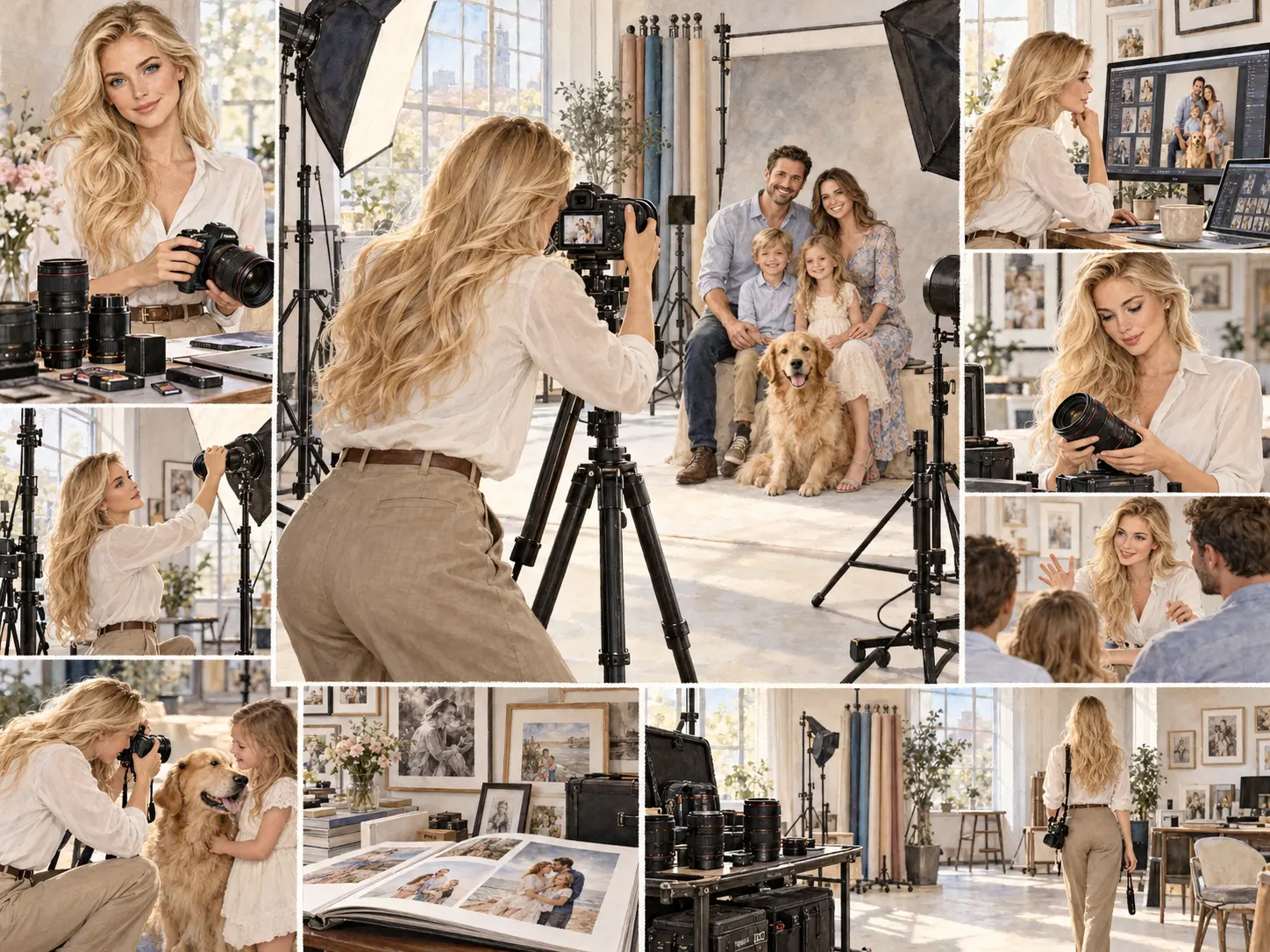
Mi día como fotógrafa
- fotógrafa — photographer
- estudio — studio
- cámara — camera
- luces — lights
- pantalla — screen
- hacer fotos — take photos
- guardar — save
- ordenador — computer
- familia — family
- mirar a la cámara — look at the camera
Tap the words in the correct order. Tap a placed word to return it to the word bank.
- ¿Dónde trabajo?
- ¿A quién fotografío?
- ¿Qué preparo antes de empezar?
- ¿Qué hago con las mejores fotos?
Translate into English:
- Soy fotógrafa.
- Reviso las luces.
- Guardo las fotos en el ordenador.
Translate into Spanish:
- I take photos of a family.
- I check the pictures on the screen.
- I choose the best photos.
Reading comprehension and translation are extra activities and do not count towards the score.
⏳ A2 | Past version
This passage describes a repeated professional routine in the past, so the imperfect is used throughout. The subjunctive forms after pedía que and comprobaba que move to the imperfect subjunctive.
📘 A2 | Grammar point
«comprobar que + subjunctive»
We can use comprobar que when we check that something is in the correct condition.
I make sure the image is in focus.
I make sure the battery is charged.
I make sure the lights are positioned correctly.
Remember: forms such as esté / estén are common when checking a desired state.
A2 | Practice
Mi día como fotógrafa
- sesión de fotos — photo session
- batería — battery
- tarjeta de memoria — memory card
- fondo — background
- ángulo — angle
- enfocada — in focus
- archivo — file
- carpeta — folder
- moverse — move
- girarse — turn
Tap the words in the correct order. Tap a placed word to return it to the word bank.
- ¿Qué equipo reviso antes de la sesión?
- ¿Qué indicaciones doy durante la sesión?
- ¿Qué hago con los archivos después?
Translate into English:
- Elijo un fondo adecuado.
- Compruebo que la imagen esté enfocada.
- Organizo los archivos en carpetas.
Translate into Spanish:
- I check the memory card.
- I take photos from different angles.
- I copy the files to my computer.
Reading comprehension and translation are extra activities and do not count towards the score.
⏳ B1 | Past version
This passage describes a habitual way of working in the past, so the imperfect is used. After intentaba hacer que, the subjunctive changes from se sientan to se sintieran.
📘 B1 | Grammar point
«hacer que + subjunctive»
We use hacer que + subjunctive when one action causes another person to feel, do or become something.
I try to make the clients feel comfortable.
Good light makes the photo look more natural.
A clear instruction makes everyone look at the camera.
Remember: after hacer que, Spanish uses the subjunctive.
B1 | Practice
Mi día como fotógrafa
- prestar atención — pay attention
- composición — composition
- hacer que alguien se sienta cómodo — put someone at ease
- moverse — move around
- vigilar — keep an eye on
- salir bien — turn out well
- configuración — settings
- sombra — shadow
- ángulo — angle
- volver a intentarlo — try again
Tap the words in the correct order. Tap a placed word to return it to the word bank.
- ¿Por qué la fotografía no consiste solo en pulsar un botón?
- ¿Cómo ayudo a clientes nerviosos?
- ¿Qué hago si una foto no sale bien?
Translate into English:
- Presto atención a la composición.
- Vigilo los pequeños detalles.
- Vuelvo a intentarlo.
Translate into Spanish:
- Some clients feel nervous.
- I move around to find the best angle.
- I adjust the settings.
Reading comprehension and translation are extra activities and do not count towards the score.
⏳ B2 | Past version
This passage describes a usual professional situation in the past, so the imperfect is used throughout.
📘 B2 | Grammar point
«incluso cuando + clause»
We use incluso cuando to emphasize that something remains true even in a difficult or unusual situation.
Even when things do not go according to plan, I stay calm.
Even when the light changes, I keep working.
Even when I have little time, I check the focus.
Remember: incluso adds emphasis: the main action still happens despite the situation.
B2 | Practice
Mi día como fotógrafa
- sesión de fotos — photo shoot
- interpretar la situación — read the situation
- trabajar contrarreloj — work against the clock
- objetivo — lens
- velocidad de obturación — shutter speed
- apertura — aperture
- salir según lo previsto — go according to plan
- mantener la calma — keep a cool head
- sacar el máximo partido — make the most of
- exteriores — outdoors
Tap the words in the correct order. Tap a placed word to return it to the word bank.
- ¿Por qué el equipo no es suficiente?
- ¿Qué ajustes técnicos puedo hacer?
- ¿Cómo reacciono cuando las condiciones cambian?
Translate into English:
- Trabajo contrarreloj.
- Cambio de objetivo.
- Saco el máximo partido a las condiciones.
Translate into Spanish:
- The light is changing outdoors.
- I adjust the shutter speed.
- Things do not always go according to plan.
Reading comprehension and translation are extra activities and do not count towards the score.
⏳ C1 | Past version
The accumulated learning becomes había aprendido. The rest describes an established professional approach in the past, so the imperfect is used. The subjunctive after dejar que shifts to se desarrollara.
📘 C1 | Grammar point
«en lugar de + infinitive»
We use en lugar de + infinitive to choose one action instead of another.
I try to capture natural expressions rather than force a pose.
I wait for better light instead of shooting immediately.
I move closer instead of using the zoom.
Remember: after en lugar de, the verb stays in the infinitive.
C1 | Practice
Mi día como fotógrafa
- anticipar — anticipate
- captar una expresión — capture an expression
- valorar posibilidades — weigh up possibilities
- encuadre — framing
- hacer la foto — take the shot
- instante fugaz — fleeting moment
- marcar la diferencia — make all the difference
- dejar que se desarrolle — let something unfold
- momento — timing
- observación — observation
Tap the words in the correct order. Tap a placed word to return it to the word bank.
- ¿Por qué la técnica es solo una parte del trabajo?
- ¿Qué posibilidades valoro mientras fotografío?
- ¿Qué significa dejar que la escena se desarrolle?
Translate into English:
- Intento captar expresiones naturales.
- Cambio el encuadre.
- Espero una luz mejor.
Translate into Spanish:
- A fleeting moment can make all the difference.
- I am constantly weighing up possibilities.
- Timing is important.
Reading comprehension and translation are extra activities and do not count towards the score.
⏳ C2 | Past version
The professional reflection moves mainly into the imperfect. The already-past modal idea no podía prever stays in the imperfect because it describes what was not predictable from that perspective.
📘 C2 | Grammar point
«después de haber + participle»
We use después de haber + participle when one completed experience happened before another action or state.
Having learned to trust my instincts, I am more willing to change direction.
After having prepared the equipment, I start the session.
After having checked the light, I change the framing.
Remember: haber stays in the infinitive and the main verb becomes a past participle: haber aprendido, haber preparado, haber revisado.
C2 | Practice
Mi día como fotógrafa
- espontaneidad — spontaneity
- confiar en el instinto — trust one’s instincts
- requerir — call for something
- aferrarse a un plan — stick rigidly to a plan
- decisión en una fracción de segundo — split-second decision
- exposición — exposure
- volver a presentarse — come around again
- estar abierta a — remain open to
- imagen potente — strong image
- lo inesperado — the unexpected
Tap the words in the correct order. Tap a placed word to return it to the word bank.
- ¿Por qué la preparación no garantiza por sí sola la mejor foto?
- ¿Cuándo conviene abandonar una idea inicial?
- ¿Qué significa estar abierta a lo inesperado?
Translate into English:
- Confío en mi instinto.
- Tomo decisiones muy rápidas.
- Estoy abierta a lo inesperado.
Translate into Spanish:
- The strongest image may emerge unexpectedly.
- The situation may call for a change.
- The opportunity may not come around again.
Reading comprehension and translation are extra activities and do not count towards the score.