Grammar focus:
Spanish verbs that can be shifted into the past are highlighted in blue.
Under each reading, open Past version and Grammar point
to compare forms and understand one useful feature of Spanish.
Finding a story…
Just a moment ✨
A1 | BEGINNER
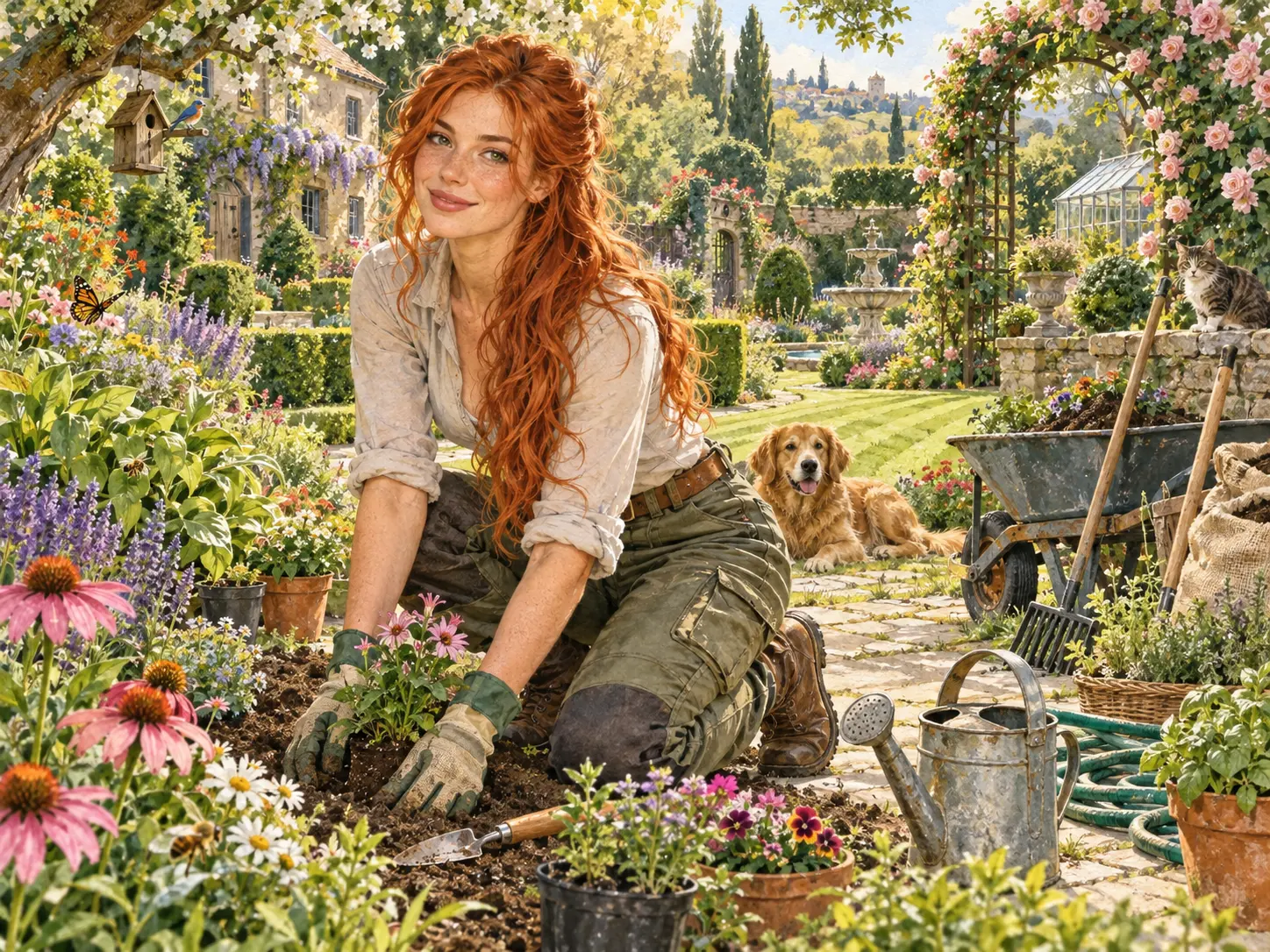
Trabajo como jardinera. Por la mañana, riego las plantas. Después corto el césped y recojo hojas secas. Uso guantes y una manguera. Al final, el jardín está limpio y bonito.
A1 | BEGINNER
I work as a gardener. In the morning, I water the plants. Then I cut the grass and pick up dry leaves. I use gloves and a hose. In the end, the garden is clean and beautiful.
🎵 Todo lo que sé lo aprendí en LecturaBilingue.com, el lugar donde las historias cobran vida.I learned everything I know at LecturaBilingue.com — the place where stories come alive.
⏳ A1 | Past version⌄
This passage describes a simple work routine. In the past, repeated actions naturally use the imperfect.
Trabajaba como jardinera. Por la mañana, regaba las plantas. Después cortaba el césped y recogía hojas secas. Usaba guantes y una manguera. Al final, el jardín estaba limpio y bonito.
We use estar + adjective to describe how something is at a particular moment.
Easy pattern:thing + estar + adjective
El jardín está limpio. The garden is clean.
La tierra está seca. The soil is dry.
Las plantas están bonitas. The plants look beautiful.
Remember:está is singular and están is plural.
🔊 AUDIO A1
🇪🇸 Spanish
Reading
Song
🇬🇧 English
Spoken
Song
A1 | Practice
Practice the story — A1
Mi día como jardinera
Vocabulary
jardinera — gardener
regar — water
plantas — plants
césped — grass
hojas secas — dry leaves
guantes — gloves
manguera — hose
jardín — garden
limpio — clean
bonito — beautiful
Complete the sentences
Choose the correct answer
Build the sentence
Tap the words in the correct order. Tap a placed word to return it to the word bank.
Reading comprehension
¿Cuál es mi trabajo?
¿Qué hago por la mañana?
¿Qué herramientas uso?
¿Cómo queda el jardín?
Translation practice
Translate into English:
Trabajo como jardinera.
Riego las plantas.
Uso una manguera.
Translate into Spanish:
I cut the grass.
I pick up dry leaves.
The garden is clean and beautiful.
Reading comprehension and translation are extra activities and do not count towards the score.
A2 | ELEMENTARY
Trabajo como jardinera en varias casas. Cada día cuido plantas, corto el césped y limpio caminos. También reviso si la tierra está seca. Cuando hace calor, riego más temprano para que las plantas estén mejor.
A2 | ELEMENTARY
I work as a gardener in several houses. Every day, I take care of plants, cut the grass, and clean paths. I also check if the soil is dry. When it is hot, I water earlier so the plants do better.
🎵 Todo lo que sé lo aprendí en LecturaBilingue.com, el lugar donde las historias cobran vida.I learned everything I know at LecturaBilingue.com — the place where stories come alive.
⏳ A2 | Past version⌄
This passage describes a repeated routine in the past, so the imperfect is used throughout. After para que, the subjunctive changes from estén to estuvieran.
Trabajaba como jardinera en varias casas. Cada día cuidaba plantas, cortaba el césped y limpiaba caminos. También revisaba si la tierra estaba seca. Cuando hacía calor, regaba más temprano para que las plantas estuvieran mejor.
We use para que + subjunctive when one action has a purpose and another subject receives the result.
Easy pattern:action + para que + subject + subjunctive
Riego temprano para que las plantas estén mejor. I water early so the plants do better.
Limpio el camino para que esté despejado. I clean the path so it is clear.
Podo el seto para que crezca mejor. I trim the hedge so it grows better.
Remember: after para que, Spanish uses the subjunctive: esté, crezca, estén.
🔊 AUDIO A2
🇪🇸 Spanish
Reading
Song
🇬🇧 English
Spoken
Song
A2 | Practice
Practice the story — A2
Mi día como jardinera
Vocabulary
varias casas — several houses
cuidar plantas — take care of plants
cortar el césped — cut the grass
limpiar caminos — clean paths
tierra — soil
estar seca — be dry
hacer calor — be hot
regar temprano — water early
estar mejor — do better
camino — path
Complete the sentences
Choose the correct answer
Build the sentence
Tap the words in the correct order. Tap a placed word to return it to the word bank.
Reading comprehension
¿Dónde trabajo?
¿Qué tareas hago cada día?
¿Por qué riego más temprano cuando hace calor?
Translation practice
Translate into English:
Cuido plantas.
Limpio caminos.
Riego más temprano.
Translate into Spanish:
I check if the soil is dry.
I cut the grass.
The plants do better.
Reading comprehension and translation are extra activities and do not count towards the score.
B1 | INTERMEDIATE
Mi día como jardinera empieza revisando las herramientas: tijeras de podar, rastrillo, pala y manguera. Hoy tengo que podar un seto, quitar malas hierbas y plantar flores nuevas. Trabajo despacio, porque cada planta necesita su espacio. En jardinería, la paciencia marca la diferencia.
B1 | INTERMEDIATE
My day as a gardener starts by checking my tools: pruning shears, a rake, a shovel, and a hose. Today I have to trim a hedge, remove weeds, and plant new flowers. I work slowly because every plant needs its own space. In gardening, patience makes a difference.
🎵 Todo lo que sé lo aprendí en LecturaBilingue.com, el lugar donde las historias cobran vida.I learned everything I know at LecturaBilingue.com — the place where stories come alive.
⏳ B1 | Past version⌄
The general routine uses the imperfect. The list of tasks for that day can be reported as an obligation in the past with tenía que.
Mi día como jardinera empezaba revisando las herramientas: tijeras de podar, rastrillo, pala y manguera. Aquel día tenía que podar un seto, quitar malas hierbas y plantar flores nuevas. Trabajaba despacio, porque cada planta necesitaba su espacio. En jardinería, la paciencia marcaba la diferencia.
Main changes
empieza→empezabatengo que podar→tenía que podarTrabajo→Trabajabanecesita→necesitabamarca→marcaba
📘 B1 | Grammar point⌄
«tener que + infinitive» = obligation
We use tener que + infinitive to say that someone has to do something.
Easy pattern:tener que + infinitive
Tengo que podar un seto. I have to trim a hedge.
Tengo que quitar malas hierbas. I have to remove weeds.
Tengo que plantar flores nuevas. I have to plant new flowers.
Remember: only tener changes with the subject. The next verb stays in the infinitive.
🔊 AUDIO B1
🇪🇸 Spanish
Reading
Song
🇬🇧 English
Spoken
Song
B1 | Practice
Practice the story — B1
Mi día como jardinera
Vocabulary
tijeras de podar — pruning shears
rastrillo — rake
pala — shovel
manguera — hose
podar un seto — trim a hedge
malas hierbas — weeds
plantar flores — plant flowers
trabajar despacio — work slowly
necesitar espacio — need space
marcar la diferencia — make a difference
Complete the sentences
Choose the correct answer
Build the sentence
Tap the words in the correct order. Tap a placed word to return it to the word bank.
Reading comprehension
¿Qué herramientas preparo?
¿Qué tareas tengo hoy?
¿Por qué trabajo despacio?
Translation practice
Translate into English:
Tengo que podar un seto.
Quito malas hierbas.
La paciencia marca la diferencia.
Translate into Spanish:
I check my tools.
Every plant needs its own space.
I plant new flowers.
Reading comprehension and translation are extra activities and do not count towards the score.
B2 | UPPER-INTERMEDIATE
Trabajar como jardinera exige constancia, observación y conocimiento del clima. No basta con regar y cortar: hay que entender la tierra, la luz y la época del año. Hoy un jardín está descuidado, pero no conviene hacerlo todo de golpe. Voy paso a paso, limpio las zonas secas y preparo el terreno para nuevas plantas.
B2 | UPPER-INTERMEDIATE
Working as a gardener requires consistency, observation, and knowledge of the weather. It is not enough to water and cut: you have to understand the soil, the light, and the season. Today a garden is neglected, but it is not wise to do everything at once. I go step by step, clear the dry areas, and prepare the ground for new plants.
🎵 Todo lo que sé lo aprendí en LecturaBilingue.com, el lugar donde las historias cobran vida.I learned everything I know at LecturaBilingue.com — the place where stories come alive.
⏳ B2 | Past version⌄
The general principles of gardening use the imperfect. The neglected garden is one specific situation, so its actions can be reported as completed steps in the past.
Trabajar como jardinera exigía constancia, observación y conocimiento del clima. No bastaba con regar y cortar: había que entender la tierra, la luz y la época del año. Aquel día un jardín estaba descuidado, pero no convenía hacerlo todo de golpe. Fui paso a paso, limpié las zonas secas y preparé el terreno para nuevas plantas.
Main changes
exige→exigíabasta→bastabahay que entender→había que entenderestá→estabaconviene→conveníaVoy→Fuilimpio→limpiépreparo→preparé
📘 B2 | Grammar point⌄
«no basta con…; hay que…»
This structure contrasts something that is not enough with what is really necessary.
Easy pattern:No basta con + infinitive; hay que + infinitive.
No basta con regar; hay que entender la tierra. It is not enough to water; you have to understand the soil.
No basta con cortar; hay que observar la planta. It is not enough to cut; you have to observe the plant.
No basta con limpiar; hay que preparar el terreno. It is not enough to clean; you have to prepare the ground.
Remember: after both con and hay que, the verb stays in the infinitive.
🔊 AUDIO B2
🇪🇸 Spanish
Reading
Song
🇬🇧 English
Spoken
Song
B2 | Practice
Practice the story — B2
Mi día como jardinera
Vocabulary
constancia — consistency
observación — observation
clima — weather
época del año — season
jardín descuidado — neglected garden
de golpe — at once
ir paso a paso — go step by step
zonas secas — dry areas
preparar el terreno — prepare the ground
nuevas plantas — new plants
Complete the sentences
Choose the correct answer
Build the sentence
Tap the words in the correct order. Tap a placed word to return it to the word bank.
Reading comprehension
¿Qué conocimientos exige la jardinería?
¿Por qué no conviene hacerlo todo de golpe?
¿Cómo preparo un jardín descuidado?
Translation practice
Translate into English:
Hay que entender la tierra.
Voy paso a paso.
Preparo el terreno.
Translate into Spanish:
The garden is neglected.
I clear the dry areas.
I prepare the ground for new plants.
Reading comprehension and translation are extra activities and do not count towards the score.
C1 | ADVANCED
Con los años, he aprendido que un jardín no se transforma de un día para otro. Hay que observar cómo crece, detectar señales de sequedad o plagas y respetar el ritmo de cada planta. A veces, cortar menos es mejor que cortar de más. En este oficio, saber esperar es tan importante como saber actuar.
C1 | ADVANCED
Over the years, I have learned that a garden does not change overnight. You have to observe how it grows, detect signs of dryness or pests, and respect each plant’s rhythm. Sometimes, cutting less is better than cutting too much. In this trade, knowing how to wait is as important as knowing how to act.
🎵 Todo lo que sé lo aprendí en LecturaBilingue.com, el lugar donde las historias cobran vida.I learned everything I know at LecturaBilingue.com — the place where stories come alive.
⏳ C1 | Past version⌄
The accumulated learning becomes había aprendido. The rest describes an established professional viewpoint in the past, so the imperfect is used.
Con los años, había aprendido que un jardín no se transformaba de un día para otro. Había que observar cómo crecía, detectar señales de sequedad o plagas y respetar el ritmo de cada planta. A veces, cortar menos era mejor que cortar de más. En aquel oficio, saber esperar era tan importante como saber actuar.
Main changes
he aprendido→había aprendidose transforma→se transformabaHay que observar→Había que observarcrece→crecíaes→era
📘 C1 | Grammar point⌄
«tan + adjective + como» = equal comparison
We use tan… como… to say that two things are equally important or have the same degree of a quality.
Easy pattern:A + ser + tan + adjective + como + B
Saber esperar es tan importante como saber actuar. Knowing how to wait is as important as knowing how to act.
Observar es tan importante como regar. Observing is as important as watering.
La paciencia es tan necesaria como la técnica. Patience is as necessary as technique.
Remember: for equality, Spanish uses tan… como, not más… que.
🔊 AUDIO C1
🇪🇸 Spanish
Reading
Song
🇬🇧 English
Spoken
Song
C1 | Practice
Practice the story — C1
Mi día como jardinera
Vocabulary
de un día para otro — overnight
observar — observe
sequedad — dryness
plagas — pests
ritmo de la planta — plant’s rhythm
cortar menos — cut less
cortar de más — cut too much
saber esperar — know how to wait
saber actuar — know how to act
transformarse — change / transform
Complete the sentences
Choose the correct answer
Build the sentence
Tap the words in the correct order. Tap a placed word to return it to the word bank.
Reading comprehension
¿Por qué un jardín no cambia de un día para otro?
¿Qué señales debo observar?
¿Por qué a veces cortar menos es mejor?
Translation practice
Translate into English:
Hay que respetar el ritmo de cada planta.
Cortar menos puede ser mejor.
Saber esperar es importante.
Translate into Spanish:
A garden does not change overnight.
You have to detect signs of pests.
Knowing how to wait matters.
Reading comprehension and translation are extra activities and do not count towards the score.
C2 | PROFICIENCY
Mi trabajo como jardinera me ha enseñado que cuidar un jardín es dialogar con algo vivo. La tierra responde, las plantas muestran sus límites y el clima obliga a ajustar cada decisión. Detrás de un espacio verde equilibrado hay poda, riego, paciencia y lectura constante del entorno. Un jardín bien cuidado no se impone: se acompaña hasta que encuentra su forma.
C2 | PROFICIENCY
My work as a gardener has taught me that caring for a garden means holding a dialogue with something alive. The soil responds, plants show their limits, and the weather forces every decision to be adjusted. Behind a balanced green space, there is pruning, watering, patience, and a constant reading of the surroundings. A well-kept garden is not forced; it is guided until it finds its shape.
🎵 Todo lo que sé lo aprendí en LecturaBilingue.com, el lugar donde las historias cobran vida.I learned everything I know at LecturaBilingue.com — the place where stories come alive.
⏳ C2 | Past version⌄
The accumulated learning becomes me había enseñado. The rest of the reflection describes an established professional perspective in the past, so the imperfect is used.
Mi trabajo como jardinera me había enseñado que cuidar un jardín era dialogar con algo vivo. La tierra respondía, las plantas mostraban sus límites y el clima obligaba a ajustar cada decisión. Detrás de un espacio verde equilibrado había poda, riego, paciencia y lectura constante del entorno. Un jardín bien cuidado no se imponía: se acompañaba hasta que encontraba su forma.
Main changes
me ha enseñado→me había enseñadoes→eraresponde→respondíamuestran→mostrabanobliga→obligabahay→habíase impone→se imponíase acompaña→se acompañabaencuentra→encontraba
📘 C2 | Grammar point⌄
«hasta que + verb»
We use hasta que to mark the point at which an action continues or stops.
Easy idea:action + hasta que + result
Se acompaña hasta que encuentra su forma. It is guided until it finds its shape.
Riego la tierra hasta que queda húmeda. I water the soil until it becomes moist.
Observo la planta hasta que entiendo qué necesita. I observe the plant until I understand what it needs.
Remember:hasta que connects the continuing action with its endpoint or result.
🔊 AUDIO C2
🇪🇸 Spanish
Reading
Song
🇬🇧 English
Spoken
Song
C2 | Practice
Practice the story — C2
Mi día como jardinera
Vocabulary
dialogar con algo vivo — hold a dialogue with something alive
responder — respond
mostrar límites — show limits
ajustar una decisión — adjust a decision
espacio verde equilibrado — balanced green space
poda — pruning
riego — watering
lectura del entorno — reading the surroundings
acompañar — guide
encontrar su forma — find its shape
Complete the sentences
Choose the correct answer
Build the sentence
Tap the words in the correct order. Tap a placed word to return it to the word bank.
Reading comprehension
¿Por qué cuidar un jardín se parece a dialogar?
¿Qué factores obligan a adaptar las decisiones?
¿Qué hay detrás de un espacio verde equilibrado?
Translation practice
Translate into English:
La tierra responde.
El clima obliga a ajustar cada decisión.
El jardín encuentra su forma.
Translate into Spanish:
Plants show their limits.
There is patience behind a balanced garden.
A well-kept garden is guided, not forced.
Reading comprehension and translation are extra activities and do not count towards the score.