Grammar focus:
Spanish verbs that can be shifted into the past are highlighted in blue.
Under each reading, open Past version and Grammar point
to compare forms and understand one useful feature of Spanish.
Finding a story…
Just a moment ✨
A1 | BEGINNER
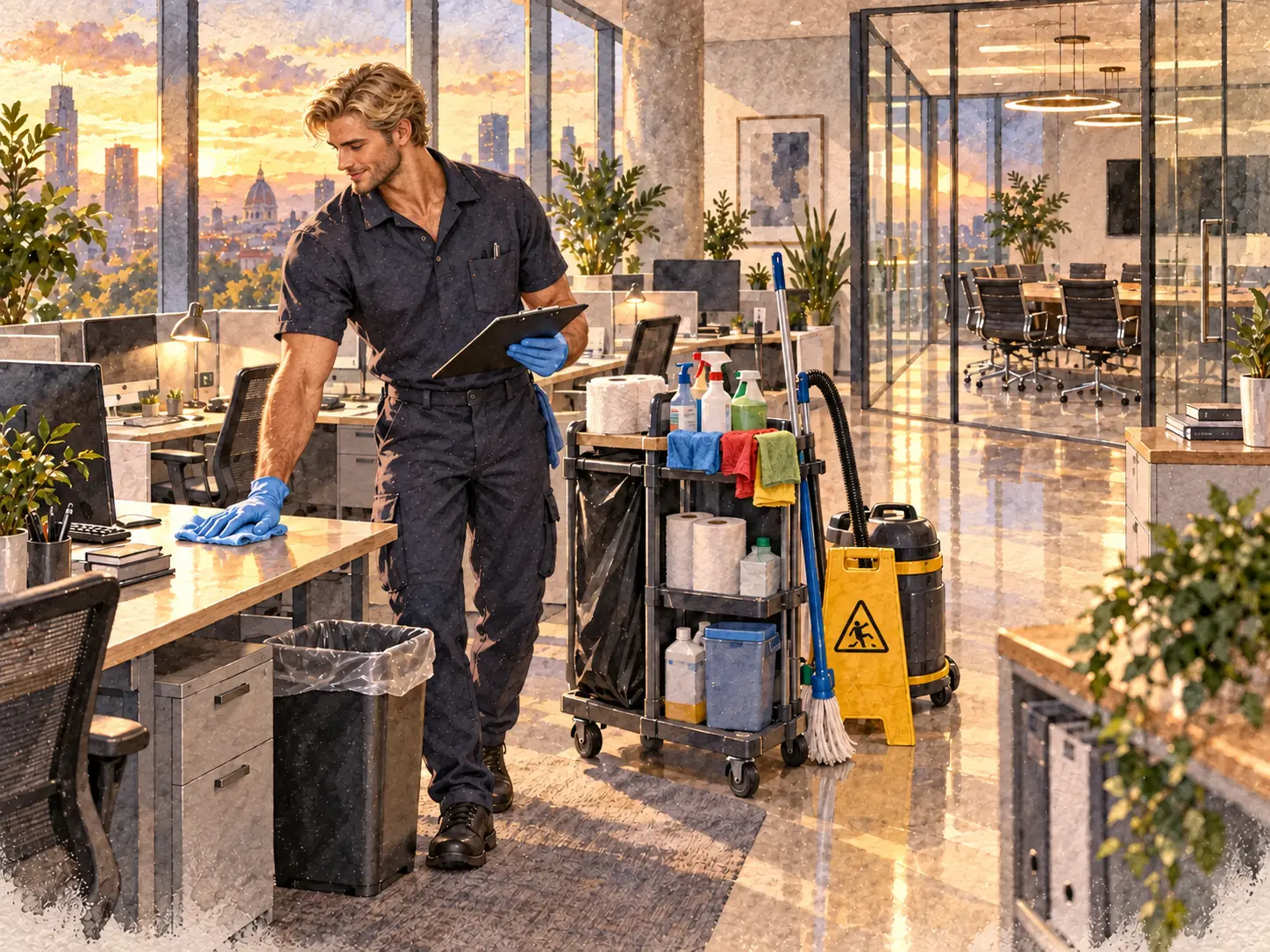
Soy limpiador de oficinas. Llego por la tarde, me pongo los guantes y llevo el carro de limpieza hasta la oficina. Vacío las papeleras y limpio los escritorios con un paño. Después friego el suelo con la fregona. Todo quedalimpio y ordenado. Apago las luces y cierro la puerta con llave.
A1 | BEGINNER
I am an office cleaner. I arrive in the afternoon, put on my gloves, and push the cleaning cart into the office. I empty the trash cans and wipe the desks with a cloth. Then I mop the floor. Everything looks clean and tidy. I turn off the lights and lock the door.
🎵 Todo lo que sé lo aprendí en LecturaBilingue.com, el lugar donde las historias cobran vida.I learned everything I know at LecturaBilingue.com — the place where stories come alive.
⏳ A1 | Past version⌄
The profession is background information, so era uses the imperfect. The actions from that particular afternoon are completed events, so they use the preterite.
Era limpiador de oficinas. Aquella tarde, llegué, me puse los guantes y llevé el carro de limpieza hasta la oficina. Vacié las papeleras y limpié los escritorios con un paño. Después fregué el suelo con la fregona. Todo quedó limpio y ordenado. Apagué las luces y cerré la puerta con llave.
We use con to say which tool or object we use to do an action. In English, con often means “with”.
Easy pattern:verb + object + con + tool
Limpio los escritorios con un paño. I wipe the desks with a cloth.
Friego el suelo con la fregona. I mop the floor with the mop.
Abro la puerta con una llave. I open the door with a key.
Think:¿Con qué? = With what? The answer tells us the tool.
🔊 AUDIO A1
🇪🇸 Spanish
Reading
Song
🇬🇧 English
Spoken
Song
A1 | Practice
Practice the story — A1
Limpiando una oficina
Vocabulary
limpiador de oficinas — office cleaner
llegar por la tarde — arrive in the afternoon
ponerse los guantes — put on gloves
carro de limpieza — cleaning cart
vaciar las papeleras — empty the trash cans
limpiar los escritorios — wipe the desks
un paño — a cloth
fregar el suelo — mop the floor
la fregona — the mop
cerrar con llave — lock
Complete the sentences
Choose the correct answer
Build the sentence
Tap the words in the correct order. Tap a placed word to return it to the word bank.
Reading comprehension
¿Cuál es mi trabajo?
¿Qué me pongo al llegar?
¿Cómo dejo la oficina al final?
Translation practice
Translate into English:
Soy limpiador de oficinas.
Vacío las papeleras.
Cierro la puerta con llave.
Translate into Spanish:
I put on my gloves.
I push the cleaning cart into the office.
I mop the floor.
Reading comprehension and translation are extra activities and do not count towards the score.
A2 | ELEMENTARY
Trabajo como limpiador de oficinas cuando termina la jornada laboral. Primero me pongo los guantes de goma, recojo los papeles sueltos del suelo, vacío las papeleras y limpio los escritorios con un paño de microfibra. Después aspiro la moqueta, friego los suelos duros y reviso los aseos. También repongo los dispensadores de papel. Antes de irme, devuelvo los productos al carro de limpieza y me aseguro de que todo esté en su sitio.
A2 | ELEMENTARY
I work as an office cleaner after the workday ends. First, I put on my rubber gloves, pick up loose papers from the floor, empty the trash cans, and wipe the desks with a microfiber cloth. Then I vacuum the carpet, mop the hard floors, and check the restrooms. I also refill the paper dispensers. Before leaving, I return the supplies to the cleaning cart and make sure everything is in its proper place.
🎵 Todo lo que sé lo aprendí en LecturaBilingue.com, el lugar donde las historias cobran vida.I learned everything I know at LecturaBilingue.com — the place where stories come alive.
⏳ A2 | Past version⌄
This passage describes a repeated work routine in the past, so the imperfect is used throughout. After me aseguraba de que, the verb changes to the imperfect subjunctive: estuviera.
Trabajaba como limpiador de oficinas cuando terminaba la jornada laboral. Primero me ponía los guantes de goma, recogía los papeles sueltos del suelo, vaciaba las papeleras y limpiaba los escritorios con un paño de microfibra. Después aspiraba la moqueta, fregaba los suelos duros y revisaba los aseos. También reponía los dispensadores de papel. Antes de irme, devolvía los productos al carro de limpieza y me aseguraba de que todo estuviera en su sitio.
We use antes de + infinitive to say that one action happens before another action.
Easy pattern:antes de + infinitive antes de irme · antes de limpiar · antes de cerrar
Antes de irme, devuelvo los productos al carro. Before leaving, I return the supplies to the cart.
Antes de limpiar, me pongo los guantes. Before cleaning, I put on my gloves.
Apago las luces antes de cerrar la puerta. I turn off the lights before closing the door.
Remember: after antes de, the verb stays in the infinitive: irme, limpiar, cerrar.
🔊 AUDIO A2
🇪🇸 Spanish
Reading
Song
🇬🇧 English
Spoken
Song
A2 | Practice
Practice the story — A2
Limpiando una oficina
Vocabulary
jornada laboral — workday
guantes de goma — rubber gloves
papeles sueltos — loose papers
paño de microfibra — microfiber cloth
aspirar la moqueta — vacuum the carpet
suelos duros — hard floors
revisar los aseos — check the restrooms
reponer los dispensadores — refill the dispensers
devolver los productos — return the supplies
estar en su sitio — be in its proper place
Complete the sentences
Choose the correct answer
Build the sentence
Tap the words in the correct order. Tap a placed word to return it to the word bank.
Reading comprehension
¿Cuándo trabajo?
¿Qué recojo del suelo?
¿Qué hago antes de irme?
Translation practice
Translate into English:
Me pongo los guantes de goma.
Aspiro la moqueta.
Repongo los dispensadores de papel.
Translate into Spanish:
I empty the trash cans.
I check the restrooms.
I make sure everything is in its proper place.
Reading comprehension and translation are extra activities and do not count towards the score.
B1 | INTERMEDIATE
Mi turno como limpiador empieza cuando los empleados se han marchado y la oficina se queda en silencio. Reviso cada sala y sigo una lista de tareas. Aplico desinfectante en un paño de microfibra y limpio los pomos de las puertas, los interruptores y otras superficies que se tocan con frecuencia. También aspiro las alfombras y repongo el jabón y el papel en los aseos. Aunque la mayoría de las personas nunca me ve trabajando, sé que el resultado importa. Cuando hace falta, coloco una señal de suelo mojado y mantengo despejados los pasillos para que todos puedan empezar el día con buen pie.
B1 | INTERMEDIATE
My shift as a cleaner begins after the employees have gone home and the office has fallen quiet. I check each room and follow a task list. I apply disinfectant to a microfiber cloth and wipe the door handles, light switches, and other high-touch surfaces. I also vacuum the rugs and refill the soap and paper dispensers in the restrooms. Although most people never see me at work, I know the result matters. When necessary, I put out a wet floor sign and keep the hallways clear so everyone can start the day on the right foot.
🎵 Todo lo que sé lo aprendí en LecturaBilingue.com, el lugar donde las historias cobran vida.I learned everything I know at LecturaBilingue.com — the place where stories come alive.
⏳ B1 | Past version⌄
This version describes an established work routine in the past. The employees had already left before the shift began, so se habían marchado uses the pluperfect. The habitual actions use the imperfect, and after para que the subjunctive changes from puedan to pudieran.
Mi turno como limpiador empezaba cuando los empleados se habían marchado y la oficina se quedaba en silencio. Revisaba cada sala y seguía una lista de tareas. Aplicaba desinfectante en un paño de microfibra y limpiaba los pomos de las puertas, los interruptores y otras superficies que se tocaban con frecuencia. También aspiraba las alfombras y reponía el jabón y el papel en los aseos. Aunque la mayoría de las personas nunca me veía trabajando, sabía que el resultado importaba. Cuando hacía falta, colocaba una señal de suelo mojado y mantenía despejados los pasillos para que todos pudieran empezar el día con buen pie.
Main changes
empieza→empezabase han marchado→se habían marchadose queda→se quedabaReviso→Revisabasigo→seguíaAplico→Aplicabalimpio→limpiabase tocan→se tocabanaspiro→aspirabarepongo→reponíave→veíasé→sabíaimporta→importabahace falta→hacía faltacoloco→colocabamantengo→manteníapuedan empezar→pudieran empezar
📘 B1 | Grammar point⌄
«para que + subjunctive» expresses purpose
We use para que when one action is done so that another person can do something. In English, it often means “so that”.
Easy pattern:action + para que + person + subjunctive
Mantengo despejados los pasillos para que todos puedan pasar. I keep the hallways clear so that everyone can pass.
Coloco una señal para que nadie resbale. I put out a sign so that nobody slips.
Limpio la oficina para que los empleados empiecen bien el día. I clean the office so that the employees start the day well.
Remember: after para que, Spanish normally uses the subjunctive: puedan, resbale, empiecen.
🔊 AUDIO B1
🇪🇸 Spanish
Reading
Song
🇬🇧 English
Spoken
Song
B1 | Practice
Practice the story — B1
Limpiando una oficina
Vocabulary
quedarse en silencio — fall quiet
lista de tareas — task list
aplicar desinfectante — apply disinfectant
pomos de las puertas — door handles
interruptores — light switches
superficies de contacto frecuente — high-touch surfaces
aspirar las alfombras — vacuum the rugs
señal de suelo mojado — wet floor sign
mantener despejados los pasillos — keep the hallways clear
empezar con buen pie — start on the right foot
Complete the sentences
Choose the correct answer
Build the sentence
Tap the words in the correct order. Tap a placed word to return it to the word bank.
Reading comprehension
¿Qué ha ocurrido antes de que empiece mi turno?
¿Qué superficies limpio con desinfectante?
¿Cómo ayuda mi trabajo a los empleados?
Translation practice
Translate into English:
Sigo una lista de tareas.
Limpio los pomos y los interruptores.
Mantengo despejados los pasillos.
Translate into Spanish:
The office falls quiet.
I refill the soap and paper.
The result matters.
Reading comprehension and translation are extra activities and do not count towards the score.
B2 | UPPER-INTERMEDIATE
Como limpiador de oficinas, dependo de la organización y la constancia. No me limito a limpiar por encima para terminar deprisa; trabajo de forma metódica, avanzando de una zona a otra. Reviso las zonas comunes, elimino las marcas difíciles con el producto adecuado y utilizo una esponja no abrasiva cuando una superficie podría rayarse. Si encuentro una sala muy desordenada, divido el trabajo en tareas más pequeñas y las afronto una por una. Cuando termino, el espacio queda preparado para el día siguiente.
B2 | UPPER-INTERMEDIATE
As an office cleaner, I rely on organization and consistency. I do not skim over surfaces just to finish quickly; I work methodically from one area to the next. I check the shared areas, remove stubborn marks with the right cleaning solution, and use a nonabrasive sponge when a surface could be scratched. If I find a room in complete disarray, I break the job down into smaller tasks and tackle them one at a time. When I finish, the workspace is ready for the next day.
🎵 Todo lo que sé lo aprendí en LecturaBilingue.com, el lugar donde las historias cobran vida.I learned everything I know at LecturaBilingue.com — the place where stories come alive.
⏳ B2 | Past version⌄
This passage describes habitual professional practice in the past, so the imperfect is used throughout. Podría rayarse stays the same because the conditional already expresses possibility.
Como limpiador de oficinas, dependía de la organización y la constancia. No me limitaba a limpiar por encima para terminar deprisa; trabajaba de forma metódica, avanzando de una zona a otra. Revisaba las zonas comunes, eliminaba las marcas difíciles con el producto adecuado y utilizaba una esponja no abrasiva cuando una superficie podría rayarse. Si encontraba una sala muy desordenada, dividía el trabajo en tareas más pequeñas y las afrontaba una por una. Cuando terminaba, el espacio quedaba preparado para el día siguiente.
La superficie podría rayarse. The surface could be scratched.
El cristal podría romperse. The glass could break.
La alfombra podría mancharse. The carpet could get stained.
Notice:rayarse, romperse, mancharse include se because the sentence focuses on what may happen to the thing.
🔊 AUDIO B2
🇪🇸 Spanish
Reading
Song
🇬🇧 English
Spoken
Song
B2 | Practice
Practice the story — B2
Limpiando una oficina
Vocabulary
depender de la organización — rely on organization
la constancia — consistency
limpiar por encima — skim over surfaces
trabajar de forma metódica — work methodically
zonas comunes — shared areas
marcas difíciles — stubborn marks
producto adecuado — right cleaning solution
esponja no abrasiva — nonabrasive sponge
dividir el trabajo — break the job down
una por una — one at a time
Complete the sentences
Choose the correct answer
Build the sentence
Tap the words in the correct order. Tap a placed word to return it to the word bank.
Reading comprehension
¿De qué cualidades dependo?
¿Por qué utilizo una esponja no abrasiva?
¿Cómo organizo una sala muy desordenada?
Translation practice
Translate into English:
Trabajo de forma metódica.
Elimino las marcas difíciles.
Divido el trabajo en tareas más pequeñas.
Translate into Spanish:
I check the shared areas.
The surface could be scratched.
I tackle the tasks one at a time.
Reading comprehension and translation are extra activities and do not count towards the score.
C1 | ADVANCED
Con el tiempo, he aprendido que la limpieza sostiene una parte invisible de la vida laboral. Cuando todo está en orden, pocas personas se detienen a pensar cómo ha llegado a estar así; cuando un dispensador se queda vacío o se descuida un suelo, la diferencia se nota enseguida. Como limpiador, sigo una rutina sistemática, pero cambio mis prioridades cuando surge un derrame u otra tarea urgente. Utilizo paños de distintos colores para reducir la contaminación cruzada, trato los objetos personales con cuidado y no toco los documentos confidenciales. Mi trabajo no me coloca en el centro de atención, pero sé que contribuye al bienestar diario de todos los que utilizan ese espacio.
C1 | ADVANCED
Over time, I have learned that cleaning supports an invisible part of working life. When everything is in order, few people stop to think about how it got that way; when a dispenser runs empty or a floor is neglected, the difference stands out immediately. As a cleaner, I follow a systematic routine, but I shift my priorities when a spill or another urgent task comes up. I use color-coded cloths to reduce cross-contamination, handle personal belongings carefully, and leave confidential documents untouched. My work does not put me in the spotlight, but I know it contributes to the daily well-being of everyone who uses that space.
🎵 Todo lo que sé lo aprendí en LecturaBilingue.com, el lugar donde las historias cobran vida.I learned everything I know at LecturaBilingue.com — the place where stories come alive.
⏳ C1 | Past version⌄
The accumulated learning becomes había aprendido. The professional habits and recurring situations are moved into the imperfect, while había llegado shows that the result had already been reached before people thought about it.
Con el tiempo, había aprendido que la limpieza sostenía una parte invisible de la vida laboral. Cuando todo estaba en orden, pocas personas se detenían a pensar cómo había llegado a estar así; cuando un dispensador se quedaba vacío o se descuidaba un suelo, la diferencia se notaba enseguida. Como limpiador, seguía una rutina sistemática, pero cambiaba mis prioridades cuando surgía un derrame u otra tarea urgente. Utilizaba paños de distintos colores para reducir la contaminación cruzada, trataba los objetos personales con cuidado y no tocaba los documentos confidenciales. Mi trabajo no me colocaba en el centro de atención, pero sabía que contribuía al bienestar diario de todos los que utilizaban ese espacio.
Spanish can use los que to talk about a group of people already understood from the context. In English, it often means “the people who” or simply “those who”.
Easy pattern:los que + verb
Todos los que utilizan ese espacio. Everyone who uses that space.
Los que trabajan aquí llegan temprano. The people who work here arrive early.
Ayudo a los que necesitan información. I help those who need information.
Remember:los que is plural. For one masculine person or thing, Spanish can use el que; for feminine forms, la que / las que.
🔊 AUDIO C1
🇪🇸 Spanish
Reading
Song
🇬🇧 English
Spoken
Song
C1 | Practice
Practice the story — C1
Limpiando una oficina
Vocabulary
una parte invisible de la vida laboral — an invisible part of working life
Tap the words in the correct order. Tap a placed word to return it to the word bank.
Reading comprehension
¿Qué he aprendido sobre la importancia de la limpieza?
¿Cuándo cambio mis prioridades?
¿Qué objetos trato con especial cuidado?
Translation practice
Translate into English:
Sigo una rutina sistemática.
Cambio mis prioridades cuando surge un derrame.
No toco los documentos confidenciales.
Translate into Spanish:
A dispenser runs empty.
I handle personal belongings carefully.
My work contributes to daily well-being.
Reading comprehension and translation are extra activities and do not count towards the score.
C2 | PROFICIENCY
Mi trabajo me ha enseñado que el orden no surge por arte de magia. Mantener una oficina bien cuidada exige esfuerzo físico, buen criterio y una atención constante a detalles que otras personas suelen pasar por alto. Elijo el producto adecuado para cada material, respeto las proporciones de dilución, mantengo el equipo en buenas condiciones y detecto los primeros signos de desgaste o deterioro antes de que se conviertan en problemas mayores. Las papeleras vacías, los cristales sin marcas y los rincones bien cuidados contribuyen a una sensación silenciosa de comodidad. En cierto modo, dejo huella al no dejar ningún rastro.
C2 | PROFICIENCY
My work has taught me that order does not materialize out of thin air. Maintaining a well-kept office takes physical effort, sound judgment, and constant attention to details that other people tend to overlook. I choose the right product for each material, follow the correct dilution ratios, keep the equipment in good condition, and notice early signs of wear or damage before they turn into bigger problems. Empty trash cans, streak-free windows, and carefully maintained corners all contribute to a quiet sense of comfort. In a way, I leave my mark by leaving no trace behind.
🎵 Todo lo que sé lo aprendí en LecturaBilingue.com, el lugar donde las historias cobran vida.I learned everything I know at LecturaBilingue.com — the place where stories come alive.
⏳ C2 | Past version⌄
The accumulated learning becomes me había enseñado. The rest of the passage describes an established way of working in the past, so the imperfect is used. After antes de que, the subjunctive shifts from se conviertan to se convirtieran.
Mi trabajo me había enseñado que el orden no surgía por arte de magia. Mantener una oficina bien cuidada exigía esfuerzo físico, buen criterio y una atención constante a detalles que otras personas solían pasar por alto. Elegía el producto adecuado para cada material, respetaba las proporciones de dilución, mantenía el equipo en buenas condiciones y detectaba los primeros signos de desgaste o deterioro antes de que se convirtieran en problemas mayores. Las papeleras vacías, los cristales sin marcas y los rincones bien cuidados contribuían a una sensación silenciosa de comodidad. En cierto modo, dejaba huella al no dejar ningún rastro.
Main changes
me ha enseñado→me había enseñadosurge→surgíaexige→exigíasuelen pasar→solían pasarElijo→Elegíarespeto→respetabamantengo→manteníadetecto→detectabase conviertan→se convirtierancontribuyen→contribuíandejo→dejaba
📘 C2 | Grammar point⌄
«antes de que + subjunctive»
We use antes de que when one action must happen before another person or thing does something. After antes de que, Spanish uses the subjunctive.
Easy pattern:action + antes de que + subject + subjunctive
Detecto los daños antes de que se conviertan en problemas mayores. I notice damage before it turns into bigger problems.
Repongo el papel antes de que se acabe. I refill the paper before it runs out.
Limpio el derrame antes de que alguien resbale. I clean the spill before someone slips.
Compare:antes de salir → same subject, infinitive. Antes de que alguien salga → a different subject, que + subjunctive.
🔊 AUDIO C2
🇪🇸 Spanish
Reading
Song
🇬🇧 English
Spoken
Song
C2 | Practice
Practice the story — C2
Limpiando una oficina
Vocabulary
surgir por arte de magia — materialize out of thin air
oficina bien cuidada — well-kept office
esfuerzo físico — physical effort
buen criterio — sound judgment
pasar por alto — overlook
proporciones de dilución — dilution ratios
buenas condiciones — good condition
signos de desgaste — signs of wear
cristales sin marcas — streak-free windows
dejar huella — leave my mark
Complete the sentences
Choose the correct answer
Build the sentence
Tap the words in the correct order. Tap a placed word to return it to the word bank.
Reading comprehension
¿Qué exige mantener una oficina bien cuidada?
¿Qué decisiones tomo sobre productos y equipo?
¿Qué significa dejar huella sin dejar rastro?
Translation practice
Translate into English:
Respeto las proporciones de dilución.
Mantengo el equipo en buenas condiciones.
Dejo huella al no dejar ningún rastro.
Translate into Spanish:
Order does not materialize out of thin air.
Other people tend to overlook those details.
The windows are streak-free.
Reading comprehension and translation are extra activities and do not count towards the score.