Grammar focus:
Spanish verbs that can be shifted into the past are highlighted in blue.
Under each reading, open Past version and Grammar point
to compare forms and understand one useful feature of Spanish.
Finding a story…
Just a moment ✨
A1 | BEGINNER
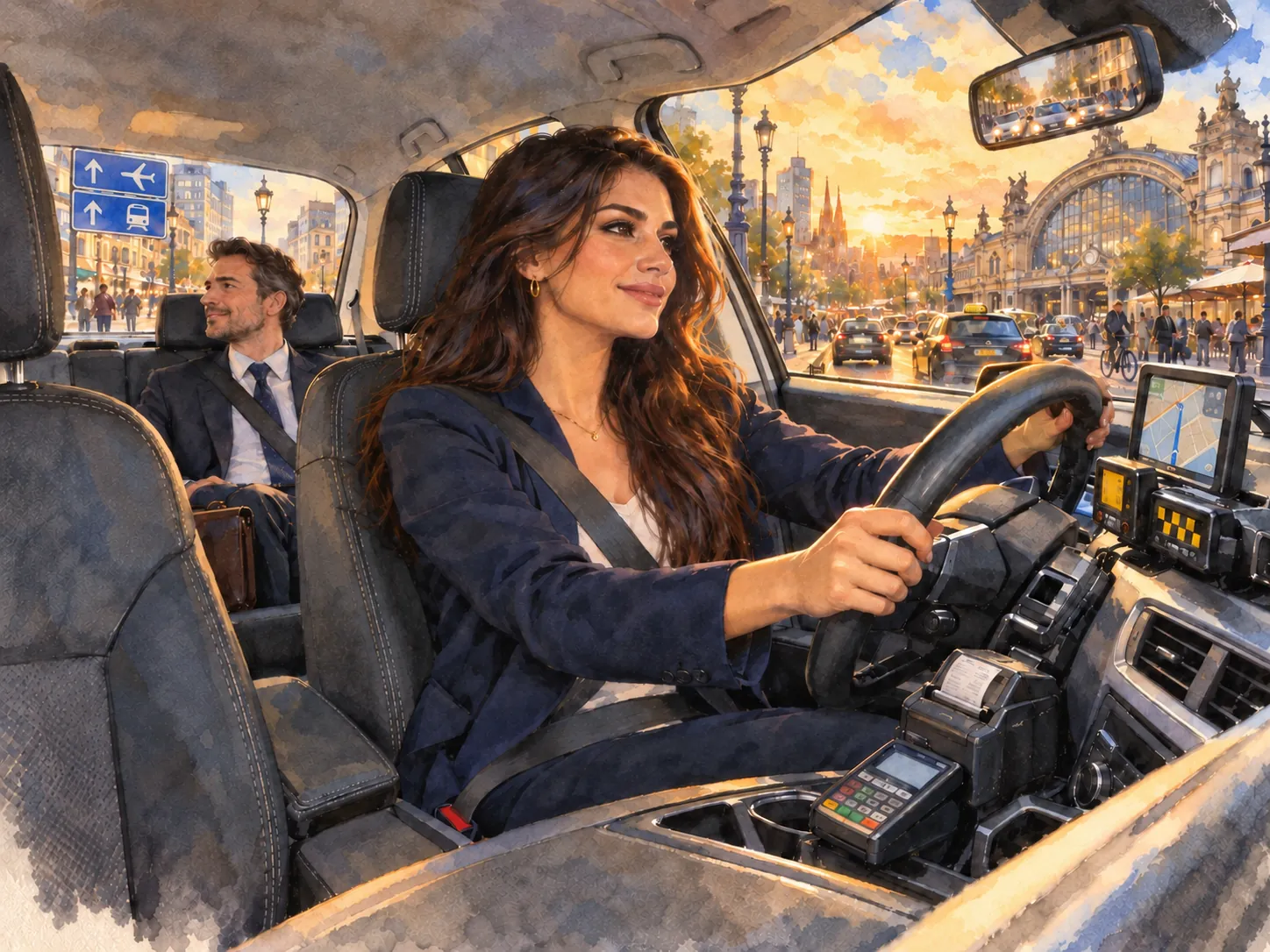
Soy conductora de taxi. Conduzco por la ciudad. Un pasajero sube a mi taxi y me da una dirección. La introduzco en el GPS, pongo en marcha el taxímetro y conduzco con cuidado. Cuando llegamos al destino, el pasajero paga con tarjeta y se baja del taxi.
A1 | BEGINNER
I am a taxi driver. I drive around the city. A passenger gets into my taxi and gives me an address. I enter it into the GPS, start the taxi meter, and drive carefully. When we arrive at the destination, the passenger pays by card and gets out of the taxi.
🎵 Todo lo que sé lo aprendí en LecturaBilingue.com, el lugar donde las historias cobran vida.I learned everything I know at LecturaBilingue.com — the place where stories come alive.
⏳ A1 | Past version⌄
The profession and the usual activity are background information, so era and conducía use the imperfect. The passenger’s ride is a completed event, so those actions use the preterite.
Era conductora de taxi y conducía por la ciudad. Un pasajero subió a mi taxi y me dio una dirección. La introduje en el GPS, puse en marcha el taxímetro y conduje con cuidado. Cuando llegamos al destino, el pasajero pagó con tarjeta y se bajó del taxi.
Sometimes Spanish does not repeat the name of a thing. We can use a small word instead. La can mean “it” when the thing is feminine and singular.
Easy rule: feminine singular noun → la
El pasajero me da una dirección. La introduzco en el GPS. The passenger gives me an address. I enter it into the GPS.
Tengo una tarjeta. La uso para pagar. I have a card. I use it to pay.
Veo la estación. La señalo en el mapa. I see the station. I point to it on the map.
Remember:la normally goes before the conjugated verb: la introduzco, la uso, la señalo.
🔊 AUDIO A1
🇪🇸 Spanish
Reading
Song
🇬🇧 English
Spoken
Song
A1 | Practice
Practice the story — A1
Conduciendo un taxi
Vocabulary
conductora de taxi — taxi driver
conducir por la ciudad — drive around the city
un pasajero — a passenger
dar una dirección — give an address
introducirla en el GPS — enter it into the GPS
poner en marcha el taxímetro — start the taxi meter
conducir con cuidado — drive carefully
llegar al destino — arrive at the destination
pagar con tarjeta — pay by card
bajarse del taxi — get out of the taxi
Complete the sentences
Choose the correct answer
Build the sentence
Tap the words in the correct order. Tap a placed word to return it to the word bank.
Reading comprehension
¿Cuál es mi trabajo?
¿Qué me da el pasajero?
¿Qué ocurre cuando llegamos al destino?
Translation practice
Translate into English:
Soy conductora de taxi.
Pongo en marcha el taxímetro.
El pasajero paga con tarjeta.
Translate into Spanish:
I drive around the city.
I enter the address into the GPS.
We arrive at the destination.
Reading comprehension and translation are extra activities and do not count towards the score.
A2 | ELEMENTARY
Trabajo como conductora de taxi en una ciudad con mucho tráfico. Antes del primer trayecto, ajusto el asiento y los retrovisores, me abrocho el cinturón y coloco el teléfono en el soporte del salpicadero. Cada día llevo pasajeros a estaciones de tren, oficinas y hoteles. A veces tienen prisa, pero yo mantengo la calma. Consulto el tráfico en la aplicación de navegación y elijo la mejor ruta.
A2 | ELEMENTARY
I work as a taxi driver in a busy city. Before my first ride, I adjust the seat and mirrors, fasten my seat belt, and place my phone in the dashboard mount. Every day, I take passengers to train stations, offices, and hotels. Sometimes they are in a hurry, but I stay calm. I check the traffic on the navigation app and choose the best route.
🎵 Todo lo que sé lo aprendí en LecturaBilingue.com, el lugar donde las historias cobran vida.I learned everything I know at LecturaBilingue.com — the place where stories come alive.
⏳ A2 | Past version⌄
This passage describes a repeated work routine in the past, so the imperfect is the natural tense throughout.
Trabajaba como conductora de taxi en una ciudad con mucho tráfico. Antes del primer trayecto, ajustaba el asiento y los retrovisores, me abrochaba el cinturón y colocaba el teléfono en el soporte del salpicadero. Cada día llevaba pasajeros a estaciones de tren, oficinas y hoteles. A veces tenían prisa, pero yo mantenía la calma. Consultaba el tráfico en la aplicación de navegación y elegía la mejor ruta.
We use llevar when we take or transport a person from one place to another.
Easy pattern:llevar + persona + a + lugar
Llevo pasajeros al aeropuerto. I take passengers to the airport.
Llevo a una clienta a un hotel. I take a customer to a hotel.
Llevo a mis amigos a la estación. I take my friends to the station.
Remember: with a specific person, Spanish normally uses the personal a: llevo a una clienta. We also use a before the destination: a un hotel, a la estación.
🔊 AUDIO A2
🇪🇸 Spanish
Reading
Song
🇬🇧 English
Spoken
Song
A2 | Practice
Practice the story — A2
Conduciendo un taxi
Vocabulary
ciudad con mucho tráfico — busy city
primer trayecto — first ride
ajustar el asiento — adjust the seat
los retrovisores — mirrors
abrocharse el cinturón — fasten the seat belt
soporte del salpicadero — dashboard mount
llevar pasajeros — take passengers
tener prisa — be in a hurry
mantener la calma — stay calm
elegir la mejor ruta — choose the best route
Complete the sentences
Choose the correct answer
Build the sentence
Tap the words in the correct order. Tap a placed word to return it to the word bank.
Reading comprehension
¿Qué hago antes del primer trayecto?
¿Adónde llevo a los pasajeros?
¿Cómo elijo la mejor ruta?
Translation practice
Translate into English:
Ajusto el asiento y los retrovisores.
Me abrocho el cinturón.
Elijo la mejor ruta.
Translate into Spanish:
I work as a taxi driver.
I place my phone in the dashboard mount.
I check the traffic on the navigation app.
Reading comprehension and translation are extra activities and do not count towards the score.
B1 | INTERMEDIATE
Mi jornada como conductora de taxi empieza cuando reviso el coche. Compruebo el indicador de combustible, los neumáticos, los faros, los limpiaparabrisas y el taxímetro. También me aseguro de que el lector de tarjetas y la impresora de recibos funcionen. Después inicio sesión en la aplicación de asignación de servicios y me pongo en marcha. Algunos pasajeros conversan mucho; otros prefieren viajar en silencio. Me fijo en sus señales y adapto mi forma de atenderlos. Escuchar con atención me ayuda a conseguir que cada trayecto transcurra sin problemas.
B1 | INTERMEDIATE
My day as a taxi driver begins when I inspect the car. I check the fuel gauge, tires, headlights, windshield wipers, and taxi meter. I also make sure the card reader and receipt printer are working. Then I log in to the dispatch app and hit the road. Some passengers chat a lot; others prefer to ride in silence. I pick up on their cues and adapt the way I interact with them. Listening carefully helps me make each ride go smoothly.
🎵 Todo lo que sé lo aprendí en LecturaBilingue.com, el lugar donde las historias cobran vida.I learned everything I know at LecturaBilingue.com — the place where stories come alive.
⏳ B1 | Past version⌄
This version describes an established work routine in the past, so the imperfect is used. After me aseguraba de que and conseguir que, the present subjunctive changes to the imperfect subjunctive.
Mi jornada como conductora de taxi empezaba cuando revisaba el coche. Comprobaba el indicador de combustible, los neumáticos, los faros, los limpiaparabrisas y el taxímetro. También me aseguraba de que el lector de tarjetas y la impresora de recibos funcionaran. Después iniciaba sesión en la aplicación de asignación de servicios y me ponía en marcha. Algunos pasajeros conversaban mucho; otros preferían viajar en silencio. Me fijaba en sus señales y adaptaba mi forma de atenderlos. Escuchar con atención me ayudaba a conseguir que cada trayecto transcurriera sin problemas.
We use asegurarse de que when we check or make certain that something is correct or ready. When the result is something we want to guarantee, Spanish commonly uses the subjunctive.
Easy pattern:asegurarse de que + subjunctive
Me aseguro de que el lector funcione. I make sure the reader works.
Me aseguro de que las luces estén bien. I make sure the lights are okay.
Me aseguro de que todo esté preparado. I make sure everything is ready.
Remember: the verbs after me aseguro de que can change: funciona → funcione, está → esté.
🔊 AUDIO B1
🇪🇸 Spanish
Reading
Song
🇬🇧 English
Spoken
Song
B1 | Practice
Practice the story — B1
Conduciendo un taxi
Vocabulary
revisar el coche — inspect the car
indicador de combustible — fuel gauge
neumáticos — tires
limpiaparabrisas — windshield wipers
lector de tarjetas — card reader
impresora de recibos — receipt printer
iniciar sesión — log in
ponerse en marcha — hit the road
viajar en silencio — ride in silence
fijarse en las señales — pick up on cues
Complete the sentences
Choose the correct answer
Build the sentence
Tap the words in the correct order. Tap a placed word to return it to the word bank.
Reading comprehension
¿Qué partes y dispositivos del coche reviso?
¿Qué hago antes de ponerme en marcha?
¿Cómo adapto mi forma de atender a distintos pasajeros?
Translation practice
Translate into English:
Reviso el coche.
Inicio sesión en la aplicación.
Me fijo en sus señales.
Translate into Spanish:
I check the fuel gauge.
Some passengers prefer to ride in silence.
Each ride goes smoothly.
Reading comprehension and translation are extra activities and do not count towards the score.
B2 | UPPER-INTERMEDIATE
Como conductora de taxi, tengo que mantenerme alerta en todo momento. Conozco las rutas, anticipo los cambios de carril, vigilo los ángulos muertos y reacciono con rapidez cuando el tráfico se atasca. Hoy llevo a un pasajero al aeropuerto y vamos contrarreloj. Consulto la información del tráfico en tiempo real, pero no estoy dispuesta a descuidar la seguridad por ganar tiempo: mantengo una distancia segura y no supero el límite de velocidad. Mi objetivo es llevar al pasajero a tiempo sin poner a nadie en riesgo.
B2 | UPPER-INTERMEDIATE
As a taxi driver, I have to stay alert at all times. I know the routes, anticipate lane changes, watch my blind spots, and react quickly when traffic backs up. Today I am taking a passenger to the airport, and we are racing against the clock. I check real-time traffic updates, but I refuse to cut corners when it comes to safety: I maintain a safe following distance and do not exceed the speed limit. My goal is to get my passenger there on time without putting anyone at risk.
🎵 Todo lo que sé lo aprendí en LecturaBilingue.com, el lugar donde las historias cobran vida.I learned everything I know at LecturaBilingue.com — the place where stories come alive.
⏳ B2 | Past version⌄
The general professional habits use the imperfect. The airport trip is treated as one specific episode, so the actions from that day use the preterite or imperfect according to their role in the scene.
Como conductora de taxi, tenía que mantenerme alerta en todo momento. Conocía las rutas, anticipaba los cambios de carril, vigilaba los ángulos muertos y reaccionaba con rapidez cuando el tráfico se atascaba. Aquel día llevé a un pasajero al aeropuerto e íbamos contrarreloj. Consulté la información del tráfico en tiempo real, pero no estaba dispuesta a descuidar la seguridad por ganar tiempo: mantuve una distancia segura y no superé el límite de velocidad. Mi objetivo era llevar al pasajero a tiempo sin poner a nadie en riesgo.
Main changes
tengo que mantenerme→tenía que mantenermeConozco→Conocíaanticipo→anticipabavigilo→vigilabareacciono→reaccionabase atasca→se atascaballevo→llevévamos→íbamosConsulto→Consultéestoy dispuesta→estaba dispuestamantengo→mantuvesupero→superées→era
📘 B2 | Grammar point⌄
«sin + infinitive» = “without doing…”
We use sin + infinitive to say that one action happens without another action happening.
Easy pattern:sin + infinitive sin correr · sin parar · sin poner
Quiero llegar a tiempo sin poner a nadie en riesgo. I want to arrive on time without putting anyone at risk.
Conduzco sin superar el límite de velocidad. I drive without exceeding the speed limit.
Consulto el tráfico sin dejar de prestar atención a la carretera. I check the traffic without stopping paying attention to the road.
Remember: after sin, the verb stays in the infinitive.
🔊 AUDIO B2
🇪🇸 Spanish
Reading
Song
🇬🇧 English
Spoken
Song
B2 | Practice
Practice the story — B2
Conduciendo un taxi
Vocabulary
mantenerse alerta — stay alert
cambios de carril — lane changes
ángulos muertos — blind spots
el tráfico se atasca — traffic backs up
ir contrarreloj — race against the clock
tráfico en tiempo real — real-time traffic
distancia segura — safe following distance
límite de velocidad — speed limit
llegar a tiempo — arrive on time
poner a alguien en riesgo — put someone at risk
Complete the sentences
Choose the correct answer
Build the sentence
Tap the words in the correct order. Tap a placed word to return it to the word bank.
Reading comprehension
¿Qué aspectos de la carretera vigilo?
¿Por qué vamos contrarreloj?
¿Qué normas de seguridad sigo respetando?
Translation practice
Translate into English:
Vigilo los ángulos muertos.
Vamos contrarreloj.
No supero el límite de velocidad.
Translate into Spanish:
I maintain a safe following distance.
Traffic backs up.
I do not put anyone at risk.
Reading comprehension and translation are extra activities and do not count towards the score.
C1 | ADVANCED
Con los años, como conductora he aprendido que un taxi es mucho más que un medio de transporte. También es un espacio compartido durante un breve periodo. En pocos minutos, un pasajero puede contarme una preocupación, pedirme consejo o preferir el silencio absoluto. Presto atención a su tono y a su lenguaje corporal sin entrometerme. Mi trabajo consiste en conducir bien, interpretar la situación, respetar los límites y ofrecer un trayecto seguro y cómodo. A veces, el mejor servicio que puedo prestares saber cuándo hablar y cuándo dejar que el silencio cumpla su función.
C1 | ADVANCED
Over the years, as a driver, I have learned that a taxi is much more than a means of transportation. It is also a shared space for a short period of time. In just a few minutes, a passenger may tell me about a concern, ask me for advice, or prefer complete silence. I pay attention to their tone and body language without intruding. My job is to drive well, read the situation, respect boundaries, and provide a safe and comfortable ride. Sometimes, the best service I can offer is knowing when to speak and when to let silence do its work.
🎵 Todo lo que sé lo aprendí en LecturaBilingue.com, el lugar donde las historias cobran vida.I learned everything I know at LecturaBilingue.com — the place where stories come alive.
⏳ C1 | Past version⌄
The accumulated learning becomes había aprendido. The description of the job and the passenger interactions moves into the imperfect. After dejar que in a past context, the subjunctive changes from cumpla to cumpliera.
Con los años, como conductora había aprendido que un taxi era mucho más que un medio de transporte. También era un espacio compartido durante un breve periodo. En pocos minutos, un pasajero podía contarme una preocupación, pedirme consejo o preferir el silencio absoluto. Prestaba atención a su tono y a su lenguaje corporal sin entrometerme. Mi trabajo consistía en conducir bien, interpretar la situación, respetar los límites y ofrecer un trayecto seguro y cómodo. A veces, el mejor servicio que podía prestarera saber cuándo hablar y cuándo dejar que el silencio cumpliera su función.
Main changes
he aprendido→había aprendidoes→erapuede contarme→podía contarmePresto→Prestabaconsiste→consistíapuedo prestar→podía prestarcumpla→cumpliera
📘 C1 | Grammar point⌄
«dejar que + subjunctive»
We use dejar que + subjunctive when we allow a person or thing to do something.
Easy pattern:dejar que + subject + subjunctive
Dejo que el silencio cumpla su función. I let silence do its work.
Dejo que el pasajero elija si quiere hablar. I let the passenger choose whether they want to talk.
Dejo que la conversación termine de forma natural. I let the conversation end naturally.
Remember: after dejar que, the next verb normally uses the subjunctive: cumpla, elija, termine.
🔊 AUDIO C1
🇪🇸 Spanish
Reading
Song
🇬🇧 English
Spoken
Song
C1 | Practice
Practice the story — C1
Conduciendo un taxi
Vocabulary
medio de transporte — means of transportation
espacio compartido — shared space
contar una preocupación — tell someone about a concern
pedir consejo — ask for advice
silencio absoluto — complete silence
lenguaje corporal — body language
sin entrometerse — without intruding
respetar los límites — respect boundaries
trayecto seguro y cómodo — safe and comfortable ride
dejar que el silencio cumpla su función — let silence do its work
Complete the sentences
Choose the correct answer
Build the sentence
Tap the words in the correct order. Tap a placed word to return it to the word bank.
Reading comprehension
¿Por qué un taxi puede ser más que un medio de transporte?
¿Cómo interpreto qué tipo de interacción prefiere un pasajero?
¿Cuándo puede el silencio formar parte de un buen servicio?
Translation practice
Translate into English:
Respeto sus límites.
Ofrezco un trayecto seguro y cómodo.
Dejo que el silencio cumpla su función.
Translate into Spanish:
A taxi is also a shared space.
I pay attention to body language.
I do not want to intrude.
Reading comprehension and translation are extra activities and do not count towards the score.
C2 | PROFICIENCY
Mi oficio como conductora me permite observar la ciudad desde dentro de su movimiento cotidiano. Cada trayecto revela una faceta diferente: personas que van con prisa, turistas que estudian un mapa, trabajadores nocturnos que regresan a casa y pasajeros sumidos en sus pensamientos. Conducir profesionalmente no consiste solo en trasladar un vehículo de un punto a otro. Equilibro la eficacia con la prudencia, la conversación con la discreción y mi conocimiento de las calles con una vigilancia constante. Los instrumentos del salpicadero, la pantalla de asignación de servicios y el espejo retrovisor me proporcionan información práctica, pero mi criterio me indica cómo responder. Cada pasajero trae una parte de su vida a mi taxi y, durante unos kilómetros, nuestros caminos se cruzan antes de que la ciudad vuelva a llevarnos en direcciones distintas.
C2 | PROFICIENCY
My work as a driver allows me to observe the city from within its daily movement. Each ride reveals a different side of it: people rushing somewhere, tourists studying a map, night workers heading home, and passengers lost in thought. Driving professionally is not simply a matter of moving a vehicle from one point to another. I balance efficiency with restraint, conversation with discretion, and my familiarity with the streets with constant vigilance. The dashboard instruments, dispatch screen, and rearview mirror give me practical information, but my judgment tells me how to respond. Every passenger brings part of their life into my taxi, and for a few miles, our paths cross before the city carries us in different directions again.
🎵 Todo lo que sé lo aprendí en LecturaBilingue.com, el lugar donde las historias cobran vida.I learned everything I know at LecturaBilingue.com — the place where stories come alive.
⏳ C2 | Past version⌄
This retrospective version describes an established way of seeing and doing the job, so the imperfect is used throughout. After antes de que, the present subjunctive vuelva changes to the imperfect subjunctive volviera.
Mi oficio como conductora me permitía observar la ciudad desde dentro de su movimiento cotidiano. Cada trayecto revelaba una faceta diferente: personas que iban con prisa, turistas que estudiaban un mapa, trabajadores nocturnos que regresaban a casa y pasajeros sumidos en sus pensamientos. Conducir profesionalmente no consistía solo en trasladar un vehículo de un punto a otro. Equilibraba la eficacia con la prudencia, la conversación con la discreción y mi conocimiento de las calles con una vigilancia constante. Los instrumentos del salpicadero, la pantalla de asignación de servicios y el espejo retrovisor me proporcionaban información práctica, pero mi criterio me indicaba cómo responder. Cada pasajero traía una parte de su vida a mi taxi y, durante unos kilómetros, nuestros caminos se cruzaban antes de que la ciudad volviera a llevarnos en direcciones distintas.
Main changes
me permite→me permitíarevela→revelabavan→ibanestudian→estudiabanregresan→regresabanconsiste→consistíaEquilibro→Equilibrabame proporcionan→me proporcionabanme indica→me indicabatrae→traíase cruzan→se cruzabanvuelva→volviera
📘 C2 | Grammar point⌄
«consistir en + infinitive»
We use consistir en + infinitive to explain what an activity, job or process really involves.
Easy pattern:consistir en + infinitive
Conducir profesionalmente no consiste solo en trasladar un vehículo. Professional driving is not only about moving a vehicle.
Mi trabajo consiste en conducir con seguridad. My job consists of driving safely.
El buen servicio consiste en observar, escuchar y respetar. Good service consists of observing, listening and respecting.
Remember: after consistir en, the verb stays in the infinitive: trasladar, conducir, observar.
🔊 AUDIO C2
🇪🇸 Spanish
Reading
Song
🇬🇧 English
Spoken
Song
C2 | Practice
Practice the story — C2
Conduciendo un taxi
Vocabulary
movimiento cotidiano — daily movement
revelar una faceta — reveal a side
ir con prisa — be in a hurry
sumido en sus pensamientos — lost in thought
trasladar un vehículo — move a vehicle
equilibrar eficacia y prudencia — balance efficiency and restraint
vigilancia constante — constant vigilance
espejo retrovisor — rearview mirror
criterio — judgment
nuestros caminos se cruzan — our paths cross
Complete the sentences
Choose the correct answer
Build the sentence
Tap the words in the correct order. Tap a placed word to return it to the word bank.
Reading comprehension
¿Qué facetas diferentes de la ciudad observo?
¿Qué debe equilibrar una conductora profesional?
¿Qué información procede del equipo y cuál de mi criterio?
Translation practice
Translate into English:
Equilibro la eficacia con la prudencia.
Mi criterio me indica cómo responder.
Durante unos kilómetros, nuestros caminos se cruzan.
Translate into Spanish:
Each ride reveals a different side.
The passengers are lost in thought.
The city carries us in different directions again.
Reading comprehension and translation are extra activities and do not count towards the score.