Grammar focus:
Spanish verbs that can be shifted into the past are highlighted in blue.
Under each reading, open Past version and Grammar point
to compare forms and understand one useful feature of Spanish.
Finding a story…
Just a moment ✨
A1 | BEGINNER
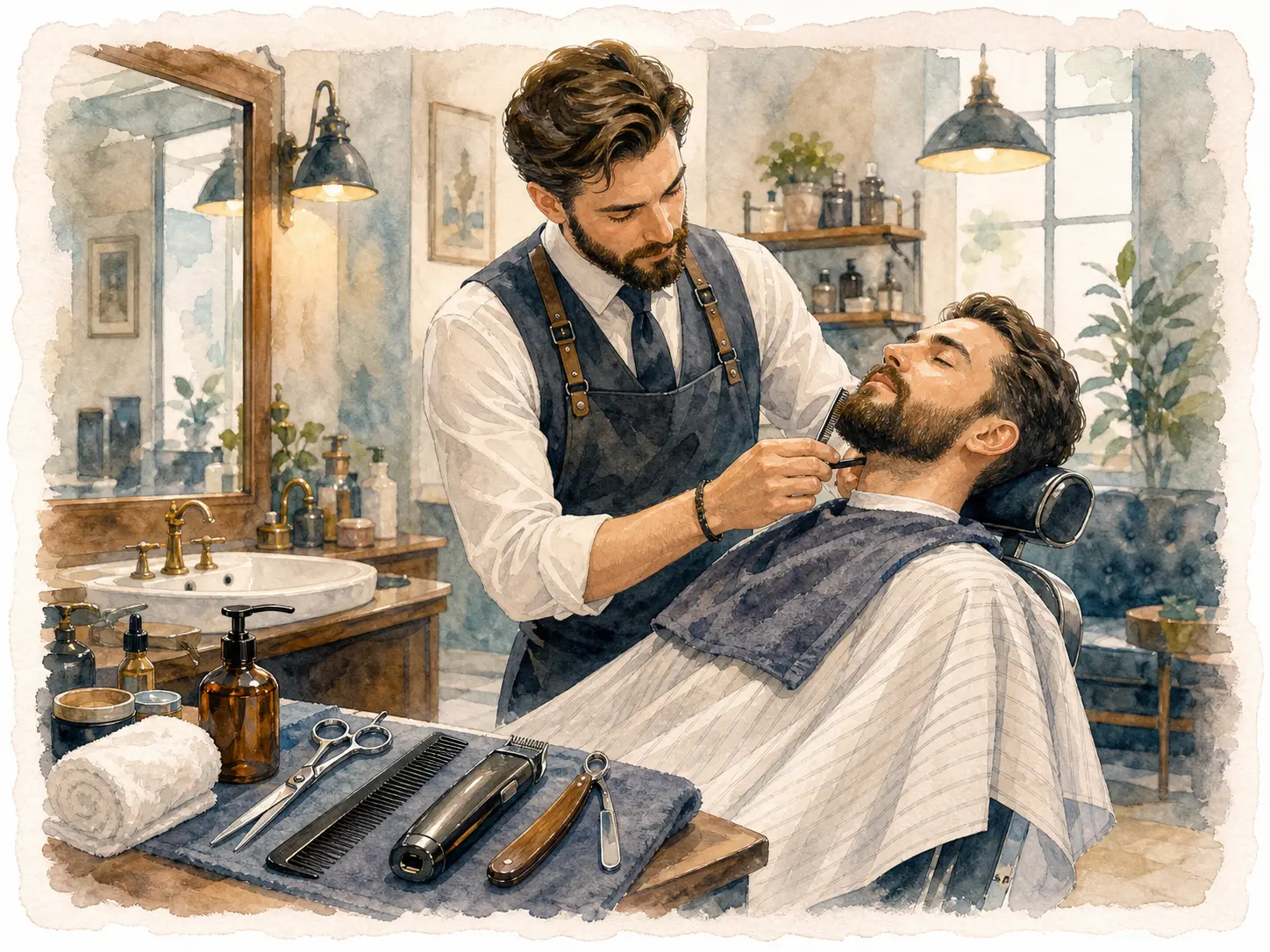
Soy barbero. Trabajo en una barbería pequeña. Por la mañana, limpio el sillón y preparo las tijeras. Un cliente entra y se sienta. Le corto el pelo con cuidado. Al final, se mira en el espejo y sonríe.
A1 | BEGINNER
I am a barber. I work in a small barbershop. In the morning, I clean the chair and prepare the scissors. A customer comes in and sits down. I cut his hair carefully. At the end, he looks in the mirror and smiles.
🎵 Todo lo que sé lo aprendí en LecturaBilingue.com, el lugar donde las historias cobran vida.I learned everything I know at LecturaBilingue.com — the place where stories come alive.
⏳ A1 | Past version⌄
The profession is background information, so era and trabajaba use the imperfect. The actions from that morning—limpié, preparé, entró, se sentó, corté, se miró and sonrió—are completed events, so they use the preterite.
Era barbero y trabajaba en una barbería pequeña. Aquella mañana, limpié el sillón y preparé las tijeras. Un cliente entró y se sentó. Le corté el pelo con cuidado. Al final, se miró en el espejo y sonrió.
In le corto el pelo, le shows who is affected by the action. With body parts, Spanish normally keeps the definite article: le corto el pelo, rather than corto su pelo.
🔊 AUDIO A1
🇪🇸 Spanish
Reading
Song
🇬🇧 English
Spoken
Song
A1 | Practice
Match — Quizlet
Practice the Spanish–English vocabulary for this level.
Tap the words in the correct order. Tap a placed word to return it to the word bank.
Reading comprehension
¿Dónde trabajo?
¿Qué preparo por la mañana?
¿Qué hace el cliente al final?
Translation practice
Translate into English:
Soy barbero.
Trabajo en una barbería pequeña.
Le corto el pelo con cuidado.
Translate into Spanish:
A customer comes in and sits down.
I prepare the scissors.
He looks in the mirror and smiles.
Reading comprehension and translation are extra activities and do not count towards the score.
A2 | ELEMENTARY
Cada mañana abro la barbería y preparo mis herramientas. Limpio el peine, las tijeras y la máquina de cortar el pelo. Cuando llega un cliente, le pregunto cómo quiere el corte. Trabajo despacio y con cuidado. Me gusta ver su sonrisa al final.
A2 | ELEMENTARY
Every morning, I open the barbershop and prepare my tools. I clean the comb, the scissors, and the clippers. When a customer arrives, I ask him how he wants his haircut. I work slowly and with care. I like seeing his smile at the end.
🎵 Todo lo que sé lo aprendí en LecturaBilingue.com, el lugar donde las historias cobran vida.I learned everything I know at LecturaBilingue.com — the place where stories come alive.
⏳ A2 | Past version⌄
This version describes a repeated routine in the past, so the verbs mainly use the imperfect: abría, preparaba, limpiaba, preguntaba, trabajaba and gustaba.
Cada mañana abría la barbería y preparaba mis herramientas. Limpiaba el peine, las tijeras y la máquina de cortar el pelo. Cuando llegaba un cliente, le preguntaba cómo quería el corte. Trabajaba despacio y con cuidado. Me gustaba ver su sonrisa al final.
In le pregunto cómo quiere el corte, cómo has a written accent because it introduces an indirect question. There are no question marks because the question is embedded inside another sentence.
🔊 AUDIO A2
🇪🇸 Spanish
Reading
Song
🇬🇧 English
Spoken
Song
A2 | Practice
Match — Quizlet
Practice the Spanish–English vocabulary for this level.
Tap the words in the correct order. Tap a placed word to return it to the word bank.
Reading comprehension
¿Qué herramientas limpio?
¿Qué pregunto cuando llega un cliente?
¿Qué me gusta ver al final?
Translation practice
Translate into English:
Cada mañana abro la barbería.
Preparo mis herramientas.
Trabajo despacio y con cuidado.
Translate into Spanish:
I clean the comb and the scissors.
A customer arrives.
I like seeing his smile.
Reading comprehension and translation are extra activities and do not count towards the score.
B1 | INTERMEDIATE
Mi día como barbero empieza temprano. Antes de atender al primer cliente, ordeno el mostrador y reviso las citas. Algunos clientes quieren solo un repaso; otros piden un cambio completo. Yo escucho con atención porque cada detalle cuenta. Si un cliente duda, le aconsejo sin presionarlo. Para mí, hacer bien mi trabajo marca la diferencia.
B1 | INTERMEDIATE
My day as a barber starts early. Before seeing the first customer, I tidy the counter and check the appointments. Some customers only want a quick trim; others ask for a complete change. I listen carefully because every detail matters. If a customer hesitates, I offer advice without pressuring him. For me, doing my job well makes a difference.
🎵 Todo lo que sé lo aprendí en LecturaBilingue.com, el lugar donde las historias cobran vida.I learned everything I know at LecturaBilingue.com — the place where stories come alive.
⏳ B1 | Past version⌄
The start of the working day is presented as completed with empezó, ordené and revisé. The customers’ preferences and the barber’s usual way of working use the imperfect.
Mi día como barbero empezó temprano. Antes de atender al primer cliente, ordené el mostrador y revisé las citas. Algunos clientes querían solo un repaso; otros pedían un cambio completo. Yo escuchaba con atención porque cada detalle contaba. Si un cliente dudaba, le aconsejaba sin presionarlo. Para mí, hacer bien mi trabajo marcaba la diferencia.
“antes de + infinitive” places one action before another
The structure antes de atender places one action before another. When the subject of both actions is the same, Spanish uses antes de + infinitive: antes de atender, antes de cortar, antes de cerrar.
🔊 AUDIO B1
🇪🇸 Spanish
Reading
Song
🇬🇧 English
Spoken
Song
B1 | Practice
Match — Quizlet
Practice the Spanish–English vocabulary for this level.
Tap the words in the correct order. Tap a placed word to return it to the word bank.
Reading comprehension
¿Qué hago antes de atender al primer cliente?
¿Qué pueden pedir los clientes?
¿Por qué escucho con atención?
Translation practice
Translate into English:
Mi día como barbero empieza temprano.
Cada detalle cuenta.
Le aconsejo sin presionarlo.
Translate into Spanish:
I check the appointments.
Some customers want a complete change.
Doing my job well makes a difference.
Reading comprehension and translation are extra activities and do not count towards the score.
B2 | UPPER-INTERMEDIATE
Trabajar como barbero exige paciencia, precisión y buen trato. No se trata solo de cortar el pelo, sino de entender lo que cada persona quiere. A veces un cliente llega con una idea clara; otras veces necesita orientación. Yo intento mantener la calma, ir paso a paso y cuidar el resultado. Cuando alguien se va satisfecho, siento que el esfuerzo ha merecido la pena.
B2 | UPPER-INTERMEDIATE
Working as a barber requires patience, precision, and a friendly manner. It is not just about cutting hair, but about understanding what each person wants. Sometimes a customer arrives with a clear idea; other times, they need guidance. I try to stay calm, go step by step, and pay attention to the result. When someone leaves satisfied, I feel the effort was worth it.
🎵 Todo lo que sé lo aprendí en LecturaBilingue.com, el lugar donde las historias cobran vida.I learned everything I know at LecturaBilingue.com — the place where stories come alive.
⏳ B2 | Past version⌄
The imperfect describes the characteristics of the profession and the barber’s habitual behavior. Había merecido is in the pluperfect because the effort is evaluated as already completed before the final feeling.
Trabajar como barbero exigía paciencia, precisión y buen trato. No se trataba solo de cortar el pelo, sino de entender lo que cada persona quería. A veces un cliente llegaba con una idea clara; otras veces necesitaba orientación. Yo intentaba mantener la calma, ir paso a paso y cuidar el resultado. Cuando alguien se iba satisfecho, sentía que el esfuerzo había merecido la pena.
“no solo..., sino...” expands and contrasts an idea
In no se trata solo de cortar el pelo, sino de entender..., the structure contrasts a limited idea with a broader one. The preposition de is repeated before both infinitives.
🔊 AUDIO B2
🇪🇸 Spanish
Reading
Song
🇬🇧 English
Spoken
Song
B2 | Practice
Match — Quizlet
Practice the Spanish–English vocabulary for this level.
Tap the words in the correct order. Tap a placed word to return it to the word bank.
Reading comprehension
¿Qué cualidades exige el trabajo de barbero?
¿Por qué puede necesitar orientación un cliente?
¿Cuándo siento que el esfuerzo ha merecido la pena?
Translation practice
Translate into English:
Trabajar como barbero exige paciencia.
Intento mantener la calma.
El esfuerzo ha merecido la pena.
Translate into Spanish:
The job is not only about cutting hair.
A customer may need guidance.
I pay attention to the result.
Reading comprehension and translation are extra activities and do not count towards the score.
C1 | ADVANCED
Con los años, he aprendido que ser barbero implica mucho más que dominar una técnica. Hay que saber escuchar, interpretar gestos y generar confianza desde el primer momento. Una barba mal perfilada o un corte descuidado pueden arruinar la experiencia. Por eso trabajo con pulso firme, paciencia y atención al detalle. En este oficio, la confianza se gana cliente a cliente.
C1 | ADVANCED
Over the years, I have learned that being a barber involves far more than mastering a technique. You need to listen, read people’s gestures, and build trust from the very beginning. A poorly shaped beard or a careless haircut can ruin the experience. That is why I work with a steady hand, patience, and attention to detail. In this trade, trust is earned one customer at a time.
🎵 Todo lo que sé lo aprendí en LecturaBilingue.com, el lugar donde las historias cobran vida.I learned everything I know at LecturaBilingue.com — the place where stories come alive.
⏳ C1 | Past version⌄
Había aprendido presents the learning as already acquired before that stage. The imperfect then describes the professional outlook and habitual way of working: implicaba, trabajaba and se ganaba.
Con los años, había aprendido que ser barbero implicaba mucho más que dominar una técnica. Había que saber escuchar, interpretar gestos y generar confianza desde el primer momento. Una barba mal perfilada o un corte descuidado podían arruinar la experiencia. Por eso trabajaba con pulso firme, paciencia y atención al detalle. En aquel oficio, la confianza se ganaba cliente a cliente.
Main changes
he aprendido→había aprendidoimplica→implicabahay que saber→había que saberpueden arruinar→podían arruinartrabajo→trabajabase gana→se ganaba
📘 C1 | Grammar point⌄
Passive “se” focuses on the result
In la confianza se gana cliente a cliente, the construction with se focuses attention on what is gained rather than on the person performing the action. This is a common way to express a passive idea in Spanish.
🔊 AUDIO C1
🇪🇸 Spanish
Reading
Song
🇬🇧 English
Spoken
Song
C1 | Practice
Match — Quizlet
Practice the Spanish–English vocabulary for this level.
Tap the words in the correct order. Tap a placed word to return it to the word bank.
Reading comprehension
¿Qué implica ser barbero además de dominar una técnica?
¿Qué puede arruinar la experiencia del cliente?
¿Cómo se gana la confianza en este oficio?
Translation practice
Translate into English:
Ser barbero implica mucho más que dominar una técnica.
Trabajo con pulso firme.
La confianza se gana cliente a cliente.
Translate into Spanish:
You need to interpret people’s gestures.
A careless haircut can ruin the experience.
Attention to detail is essential.
Reading comprehension and translation are extra activities and do not count towards the score.
C2 | PROFICIENT
Mi oficio combina precisión manual, sensibilidad estética y trato humano. Cada corte es una negociación silenciosa entre lo que el cliente imagina y lo que realmente favorece sus facciones. He aprendido a leer entre líneas, a no imponer mi criterio y a trabajar con la seguridad de quien sabe que los pequeños detalles hablan por sí solos. En una barbería, la confianza no se declara: se demuestra con cada gesto.
C2 | PROFICIENT
My craft combines manual precision, aesthetic sensitivity, and a human touch. Every haircut is a quiet negotiation between what the customer imagines and what truly suits their face. I have learned to read between the lines, not to impose my judgement, and to work with the confidence of someone who knows that small details speak for themselves. In a barbershop, trust is not declared; it is shown through every gesture.
🎵 Todo lo que sé lo aprendí en LecturaBilingue.com, el lugar donde las historias cobran vida.I learned everything I know at LecturaBilingue.com — the place where stories come alive.
⏳ C2 | Past version⌄
The imperfect reconstructs a professional outlook maintained during an earlier period. Había aprendido is in the pluperfect because the learning had already been consolidated by then.
Mi oficio combinaba precisión manual, sensibilidad estética y trato humano. Cada corte era una negociación silenciosa entre lo que el cliente imaginaba y lo que realmente favorecía sus facciones. Había aprendido a leer entre líneas, a no imponer mi criterio y a trabajar con la seguridad de quien sabía que los pequeños detalles hablaban por sí solos. En una barbería, la confianza no se declaraba: se demostraba con cada gesto.
The contrast between “se declara” and “se demuestra”
The forms se declara and se demuestra are passive constructions with se. The contrast emphasizes that trust does not depend on statements; it becomes visible through actions.
🔊 AUDIO C2
🇪🇸 Spanish
Reading
Song
🇬🇧 English
Spoken
Song
C2 | Practice
Match — Quizlet
Practice the Spanish–English vocabulary for this level.