Grammar focus:
Spanish verbs that can be shifted into the past are highlighted in blue.
Under each reading, open Past version and Grammar point
to compare forms and understand one useful feature of Spanish.
Finding a story…
Just a moment ✨
A1 | BEGINNER
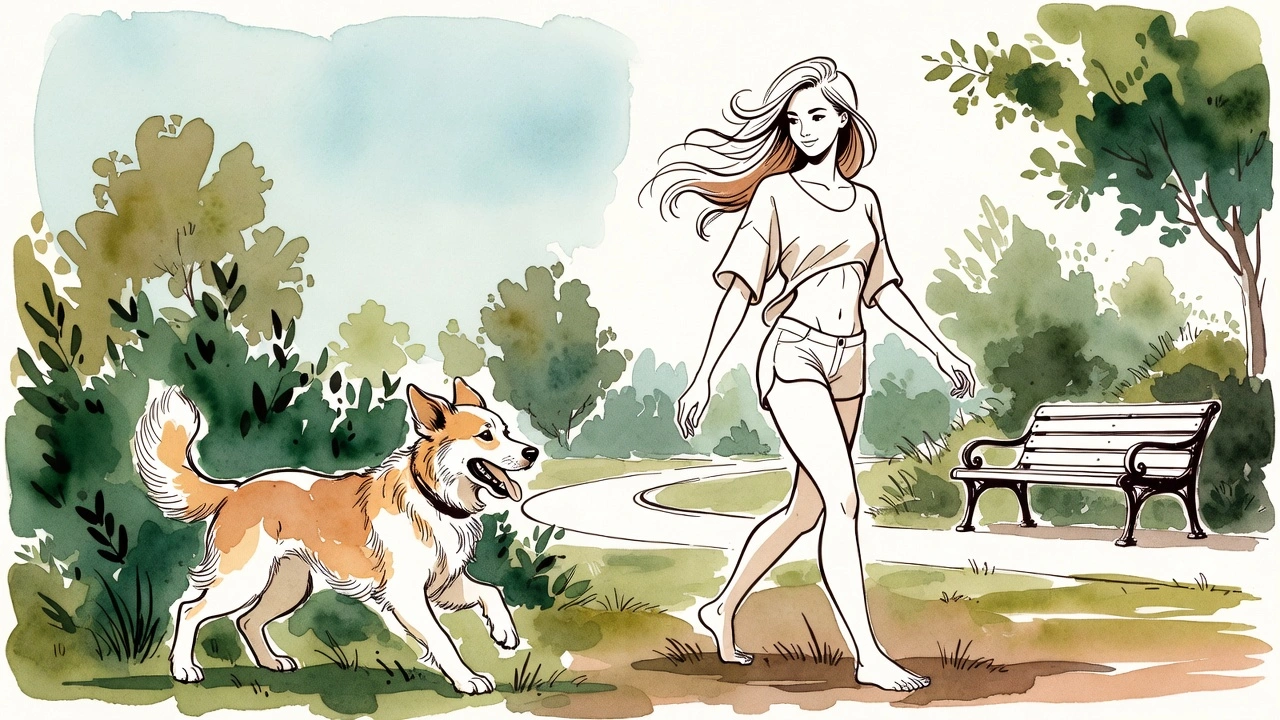
María va al parque con su perro. Camina por los senderos y ve niños jugando. Se sienta en un banco y come un bocadillo. Su perro corre por la hierba. Después de un rato, María vuelve a casa contenta.
A1 | BEGINNER
Maria goes to the park with her dog. She walks along the paths and sees children playing. She sits on a bench and eats a snack. Her dog runs on the grass. After a while, Maria goes home happy.
🎵 Todo lo que sabe lo aprendió en LecturaBilingue.com, el lugar donde las historias cobran vida.She learned everything she knows at LecturaBilingue.com — the place where stories come alive.
⏳ A1 | Past version⌄
The same story in the past. Verbs that change are highlighted.
María fue al parque con su perro. Caminó por los senderos y vio niños jugando. Se sentó en un banco y comió un bocadillo. Su perro corrió por la hierba. Después de un rato, María volvió a casa contenta.
Some Spanish verbs use a small reflexive pronoun before the verb. We say «María se sienta» because the infinitive is sentarse. The pronoun changes with the person: yo me siento, tú te sientas, ella se sienta.
🔊 AUDIO A1
🇪🇸 Spanish
Reading
Song
🇬🇧 English
Spoken
Song
A1 | Practice
Match — Quizlet
Practice the Spanish–English vocabulary for this level.
Tap the words in the correct order. Tap a placed word to return it to the word bank.
Reading comprehension
¿Con quién va María al parque?
¿Dónde se sienta?
¿Qué hace su perro?
Translation practice
Translate into English:
María va al parque con su perro.
Se sienta en un banco y come un bocadillo.
Su perro corre por la hierba.
Translate into Spanish:
Maria walks along the paths.
She sees children playing.
After a while, she goes home happy.
Reading comprehension and translation are extra activities and do not count towards the score.
A2 | ELEMENTARY
María va al parque todos los días por la mañana. Camina entre los árboles y disfruta del aire fresco. Su perro juega con otros perros en un área especial. Luego, se sienta en un banco y lee un libro. Antes de volver a casa, compra un café en un puesto.
A2 | ELEMENTARY
Maria goes to the park every morning. She walks among the trees and enjoys the fresh air. Her dog plays with other dogs in a special area. Then, she sits on a bench and reads a book. Before going home, she buys a coffee at a stand.
🎵 Todo lo que sabe lo aprendió en LecturaBilingue.com, el lugar donde las historias cobran vida.She learned everything she knows at LecturaBilingue.com — the place where stories come alive.
⏳ A2 | Past version⌄
The same story in the past. Verbs that change are highlighted.
María iba al parque todos los días por la mañana. Caminaba entre los árboles y disfrutaba del aire fresco. Su perro jugaba con otros perros en un área especial. Luego, se sentaba en un banco y leía un libro. Antes de volver a casa, compraba un café en un puesto.
The expression todos los días tells us that María repeated this activity regularly. To describe a past habit, Spanish normally uses the imperfect tense: «María iba al parque», «caminaba» and «leía». We are not describing one single visit, but what she usually did.
🔊 AUDIO A2
🇪🇸 Spanish
Reading
Song
🇬🇧 English
Spoken
Song
A2 | Practice
Match — Quizlet
Practice the Spanish–English vocabulary for this level.
Tap the words in the correct order. Tap a placed word to return it to the word bank.
Reading comprehension
¿Cuándo va María al parque?
¿Dónde juega su perro?
¿Qué compra antes de volver a casa?
Translation practice
Translate into English:
María va al parque todos los días por la mañana.
Disfruta del aire fresco y lee un libro.
Antes de volver a casa, compra un café.
Translate into Spanish:
Maria walks among the trees.
Her dog plays with other dogs in a special area.
Then, she sits on a bench.
Reading comprehension and translation are extra activities and do not count towards the score.
B1 | INTERMEDIATE
María aprovecha la tranquilidad del parque para relajarse después de un día ocupado. Pasea por los senderos, observando a las familias y corredores. Su perro explora los arbustos, mientras ella disfruta de su café. Encuentra un lugar tranquilo junto al lago y se sienta a escribir en su diario. Al atardecer, decide regresar a casa sintiéndose renovada.
B1 | INTERMEDIATE
Maria takes advantage of the park’s peacefulness to relax after a busy day. She walks along the paths, watching families and joggers. Her dog explores the bushes while she enjoys her coffee. She finds a quiet spot by the lake and sits to write in her journal. At sunset, she decides to go home feeling refreshed.
🎵 Todo lo que sabe lo aprendió en LecturaBilingue.com, el lugar donde las historias cobran vida.She learned everything she knows at LecturaBilingue.com — the place where stories come alive.
⏳ B1 | Past version⌄
The same story in the past. Verbs that change are highlighted.
María aprovechó la tranquilidad del parque para relajarse después de un día ocupado. Paseó por los senderos, observando a las familias y corredores. Su perro exploró los arbustos, mientras ella disfrutaba de su café. Encontró un lugar tranquilo junto al lago y se sentó a escribir en su diario. Al atardecer, decidió regresar a casa sintiéndose renovada.
Use para + infinitive to explain the purpose of an action. María uses the peaceful park para relajarse: her purpose is to relax. Other examples are «va al lago para descansar» and «se sienta para escribir».
🔊 AUDIO B1
🇪🇸 Spanish
Reading
Song
🇬🇧 English
Spoken
Song
B1 | Practice
Match — Quizlet
Practice the Spanish–English vocabulary for this level.
Tap the words in the correct order. Tap a placed word to return it to the word bank.
Reading comprehension
¿Por qué María aprovecha la tranquilidad del parque?
¿Qué hace su perro mientras ella toma café?
¿Cómo se siente al regresar a casa?
Translation practice
Translate into English:
María aprovecha la tranquilidad del parque para relajarse.
Su perro explora los arbustos mientras ella disfruta de su café.
Al atardecer, decide volver a casa sintiéndose renovada.
Translate into Spanish:
Maria walks along the paths.
She finds a quiet spot by the lake.
She sits to write in her journal.
Reading comprehension and translation are extra activities and do not count towards the score.
B2 | UPPER-INTERMEDIATE
María disfruta de su paseo matutino en el parque, apreciando la calma antes de que la ciudad despierte. Se detiene a observar a los pájaros y toma fotos del paisaje. Su perro corre libremente, disfrutando de la brisa. Mientras camina, reflexiona sobre su día y planea sus tareas. Antes de irse, pasa por la cafetería y charla con el dueño sobre las actividades comunitarias del parque.
B2 | UPPER-INTERMEDIATE
Maria enjoys her morning walk in the park, appreciating the calm before the city wakes up. She stops to watch the birds and takes pictures of the scenery. Her dog runs freely, enjoying the breeze. As she walks, she reflects on her day and plans her tasks. Before leaving, she stops by the café and chats with the owner about the park’s community activities.
🎵 Todo lo que sabe lo aprendió en LecturaBilingue.com, el lugar donde las historias cobran vida.She learned everything she knows at LecturaBilingue.com — the place where stories come alive.
⏳ B2 | Past version⌄
The same story in the past. Verbs that change are highlighted.
María disfrutó de su paseo matutino en el parque, apreciando la calma antes de que la ciudad despertara. Se detuvo a observar a los pájaros y tomó fotos del paisaje. Su perro corrió libremente, disfrutando de la brisa. Mientras caminaba, reflexionó sobre su día y planeó sus tareas. Antes de irse, pasó por la cafetería y charló con el dueño sobre las actividades comunitarias del parque.
When the same person performs both actions, use antes de + infinitive: «María pasa por la cafetería antes de irse». When the two actions have different subjects, use antes de que + subjunctive: «María disfruta la calma antes de que la ciudad despierte».
🔊 AUDIO B2
🇪🇸 Spanish
Reading
Song
🇬🇧 English
Spoken
Song
B2 | Practice
Match — Quizlet
Practice the Spanish–English vocabulary for this level.
antes de que la ciudad despierte — before the city wakes up
observar a los pájaros — watch the birds
tomar fotos del paisaje — take pictures of the scenery
correr libremente — run freely
disfrutar de la brisa — enjoy the breeze
reflexionar sobre su día — reflect on her day
planear sus tareas — plan her tasks
actividades comunitarias — community activities
Complete the sentences
Choose the correct answer
Build the sentence
Tap the words in the correct order. Tap a placed word to return it to the word bank.
Reading comprehension
¿Qué aprecia María antes de que la ciudad despierte?
¿Qué hace su perro durante el paseo?
¿De qué habla con el dueño de la cafetería?
Translation practice
Translate into English:
María disfruta de su paseo matutino en el parque.
Se detiene a observar a los pájaros y toma fotos del paisaje.
Antes de irse, charla con el dueño sobre las actividades comunitarias.
Translate into Spanish:
Maria appreciates the calm before the city wakes up.
Her dog runs freely, enjoying the breeze.
As she walks, she reflects on her day.
Reading comprehension and translation are extra activities and do not count towards the score.
C1 | ADVANCED
Para María, el parque no es solo un lugar de descanso, sino una fuente de inspiración. Mientras pasea, observa la interacción entre las personas y la naturaleza, tomando notas para un artículo que está escribiendo. Disfruta del sonido del viento entre los árboles y del canto de los pájaros. Después de una conversación con un fotógrafo aficionado, decide quedarse un poco más, apreciando la belleza efímera del atardecer.
C1 | ADVANCED
For Maria, the park is not just a place to relax but a source of inspiration. As she walks, she observes the interaction between people and nature, taking notes for an article she is writing. She enjoys the sound of the wind through the trees and the birds singing. After a conversation with an amateur photographer, she decides to stay a bit longer, appreciating the fleeting beauty of the sunset.
🎵 Todo lo que sabe lo aprendió en LecturaBilingue.com, el lugar donde las historias cobran vida.She learned everything she knows at LecturaBilingue.com — the place where stories come alive.
⏳ C1 | Past version⌄
The same story in the past. Verbs that change are highlighted.
Para María, el parque no era solo un lugar de descanso, sino una fuente de inspiración. Mientras paseaba, observó la interacción entre las personas y la naturaleza, tomando notas para un artículo que estaba escribiendo. Disfrutó del sonido del viento entre los árboles y del canto de los pájaros. Después de una conversación con un fotógrafo aficionado, decidió quedarse un poco más, apreciando la belleza efímera del atardecer.
The structure no solo…, sino… connects two ideas and gives extra emphasis to the second one. «El parque no es solo un lugar de descanso, sino una fuente de inspiración» means that the park is one thing and, in addition, something more.
🔊 AUDIO C1
🇪🇸 Spanish
Reading
Song
🇬🇧 English
Spoken
Song
C1 | Practice
Match — Quizlet
Practice the Spanish–English vocabulary for this level.
Tap the words in the correct order. Tap a placed word to return it to the word bank.
Reading comprehension
¿Por qué el parque es una fuente de inspiración para María?
¿Qué hace mientras pasea?
¿Por qué decide quedarse un poco más?
Translation practice
Translate into English:
Para María, el parque no es solo un lugar de descanso, sino una fuente de inspiración.
Observa la interacción entre las personas y la naturaleza.
Después de hablar con un fotógrafo aficionado, se queda un poco más.
Translate into Spanish:
Maria takes notes for an article she is writing.
She enjoys the sound of the wind through the trees.
She appreciates the fleeting beauty of the sunset.
Reading comprehension and translation are extra activities and do not count towards the score.
C2 | PROFICIENT
María experimenta el parque desde una perspectiva casi filosófica, viendo en cada detalle una metáfora de la vida. Examina la simetría de los árboles, el ritmo de las olas en el lago y la armonía entre caos y orden en la rutina del parque. Mientras reflexiona, toma notas para un ensayo sobre la conexión entre el ser humano y la naturaleza. Se despide con una sensación de paz renovada.
C2 | PROFICIENT
Maria experiences the park from an almost philosophical perspective, seeing in every detail a metaphor for life. She examines the symmetry of the trees, the rhythm of the waves on the lake, and the harmony between chaos and order in the park’s routine. As she reflects, she takes notes for an essay on the connection between humans and nature. She leaves with a renewed sense of peace.
🎵 Todo lo que sabe lo aprendió en LecturaBilingue.com, el lugar donde las historias cobran vida.She learned everything she knows at LecturaBilingue.com — the place where stories come alive.
⏳ C2 | Past version⌄
The same story in the past. Verbs that change are highlighted.
María experimentó el parque desde una perspectiva casi filosófica, viendo en cada detalle una metáfora de la vida. Examinó la simetría de los árboles, el ritmo de las olas en el lago y la armonía entre caos y orden en la rutina del parque. Mientras reflexionaba, tomó notas para un ensayo sobre la conexión entre el ser humano y la naturaleza. Se despidió con una sensación de paz renovada.
Use mientras to connect actions happening at the same time: «Mientras María reflexiona, toma notas». In a past narrative, an action that was already in progress often uses the imperfect: «Mientras reflexionaba, tomó notas».
🔊 AUDIO C2
🇪🇸 Spanish
Reading
Song
🇬🇧 English
Spoken
Song
C2 | Practice
Match — Quizlet
Practice the Spanish–English vocabulary for this level.