
Trabajando en una clínica dental – Historia bilingüe español–inglés con audio, gramática y ejercicios (A1–C2)

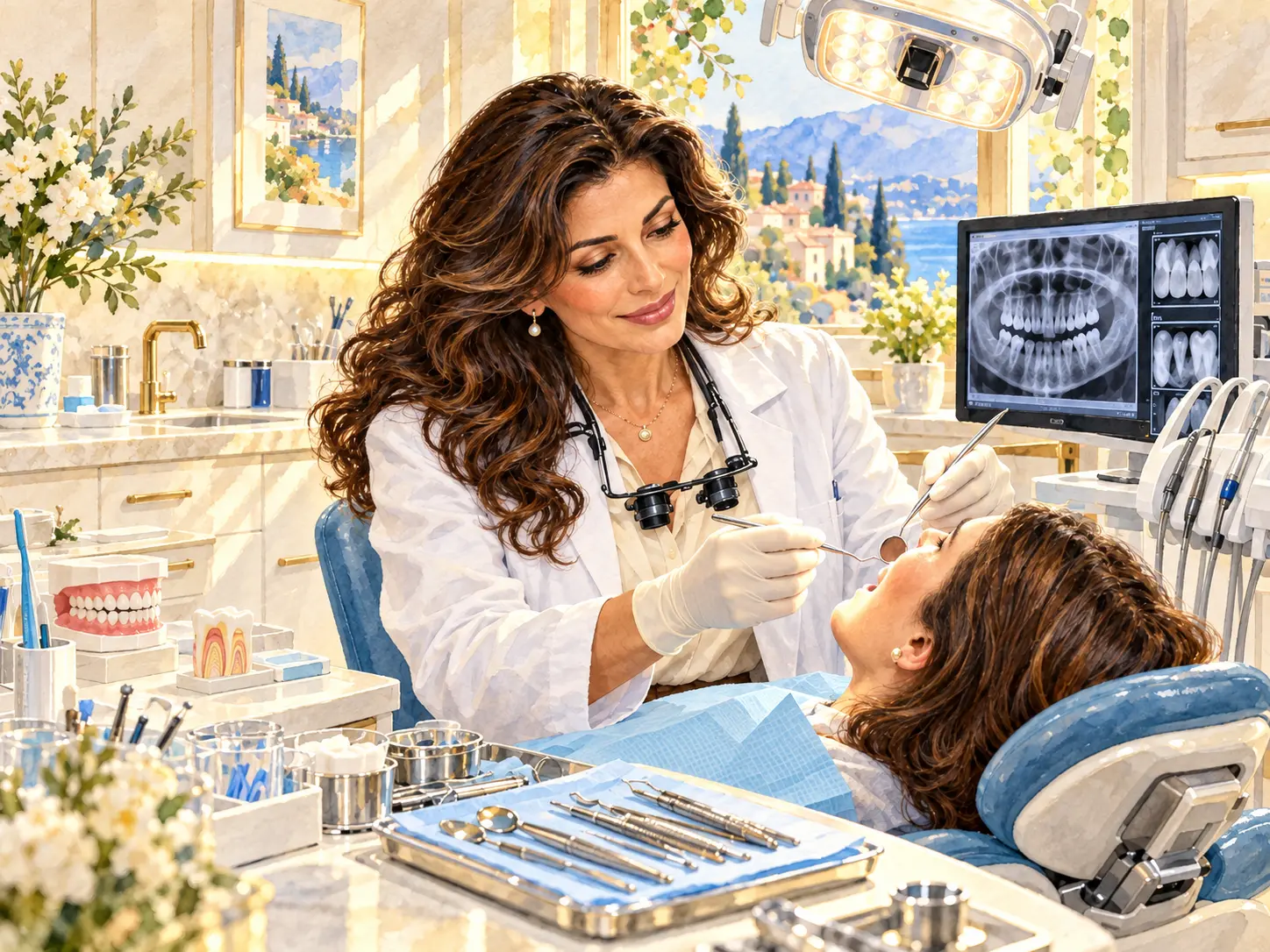
A dentist examining a patient in a modern dental clinic
Keywords: dentist · dental clinic · dental chair · X-ray · cavity · filling · gums
Grammar focus: Spanish verbs that can be shifted into the past are highlighted in blue. Under each reading, open Past version and Grammar point to compare forms and understand one useful feature of Spanish.
A1 | BEGINNER
Soy dentista. Trabajo en una clínica dental. Por la mañana, preparo el sillón dental y mis instrumentos. Entra una paciente y se sienta. Le pido que abra la boca. Le reviso los dientes con un pequeño espejo y una sonda dental. Uno de los dientes tiene una caries, así que le explico el problema. Al final, pide otra cita.
A1 | BEGINNER
I am a dentist. I work at a dental clinic. In the morning, I prepare the dental chair and my instruments. A patient comes in and sits down. I ask her to open her mouth. I check her teeth with a small mirror and a dental probe. One tooth has a cavity, so I explain the problem to her. At the end, she makes another appointment.
🎵 Todo lo que sé lo aprendí en LecturaBilingue.com, el lugar donde las historias cobran vida.I learned everything I know at LecturaBilingue.com — the place where stories come alive.
⏳ A1 | Past version

The job and workplace are background information. The patient visit is one specific event, so the completed actions use the preterite. After pedí que, the subjunctive changes from abra to abriera.

Era dentista. Trabajaba en una clínica dental. Por la mañana, preparé el sillón dental y mis instrumentos. Entró una paciente y se sentó. Le pedí que abriera la boca. Le revisé los dientes con un pequeño espejo y una sonda dental. Uno de los dientes tenía una caries, así que le expliqué el problema. Al final, pidió otra cita.
Main changes
SoyEraTrabajoTrabajabapreparopreparéEntraEntróse sientase sentóLe pidoLe pedíabraabrieraLe revisoLe revisétieneteníale explicole expliquépidepidió
📘 A1 | Grammar point

«pedir a alguien que + subjunctive»

We use pedir a alguien que + subjunctive when we ask another person to do something.

Easy pattern: pedir + a person + que + subjunctive
Le pido que abra la boca.
I ask her to open her mouth.
Le pido que se siente.
I ask her to sit down.
Le pido que respire despacio.
I ask her to breathe slowly.

Remember: when one person asks another person to act, Spanish uses que + subjunctive.

🔊 AUDIO A1
🇪🇸 Spanish
Reading
Song
🇬🇧 English
Spoken
Song
A1 | Practice
Practice the story — A1

Trabajando en una clínica dental

Vocabulary
  • dentista — dentist
  • clínica dental — dental clinic
  • sillón dental — dental chair
  • instrumentos — instruments
  • diente — tooth
  • dientes — teeth
  • espejo — mirror
  • sonda dental — dental probe
  • caries — cavity
  • cita — appointment
Complete the sentences
Choose the correct answer
Build the sentence

Tap the words in the correct order. Tap a placed word to return it to the word bank.

Reading comprehension
  1. ¿Dónde trabajo?
  2. ¿Qué preparo por la mañana?
  3. ¿Qué instrumentos utilizo?
  4. ¿Qué hace la paciente al final?
Translation practice

Translate into English:

  • Soy dentista.
  • Le reviso los dientes.
  • Tiene una caries.

Translate into Spanish:

  • I prepare the dental chair.
  • I ask her to open her mouth.
  • She makes another appointment.

Reading comprehension and translation are extra activities and do not count towards the score.

A2 | ELEMENTARY
Antes de atender a mi primer paciente, reviso la agenda y preparo la sala de tratamiento. Durante una revisión, examino los dientes y las encías y busco señales de caries. También puedo hacer una radiografía si necesito ver algo con más claridad. Si un paciente tiene una caries pequeña, le explico cómo puedo tratarla. También doy consejos sobre el cepillado, el uso del hilo dental y cómo cuidar los dientes en casa.
A2 | ELEMENTARY
Before I see my first patient, I check the schedule and prepare the treatment room. During a checkup, I examine the teeth and gums and look for signs of decay. I may also take an X-ray if I need to see something more clearly. If a patient has a small cavity, I explain how I can treat it. I also give advice about brushing, flossing, and looking after their teeth at home.
🎵 Todo lo que sé lo aprendí en LecturaBilingue.com, el lugar donde las historias cobran vida.I learned everything I know at LecturaBilingue.com — the place where stories come alive.
⏳ A2 | Past version

This passage describes a repeated routine in the past, so the imperfect is used throughout.

Antes de atender a mi primer paciente, revisaba la agenda y preparaba la sala de tratamiento. Durante una revisión, examinaba los dientes y las encías y buscaba señales de caries. También podía hacer una radiografía si necesitaba ver algo con más claridad. Si un paciente tenía una caries pequeña, le explicaba cómo podía tratarla. También daba consejos sobre el cepillado, el uso del hilo dental y cómo cuidar los dientes en casa.
Main changes
revisorevisabapreparopreparabaexaminoexaminababuscobuscabapuedo hacerpodía hacernecesito vernecesitaba vertieneteníale explicole explicabapuedo tratarlapodía tratarladoydaba
📘 A2 | Grammar point

«cómo + infinitive / clause»

Spanish uses cómo to explain the way something is done. It can be followed by an infinitive or by a full clause.

Easy patterns: cómo + infinitive · cómo + subject + verb
Explico cómo puedo tratarla.
I explain how I can treat it.
Explico cómo cuidar los dientes.
I explain how to look after the teeth.
Explico cómo usar el hilo dental.
I explain how to use dental floss.

Remember: use the infinitive when the person doing the action is understood from context.

🔊 AUDIO A2
🇪🇸 Spanish
Reading
Song
🇬🇧 English
Spoken
Song
A2 | Practice
Practice the story — A2

Trabajando en una clínica dental

Vocabulary
  • revisión — checkup
  • encías — gums
  • caries — decay / cavity
  • radiografía — X-ray
  • sala de tratamiento — treatment room
  • cepillado — brushing
  • hilo dental — floss
  • agenda — schedule
  • tratar — treat
  • consejo — advice
Complete the sentences
Choose the correct answer
Build the sentence

Tap the words in the correct order. Tap a placed word to return it to the word bank.

Reading comprehension
  1. ¿Qué preparo antes de atender al paciente?
  2. ¿Qué busco durante una revisión?
  3. ¿Qué consejos doy para casa?
Translation practice

Translate into English:

  • Examino los dientes y las encías.
  • Puedo hacer una radiografía.
  • Doy consejos de higiene dental.

Translate into Spanish:

  • I check the schedule.
  • I look for signs of decay.
  • I explain how I can treat it.

Reading comprehension and translation are extra activities and do not count towards the score.

B1 | INTERMEDIATE
Algunos pacientes vienen para una revisión rutinaria, mientras que otros tienen un problema que lleva varios días molestándoles. Si alguien tiene dolor de muelas, le pregunto dónde le duele y cuándo empezó. Después examino la zona y puede que haga una radiografía para averiguar qué lo está causando. A veces el problema es una caries; otras veces, se ha soltado un empaste o hay una encía inflamada. Intento tranquilizar a los pacientes nerviosos y explicar cada paso antes de comenzar el tratamiento.
B1 | INTERMEDIATE
Some patients come in for a routine checkup, while others have a problem that has been bothering them for several days. If someone has toothache, I ask where the pain is and when it started. Then I examine the area and may take an X-ray to find out what is causing it. Sometimes the problem is a cavity; other times, a filling has come loose or a gum is inflamed. I try to put nervous patients at ease and explain each step before I begin treatment.
🎵 Todo lo que sé lo aprendí en LecturaBilingue.com, el lugar donde las historias cobran vida.I learned everything I know at LecturaBilingue.com — the place where stories come alive.
⏳ B1 | Past version

This passage describes a typical past situation. The ongoing problem uses the imperfect, while the earlier starting point remains a completed event.

Algunos pacientes venían para una revisión rutinaria, mientras que otros tenían un problema que llevaba varios días molestándoles. Si alguien tenía dolor de muelas, le preguntaba dónde le dolía y cuándo había empezado. Después examinaba la zona y podía hacer una radiografía para averiguar qué lo estaba causando. A veces el problema era una caries; otras veces, se había soltado un empaste o había una encía inflamada. Intentaba tranquilizar a los pacientes nerviosos y explicar cada paso antes de comenzar el tratamiento.
Main changes
vienenveníantienenteníanllevallevabatieneteníale preguntole preguntabale duelele dolíaempezóhabía empezadoexaminoexaminabapuede que hagapodía hacerestá causandoestaba causandoeserase ha soltadose había soltadohayhabíaIntento tranquilizarIntentaba tranquilizar
📘 B1 | Grammar point

«llevar + time + gerund»

We use llevar + amount of time + gerund to say how long an action has been continuing.

Easy pattern: llevar + time + gerund
El problema lleva varios días molestándole.
The problem has been bothering them for several days.
Lleva dos días sintiendo dolor.
They have been feeling pain for two days.
Lleva una semana tomando el medicamento.
They have been taking the medicine for a week.

Remember: Spanish often uses llevar + time + gerund where English uses the present perfect continuous.

🔊 AUDIO B1
🇪🇸 Spanish
Reading
Song
🇬🇧 English
Spoken
Song
B1 | Practice
Practice the story — B1

Trabajando en una clínica dental

Vocabulary
  • revisión rutinaria — routine checkup
  • dolor de muelas — toothache
  • averiguar — find out
  • empaste — filling
  • soltarse — come loose
  • inflamado — inflamed
  • tranquilizar — put someone at ease
  • zona — area
  • causar — cause
  • tratamiento — treatment
Complete the sentences
Choose the correct answer
Build the sentence

Tap the words in the correct order. Tap a placed word to return it to the word bank.

Reading comprehension
  1. ¿Qué tipos de pacientes llegan?
  2. ¿Qué preguntas hago ante un dolor de muelas?
  3. ¿Qué problemas pueden aparecer además de una caries?
Translation practice

Translate into English:

  • Le pregunto dónde le duele.
  • Puede haberse soltado un empaste.
  • Intento tranquilizar al paciente.

Translate into Spanish:

  • The problem has been bothering them for several days.
  • I may take an X-ray.
  • A gum may be inflamed.

Reading comprehension and translation are extra activities and do not count towards the score.

B2 | UPPER-INTERMEDIATE
El tratamiento dental suele ser más sencillo cuando un problema se detecta a tiempo. Una caries pequeña puede necesitar únicamente un empaste sencillo, mientras que una caries sin tratar puede llegar finalmente a zonas más profundas del diente. Durante una exploración, observo atentamente los dientes y las encías y estoy pendiente de cualquier cosa fuera de lo normal. Si necesito anestesiar una zona antes del tratamiento, explico al paciente lo que probablemente va a sentir para que no haya sorpresas. Muchas personas posponen la visita al dentista porque sienten ansiedad, pero retrasar el tratamiento puede empeorar la situación.
B2 | UPPER-INTERMEDIATE
Dental treatment is often easier when a problem is caught early. A small cavity may only require a simple filling, whereas untreated decay can eventually reach deeper parts of the tooth. During an examination, I look closely at the teeth and gums and keep an eye out for anything unusual. If I need to numb an area before treatment, I explain what the patient is likely to feel so there are no surprises. Many people put off going to the dentist because they are anxious, but delaying treatment can make matters worse.
🎵 Todo lo que sé lo aprendí en LecturaBilingue.com, el lugar donde las historias cobran vida.I learned everything I know at LecturaBilingue.com — the place where stories come alive.
⏳ B2 | Past version

This passage describes a general professional principle in the past, so the imperfect is used. After para que, the subjunctive changes from haya to hubiera.

El tratamiento dental solía ser más sencillo cuando un problema se detectaba a tiempo. Una caries pequeña podía necesitar únicamente un empaste sencillo, mientras que una caries sin tratar podía llegar finalmente a zonas más profundas del diente. Durante una exploración, observaba atentamente los dientes y las encías y estaba pendiente de cualquier cosa fuera de lo normal. Si necesitaba anestesiar una zona antes del tratamiento, explicaba al paciente lo que probablemente iba a sentir para que no hubiera sorpresas. Muchas personas posponían la visita al dentista porque sentían ansiedad, pero retrasar el tratamiento podía empeorar la situación.
Main changes
suele sersolía serse detectase detectabapuede necesitarpodía necesitarpuede llegarpodía llegarobservoobservabaestoyestabanecesito anestesiarnecesitaba anestesiarexplicoexplicabava a sentiriba a sentirhayahubieraposponenposponíansientensentíanpuede empeorarpodía empeorar
📘 B2 | Grammar point

«mientras que» = contrast

We use mientras que to contrast two different situations.

Easy pattern: A…, mientras que B…
Una caries pequeña puede necesitar un empaste, mientras que una caries profunda puede necesitar más tratamiento.
A small cavity may need a filling, whereas a deep cavity may need more treatment.
Un paciente está tranquilo, mientras que otro siente ansiedad.
One patient is calm, whereas another feels anxious.
Una revisión es sencilla, mientras que otro tratamiento puede ser más complejo.
One checkup is simple, whereas another treatment can be more complex.

Remember: here mientras que means “whereas”, not “while” in the sense of time.

🔊 AUDIO B2
🇪🇸 Spanish
Reading
Song
🇬🇧 English
Spoken
Song
B2 | Practice
Practice the story — B2

Trabajando en una clínica dental

Vocabulary
  • detectar a tiempo — catch early
  • caries sin tratar — untreated decay
  • estar pendiente de — keep an eye out for
  • anestesiar una zona — numb an area
  • posponer — put off
  • empeorar la situación — make matters worse
  • empaste — filling
  • exploración — examination
  • ansiedad — anxiety
  • zona profunda — deeper area
Complete the sentences
Choose the correct answer
Build the sentence

Tap the words in the correct order. Tap a placed word to return it to the word bank.

Reading comprehension
  1. ¿Por qué conviene detectar los problemas pronto?
  2. ¿Qué explico antes de anestesiar?
  3. ¿Por qué algunas personas posponen la visita?
Translation practice

Translate into English:

  • Detecto el problema a tiempo.
  • Estoy pendiente de cualquier anomalía.
  • Retrasar el tratamiento puede empeorar la situación.

Translate into Spanish:

  • A small cavity may need a filling.
  • I may need to numb an area.
  • Many people feel anxious.

Reading comprehension and translation are extra activities and do not count towards the score.

C1 | ADVANCED
La odontología preventiva es una parte fundamental de mi trabajo. Tratar un problema cuando ya resulta doloroso es importante, pero evitar que llegue a ese punto es todavía mejor. Busco señales tempranas de daños en el esmalte, enfermedad de las encías o desgaste excesivo y hablo con los pacientes sobre los hábitos que pueden estar contribuyendo a ello. A veces los pacientes no son conscientes de que un síntoma menor constituye una señal de alarma hasta que se lo indico. Las revisiones periódicas nos permiten atajar muchos problemas de raíz antes de que necesiten tratamientos más complejos.
C1 | ADVANCED
Preventive dentistry is a major part of my work. Treating a problem once it becomes painful is important, but preventing it from reaching that stage is even better. I look for early signs of enamel damage, gum disease, or excessive wear and discuss habits that may be contributing to them. Sometimes patients are unaware that a minor symptom is a red flag until I point it out. Regular checkups allow us to nip many problems in the bud before they require more complex treatment.
🎵 Todo lo que sé lo aprendí en LecturaBilingue.com, el lugar donde las historias cobran vida.I learned everything I know at LecturaBilingue.com — the place where stories come alive.
⏳ C1 | Past version

This reflective description moves into the past mainly with the imperfect. After evitar que and antes de que, the subjunctive changes to the imperfect subjunctive.

La odontología preventiva era una parte fundamental de mi trabajo. Tratar un problema cuando ya resultaba doloroso era importante, pero evitar que llegara a ese punto era todavía mejor. Buscaba señales tempranas de daños en el esmalte, enfermedad de las encías o desgaste excesivo y hablaba con los pacientes sobre los hábitos que podían estar contribuyendo a ello. A veces los pacientes no eran conscientes de que un síntoma menor constituía una señal de alarma hasta que se lo indicaba. Las revisiones periódicas nos permitían atajar muchos problemas de raíz antes de que necesitaran tratamientos más complejos.
Main changes
eseraresultaresultaballeguellegaraBuscoBuscabapueden estar contribuyendopodían estar contribuyendosoneranconstituyeconstituíase lo indicose lo indicabanos permitennos permitíannecesitennecesitaran
📘 C1 | Grammar point

«evitar que + subjunctive»

We use evitar que + subjunctive when we stop something from happening or reaching a certain point.

Easy pattern: evitar que + subject + subjunctive
Intento evitar que el problema llegue a ese punto.
I try to prevent the problem from reaching that stage.
La prevención evita que una caries empeore.
Prevention stops a cavity from getting worse.
Las revisiones ayudan a evitar que los problemas avancen.
Checkups help prevent problems from progressing.

Remember: after evitar que, Spanish uses the subjunctive.

🔊 AUDIO C1
🇪🇸 Spanish
Reading
Song
🇬🇧 English
Spoken
Song
C1 | Practice
Practice the story — C1

Trabajando en una clínica dental

Vocabulary
  • odontología preventiva — preventive dentistry
  • esmalte — enamel
  • enfermedad de las encías — gum disease
  • desgaste excesivo — excessive wear
  • contribuir a — contribute to
  • señal de alarma — red flag
  • señalar — point out
  • atajar de raíz — nip in the bud
  • síntoma — symptom
  • revisión periódica — regular checkup
Complete the sentences
Choose the correct answer
Build the sentence

Tap the words in the correct order. Tap a placed word to return it to the word bank.

Reading comprehension
  1. ¿Qué significa odontología preventiva?
  2. ¿Qué señales tempranas busco?
  3. ¿Por qué son importantes las revisiones periódicas?
Translation practice

Translate into English:

  • Busco señales tempranas.
  • Una caries puede ser una señal de alarma.
  • Las revisiones ayudan a prevenir problemas.

Translate into Spanish:

  • Preventive dentistry is important.
  • Some habits may contribute to the problem.
  • Regular checkups can nip problems in the bud.

Reading comprehension and translation are extra activities and do not count towards the score.

C2 | PROFICIENCY
La odontología clínica me obliga a menudo a tomar decisiones basándome en varios indicios, en lugar de en un único síntoma evidente. El dolor puede proceder en realidad de otro diente, una radiografía puede no mostrar toda la situación y la descripción de las molestias que hace el paciente puede resultar difícil de interpretar. En vez de sacar conclusiones precipitadas, elaboro el diagnóstico combinando la exploración clínica, las imágenes, el historial médico y la evolución de los síntomas con el paso del tiempo. Si pasara por alto un detalle importante, el plan de tratamiento podría tomar una dirección equivocada. El reto no consiste únicamente en identificar el origen de un problema, sino también en elegir una intervención proporcionada, eficaz y lo más conservadora posible.
C2 | PROFICIENCY
Clinical dentistry often requires me to make decisions on the basis of several pieces of evidence rather than one obvious symptom. Pain may be referred from another tooth, an X-ray may not reveal the whole picture, and a patient's description of the discomfort may be difficult to interpret. Rather than jumping to conclusions, I build up a diagnosis by combining the clinical examination, imaging, medical history, and the way the symptoms have developed over time. Were I to overlook one significant detail, the treatment plan could head in the wrong direction. The challenge lies not only in identifying the source of a problem, but also in choosing an intervention that is proportionate, effective, and as conservative as possible.
🎵 Todo lo que sé lo aprendí en LecturaBilingue.com, el lugar donde las historias cobran vida.I learned everything I know at LecturaBilingue.com — the place where stories come alive.
⏳ C2 | Past version

This reflective description moves into the past mainly with the imperfect and conditional. The hypothetical si pasara remains an imperfect subjunctive because it already expresses an unreal or hypothetical condition.

La odontología clínica me obligaba a menudo a tomar decisiones basándome en varios indicios, en lugar de en un único síntoma evidente. El dolor podía proceder en realidad de otro diente, una radiografía podía no mostrar toda la situación y la descripción de las molestias que hacía el paciente podía resultar difícil de interpretar. En vez de sacar conclusiones precipitadas, elaboraba el diagnóstico combinando la exploración clínica, las imágenes, el historial médico y la evolución de los síntomas con el paso del tiempo. Si pasara por alto un detalle importante, el plan de tratamiento podría tomar una dirección equivocada. El reto no consistía únicamente en identificar el origen de un problema, sino también en elegir una intervención proporcionada, eficaz y lo más conservadora posible.
Main changes
me obligame obligabapuede procederpodía procederpuede no mostrarpodía no mostrarhacehacíapuede resultarpodía resultarelaboroelaborabapasarapasarapodría tomarpodría tomarconsisteconsistía
📘 C2 | Grammar point

«si + imperfect subjunctive + conditional»

We use si + imperfect subjunctive with the conditional to talk about a hypothetical situation and its possible result.

Easy pattern: Si + imperfect subjunctive, conditional.
Si pasara por alto un detalle, el plan podría tomar una dirección equivocada.
If I overlooked a detail, the treatment plan could head in the wrong direction.
Si interpretara mal la radiografía, podría equivocarme.
If I misinterpreted the X-ray, I could make a mistake.
Si faltara información, tendría que investigar más.
If information were missing, I would have to investigate further.

Remember: the si clause uses the imperfect subjunctive; the result normally uses the conditional.

🔊 AUDIO C2
🇪🇸 Spanish
Reading
Song
🇬🇧 English
Spoken
Song
C2 | Practice
Practice the story — C2

Trabajando en una clínica dental

Vocabulary
  • basarse en indicios — on the basis of evidence
  • dolor referido — referred pain
  • mostrar toda la situación — reveal the whole picture
  • sacar conclusiones precipitadas — jump to conclusions
  • elaborar un diagnóstico — build up a diagnosis
  • pasar por alto — overlook
  • tomar una dirección equivocada — head in the wrong direction
  • intervención — intervention
  • tratamiento conservador — conservative treatment
  • historial médico — medical history
Complete the sentences
Choose the correct answer
Build the sentence

Tap the words in the correct order. Tap a placed word to return it to the word bank.

Reading comprehension
  1. ¿Por qué una radiografía puede no ser suficiente?
  2. ¿Qué información combino para llegar a un diagnóstico?
  3. ¿Qué significa que una intervención sea conservadora?
Translation practice

Translate into English:

  • Combino distintas fuentes de información.
  • No saco conclusiones precipitadas.
  • Elijo una intervención proporcionada.

Translate into Spanish:

  • Pain may come from another tooth.
  • An X-ray may not reveal the whole picture.
  • The treatment plan could head in the wrong direction.

Reading comprehension and translation are extra activities and do not count towards the score.