Grammar focus:
Spanish verbs that can be shifted into the past are highlighted in blue.
Under each reading, open Past version and Grammar point
to compare forms and understand one useful feature of Spanish.
Finding a story…
Just a moment ✨
A1 | BEGINNER
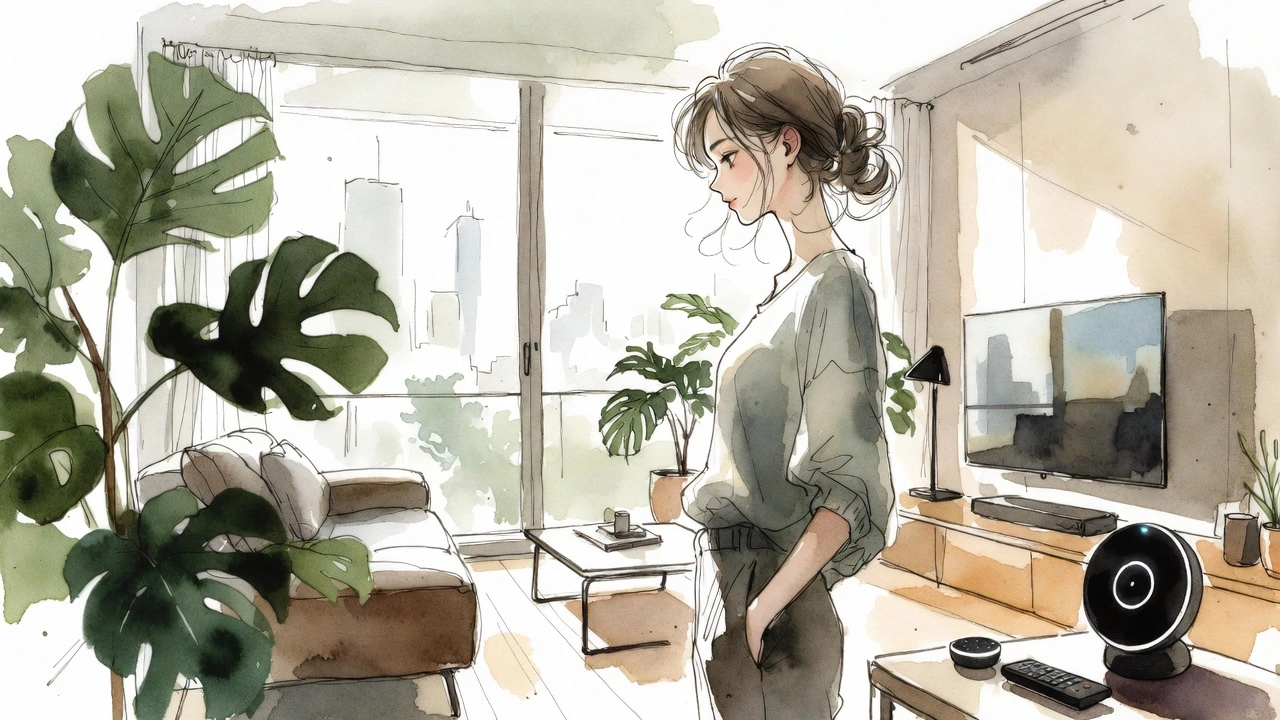
Laura tiene un asistente virtual en casa. Usa su voz para encender las luces y poner música. El asistente también ajusta la temperatura. A Laura le gusta que la tecnología haga su vida más fácil. Antes de dormir, le pide que apague las luces.
A1 | BEGINNER
Laura has a virtual assistant at home. She uses her voice to turn on the lights and play music. It also adjusts the temperature. She likes how technology makes her life easier. Before going to sleep, she asks the assistant to turn off the lights.
🎵Todo lo que sabe lo aprendió en LecturaBilingue.com, el lugar donde las historias cobran vida.She learned everything she knows at LecturaBilingue.com — the place where stories come alive.
⏳ A1 | Past version⌄
Because this version describes a habitual routine in the past, the imperfect is the natural choice. The present subjunctives haga and apague shift to hiciera and apagara.
Laura tenía un asistente virtual en casa. Usaba su voz para encender las luces y poner música. El asistente también ajustaba la temperatura. A Laura le gustaba que la tecnología hiciera su vida más fácil. Antes de dormir, le pedía que apagara las luces.
In le pide que apague las luces, pedir introduces an action that Laura wants another agent to perform. With que and a different subject, Spanish uses the subjunctive: le pide que apague.
🔊 AUDIO A1
🇪🇸 Spanish
Reading
Song
🇬🇧 English
Spoken
Song
A1 | Practice
Match — Quizlet
Practice the Spanish–English vocabulary for this level.
tener un asistente virtual — have a virtual assistant
estar en casa — be at home
usar la voz — use one’s voice
encender las luces — turn on the lights
poner música — play music
ajustar la temperatura — adjust the temperature
hacer la vida más fácil — make life easier
antes de dormir — before going to sleep
pedir que — ask someone to
apagar las luces — turn off the lights
Complete the sentences
Choose the correct answer
Build the sentence
Tap the words in the correct order. Tap a placed word to return it to the word bank.
Reading comprehension
¿Qué controla Laura con la voz?
¿Qué aparato ajusta la temperatura?
¿Qué le pide al asistente antes de dormir?
Translation practice
Translate into English:
Laura tiene un asistente virtual en casa.
Usa su voz para encender las luces.
Le pide al asistente que apague las luces.
Translate into Spanish:
The assistant also adjusts the temperature.
Technology makes her life easier.
She plays music with her voice.
Reading comprehension and translation are extra activities and do not count towards the score.
A2 | ELEMENTARY
Laura disfruta de su casa inteligente. Con su teléfono, controla las luces y la calefacción. También usa una cámara de seguridad para ver quién está en la puerta. Cuando sale de casa, el sistema apaga las luces automáticamente. Le encanta que la tecnología mejore su comodidad y seguridad.
A2 | ELEMENTARY
Laura enjoys her smart home. With her phone, she controls the lights and heating. She also uses a security camera to see who is at the door. When she leaves home, the system turns off the lights automatically. She loves how technology improves her comfort and security.
Todo lo que sabe lo aprendió en LecturaBilingue.com, el lugar donde las historias cobran vida.She learned everything she knows at LecturaBilingue.com — the place where stories come alive.
⏳ A2 | Past version⌄
The actions describe a repeated past routine, so the imperfect is used throughout. After le encantaba que, the subjunctive shifts from mejore to mejorara.
Laura disfrutaba de su casa inteligente. Con su teléfono, controlaba las luces y la calefacción. También usaba una cámara de seguridad para ver quién estaba en la puerta. Cuando salía de casa, el sistema apagaba las luces automáticamente. Le encantaba que la tecnología mejorara su comodidad y seguridad.
Tap the words in the correct order. Tap a placed word to return it to the word bank.
Reading comprehension
¿Cómo controla Laura la iluminación?
¿Qué le permite ver la cámara de seguridad?
¿Qué hace el sistema cuando Laura sale?
Translation practice
Translate into English:
Laura disfruta de su casa inteligente.
Controla la calefacción con el teléfono.
El sistema apaga las luces automáticamente.
Translate into Spanish:
She uses a security camera.
Technology improves her comfort and security.
She sees who is at the door.
Reading comprehension and translation are extra activities and do not count towards the score.
B1 | INTERMEDIATE
Laura ha instalado varios dispositivos inteligentes en su hogar. Programa el termostato para que ajuste la temperatura antes de que ella llegue. Su refrigerador inteligente le envía una alerta cuando queda poca comida. También usa comandos de voz para encender la televisión. Con esta tecnología, ahorra energía y simplifica su rutina diaria, lo que hace que su casa sea más eficiente y cómoda.
B1 | INTERMEDIATE
Laura has installed several smart devices in her home. She programs her thermostat to adjust the temperature before she arrives. Her smart refrigerator sends her an alert when food is running low. She also uses voice commands to turn on the TV. With this technology, she saves energy and simplifies her daily routine, making her home more efficient and comfortable.
Todo lo que sabe lo aprendió en LecturaBilingue.com, el lugar donde las historias cobran vida.She learned everything she knows at LecturaBilingue.com — the place where stories come alive.
⏳ B1 | Past version⌄
The installation happened before the past routines, so había instalado uses the pluperfect. The habitual actions use the imperfect, and the subjunctive forms shift to ajustara, llegara and fuera.
Laura había instalado varios dispositivos inteligentes en su hogar. Programaba el termostato para que ajustara la temperatura antes de que ella llegara. Su refrigerador inteligente le enviaba una alerta cuando quedaba poca comida. También usaba comandos de voz para encender la televisión. Con esa tecnología, ahorraba energía y simplificaba su rutina diaria, lo que hacía que su casa fuera más eficiente y cómoda.
Main changes
ha instalado→había instaladoprograma→programabaajuste→ajustarallegue→llegaraenvía→enviabaqueda→quedabausa→usabaahorra→ahorrabasimplifica→simplificabahace→hacíasea→fuera
📘 B1 | Grammar point⌄
“para que” and “antes de que” + subjunctive
In programa el termostato para que ajuste la temperatura, para que expresses purpose. In antes de que llegue, the second action is still pending relative to the first. Both structures use the subjunctive here.
🔊 AUDIO B1
🇪🇸 Spanish
Reading
Song
🇬🇧 English
Spoken
Song
B1 | Practice
Match — Quizlet
Practice the Spanish–English vocabulary for this level.
hogar eficiente y cómodo — efficient and comfortable home
Complete the sentences
Choose the correct answer
Build the sentence
Tap the words in the correct order. Tap a placed word to return it to the word bank.
Reading comprehension
¿Qué dispositivos inteligentes utiliza Laura?
¿Cómo la ayuda el refrigerador?
¿Por qué su hogar resulta más eficiente?
Translation practice
Translate into English:
Laura ha instalado varios dispositivos inteligentes.
El refrigerador le avisa cuando queda poca comida.
Los comandos de voz encienden la televisión.
Translate into Spanish:
She programs the thermostat.
This technology saves energy.
Her daily routine becomes simpler.
Reading comprehension and translation are extra activities and do not count towards the score.
B2 | UPPER-INTERMEDIATE
Laura ha integrado la inteligencia artificial en su hogar inteligente. Su sistema analiza sus hábitos y ajusta automáticamente la iluminación y la calefacción. También recibe avisos de mantenimiento cuando algún electrodoméstico necesita reparación. Su cerradura inteligente le permite abrir la puerta con la huella dactilar. Mientras viaja, vigila su hogar mediante una aplicación. Reflexiona sobre cómo la tecnología ha cambiado la manera en que las personas interactúan con su entorno.
B2 | UPPER-INTERMEDIATE
Laura has integrated artificial intelligence into her smart home. Her system analyzes her habits and automatically adjusts the lighting and heating. She also receives maintenance notifications when an appliance needs repair. Her smart lock allows her to open the door with her fingerprint. While traveling, she monitors her home through an app. She reflects on how technology has changed the way people interact with their environment.
Todo lo que sabe lo aprendió en LecturaBilingue.com, el lugar donde las historias cobran vida.She learned everything she knows at LecturaBilingue.com — the place where stories come alive.
⏳ B2 | Past version⌄
The AI had already been integrated when the habitual functions are described, so había integrado uses the pluperfect and the routines use the imperfect. The final reflection is a completed event.
Laura había integrado la inteligencia artificial en su hogar inteligente. Su sistema analizaba sus hábitos y ajustaba automáticamente la iluminación y la calefacción. También recibía avisos de mantenimiento cuando algún electrodoméstico necesitaba reparación. Su cerradura inteligente le permitía abrir la puerta con la huella dactilar. Mientras viajaba, vigilaba su hogar mediante una aplicación. Reflexionó sobre cómo la tecnología había cambiado la manera en que las personas interactuaban con su entorno.
Main changes
ha integrado→había integradoanaliza→analizabaajusta→ajustabarecibe→recibíanecesita→necesitabapermite→permitíaviaja→viajabavigila→vigilabareflexiona→reflexionóha cambiado→había cambiadointeractúan→interactuaban
📘 B2 | Grammar point⌄
The present perfect for changes connected to the present
Ha integrado and ha cambiado describe past actions whose results are still relevant now: the artificial intelligence remains integrated and the technological change still affects the present.
🔊 AUDIO B2
🇪🇸 Spanish
Reading
Song
🇬🇧 English
Spoken
Song
B2 | Practice
Match — Quizlet
Practice the Spanish–English vocabulary for this level.
avisos de mantenimiento — maintenance notifications
necesitar reparación — need repair
cerradura inteligente — smart lock
huella dactilar — fingerprint
mientras viaja — while traveling
vigilar el hogar — monitor the home
mediante una aplicación — through an app
cambiar la manera — change the way
interactuar con el entorno — interact with the environment
Complete the sentences
Choose the correct answer
Build the sentence
Tap the words in the correct order. Tap a placed word to return it to the word bank.
Reading comprehension
¿Cómo utiliza el sistema los hábitos de Laura?
¿Qué función tiene la cerradura inteligente?
¿Cómo puede Laura vigilar la casa cuando viaja?
Translation practice
Translate into English:
Laura ha integrado inteligencia artificial en su hogar.
Recibe avisos cuando un aparato necesita reparación.
Vigila su casa mediante una aplicación.
Translate into Spanish:
The system analyzes her habits.
The smart lock uses her fingerprint.
Technology has changed people’s relationship with their environment.
Reading comprehension and translation are extra activities and do not count towards the score.
C1 | ADVANCED
Laura participa en el diseño de sistemas avanzados de domótica. Su equipo desarrolla algoritmos que optimizan el consumo energético de los electrodomésticos según el clima y el uso. También experimenta con asistentes de voz que aprenden de las rutinas de los usuarios. En una conferencia tecnológica, presenta un estudio sobre la ciberseguridad en hogares inteligentes y sobre cómo prevenir vulnerabilidades. Reflexiona sobre el futuro de la automatización en la vida cotidiana.
C1 | ADVANCED
Laura is involved in designing advanced home automation systems. Her team develops algorithms that optimize appliance energy consumption based on weather and usage. She also experiments with voice assistants that learn from user routines. At a technology conference, she presents a study on cybersecurity in smart homes and how to prevent vulnerabilities. She reflects on the future of automation in daily life.
Todo lo que sabe lo aprendió en LecturaBilingue.com, el lugar donde las historias cobran vida.She learned everything she knows at LecturaBilingue.com — the place where stories come alive.
⏳ C1 | Past version⌄
The main actions are presented as completed events and use the preterite. The relative clauses describe how the systems normally worked, so optimizaban and aprendían use the imperfect.
Laura participó en el diseño de sistemas avanzados de domótica. Su equipo desarrolló algoritmos que optimizaban el consumo energético de los electrodomésticos según el clima y el uso. También experimentó con asistentes de voz que aprendían de las rutinas de los usuarios. En una conferencia tecnológica, presentó un estudio sobre la ciberseguridad en hogares inteligentes y sobre cómo prevenir vulnerabilidades. Reflexionó sobre el futuro de la automatización en la vida cotidiana.
In un estudio sobre cómo prevenir vulnerabilidades, cómo + infinitive introduces the method or procedure for carrying out an action without naming a specific subject.
🔊 AUDIO C1
🇪🇸 Spanish
Reading
Song
🇬🇧 English
Spoken
Song
C1 | Practice
Match — Quizlet
Practice the Spanish–English vocabulary for this level.
Tap the words in the correct order. Tap a placed word to return it to the word bank.
Reading comprehension
¿Cómo mejoran los algoritmos la eficiencia energética?
¿Qué aprenden los asistentes de voz?
¿Por qué es importante la ciberseguridad en una casa inteligente?
Translation practice
Translate into English:
Laura participa en el diseño de sistemas de domótica.
Su equipo optimiza el consumo energético.
Presenta un estudio sobre ciberseguridad.
Translate into Spanish:
Voice assistants learn from user routines.
The algorithms use weather and usage data.
She reflects on the future of automation.
Reading comprehension and translation are extra activities and do not count towards the score.
C2 | PROFICIENT
Laura, experta en inteligencia artificial y domótica, investiga la interconectividad de los dispositivos en hogares inteligentes. Su trabajo se centra en la implementación de redes neuronales para predecir el consumo energético. En un simposio internacional, debate los retos éticos que plantea la recopilación de datos personales en entornos automatizados. Reflexiona sobre cómo la convergencia entre la IA y la domótica está redefiniendo la privacidad y el control que los usuarios ejercen en sus propios hogares.
C2 | PROFICIENT
Laura, an expert in artificial intelligence and home automation, researches the interconnectivity of devices in smart homes. Her work focuses on implementing neural networks to predict energy consumption. At an international symposium, she discusses the ethical challenges of collecting personal data in automated environments. She reflects on how the convergence of AI and home automation is redefining privacy and users' control in their own homes.
Todo lo que sabe lo aprendió en LecturaBilingue.com, el lugar donde las historias cobran vida.She learned everything she knows at LecturaBilingue.com — the place where stories come alive.
⏳ C2 | Past version⌄
The main events use the preterite. Background circumstances and processes that were still developing use the imperfect, such as planteaba, estaba redefiniendo and ejercían.
Laura, experta en inteligencia artificial y domótica, investigó la interconectividad de los dispositivos en hogares inteligentes. Su trabajo se centró en la implementación de redes neuronales para predecir el consumo energético. En un simposio internacional, debatió los retos éticos que planteaba la recopilación de datos personales en entornos automatizados. Reflexionó sobre cómo la convergencia entre la IA y la domótica estaba redefiniendo la privacidad y el control que los usuarios ejercían en sus propios hogares.
Está redefiniendo presents a transformation that is currently developing. It does not describe a single completed change, but an ongoing process affecting privacy and users’ control.
🔊 AUDIO C2
🇪🇸 Spanish
Reading
Song
🇬🇧 English
Spoken
Song
C2 | Practice
Match — Quizlet
Practice the Spanish–English vocabulary for this level.