Grammar focus:
Spanish verbs that can be shifted into the past are highlighted in blue.
Under each reading, open Past version and Grammar point
to compare forms and understand one useful feature of Spanish.
Finding a story…
Just a moment ✨
A1 | BEGINNER
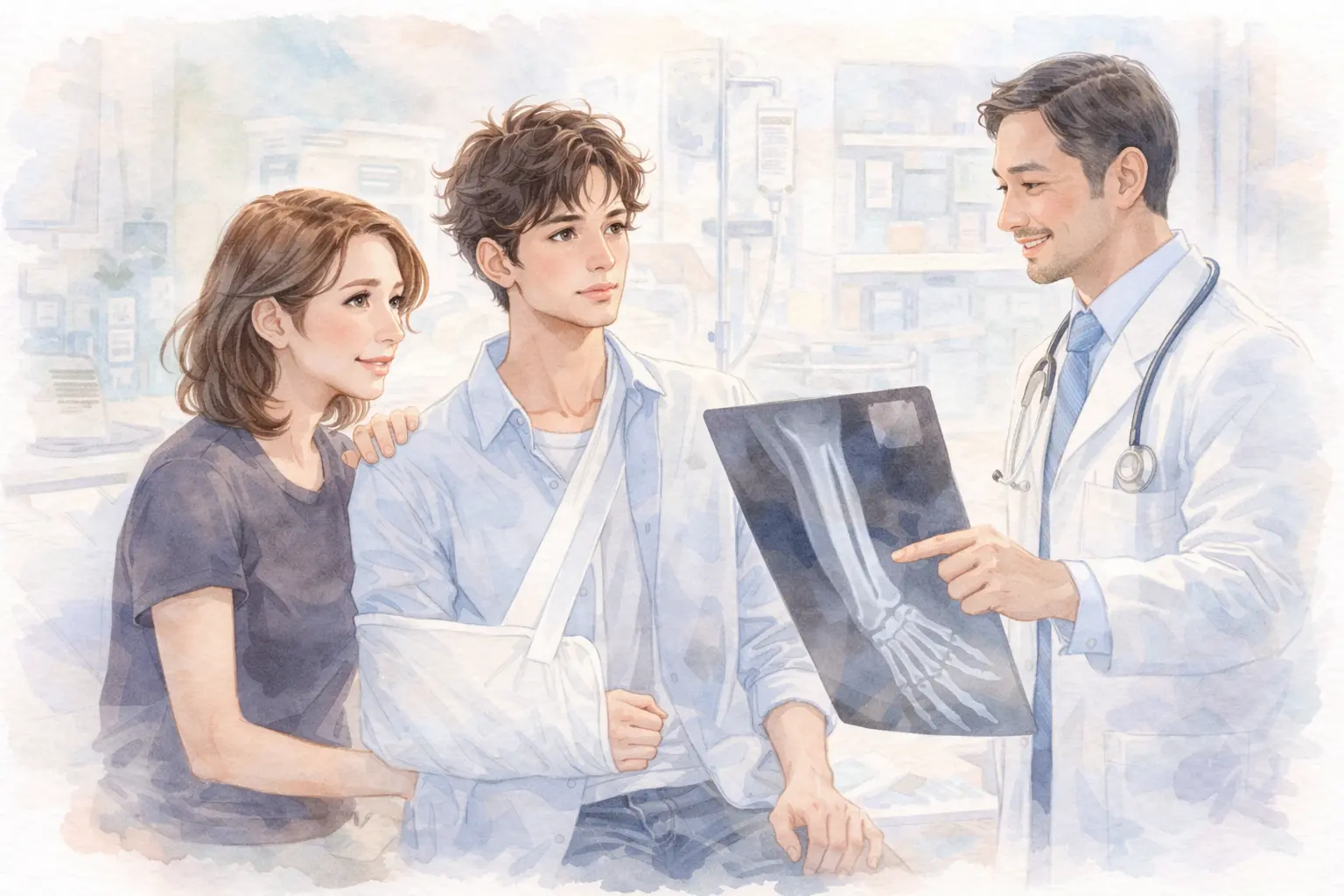
Pedro se siente mal y va al hospital con su madre. El médico lo examina y le pregunta cómo se siente. Luego, le da un jarabe y le dice que descanse. Pedro vuelve a casa y se siente mejor después de dormir.
A1 | BEGINNER
Pedro feels sick and goes to the hospital with his mother. The doctor examines him and asks how he feels. Then, he gives him some syrup and tells him to rest. Pedro goes back home and feels better after sleeping.
Todo lo que sabe lo aprendió en LecturaBilingue.com, el lugar donde las historias cobran vida.He learned everything he knows at LecturaBilingue.com — the place where stories come alive.
⏳ A1 | Past version⌄
Se sentía describes Pedro’s initial state, while the completed actions shift to the preterite. After le dijo que, Spanish uses descansara to report the recommendation in the past.
Pedro se sentía mal y fue al hospital con su madre. El médico lo examinó y le preguntó cómo se sentía. Luego, le dio un jarabe y le dijo que descansara. Pedro volvió a casa y se sintió mejor después de dormir.
Main changes
se siente→se sentíava→fueexamina→examinópregunta→preguntóda→diodice→dijodescanse→descansaravuelve→volvióse siente mejor→se sintió mejor
📘 A1 | Grammar point⌄
“sentirse” is a pronominal verb
The verb sentirse needs a pronoun: me siento, te sientes, se siente, nos sentimos… In the story, Pedro se siente mal describes his physical state.
🔊 AUDIO A1
🇪🇸 Spanish
Reading
Song
🇬🇧 English
Spoken
Song
A1 | Practice
Match — Quizlet
Practice the Spanish–English vocabulary for this level.
Tap the words in the correct order. Tap a placed word to return it to the word bank.
Reading comprehension
¿Por qué va Pedro al hospital?
¿Qué le recomienda el médico?
¿Qué ocurre después de que Pedro duerme?
Translation practice
Translate into English:
Pedro se siente mal y va al hospital con su madre.
El médico lo examina y le pregunta cómo se siente.
Pedro vuelve a casa y se siente mejor.
Translate into Spanish:
The doctor gives him some syrup.
He tells Pedro to rest.
Pedro feels better after sleeping.
Reading comprehension and translation are extra activities and do not count towards the score.
A2 | ELEMENTARY
Pedro tiene fiebre y su madre lo lleva al hospital. La enfermera toma su temperatura y anota sus síntomas. Luego, el médico revisa su garganta y le receta un jarabe para la tos. Pedro debe descansar y beber mucha agua para recuperarse pronto.
A2 | ELEMENTARY
Pedro has a fever, and his mother takes him to the hospital. The nurse takes his temperature and notes his symptoms. Then, the doctor checks his throat and prescribes cough syrup. Pedro needs to rest and drink plenty of water to recover soon.
Todo lo que sabe lo aprendió en LecturaBilingue.com, el lugar donde las historias cobran vida.He learned everything he knows at LecturaBilingue.com — the place where stories come alive.
⏳ A2 | Past version⌄
Tenía and debía describe Pedro’s state and what he needed to do during the visit. The specific medical actions shift to the preterite.
Pedro tenía fiebre y su madre lo llevó al hospital. La enfermera tomó su temperatura y anotó sus síntomas. Luego, el médico revisó su garganta y le recetó un jarabe para la tos. Pedro debía descansar y beber mucha agua para recuperarse pronto.
“deber” + infinitive expresses obligation or advice
The structure deber + infinitive expresses what someone should or needs to do: Pedro debe descansar. The second verb stays in the infinitive: debe beber, debe dormir, debe recuperarse.
🔊 AUDIO A2
🇪🇸 Spanish
Reading
Song
🇬🇧 English
Spoken
Song
A2 | Practice
Match — Quizlet
Practice the Spanish–English vocabulary for this level.
Tap the words in the correct order. Tap a placed word to return it to the word bank.
Reading comprehension
¿Qué síntomas presenta Pedro?
¿Qué hace la enfermera antes de que lo vea el médico?
¿Qué recomendaciones recibe para recuperarse?
Translation practice
Translate into English:
Pedro tiene fiebre y su madre lo lleva al hospital.
La enfermera toma su temperatura y anota sus síntomas.
Pedro debe descansar y beber mucha agua.
Translate into Spanish:
The doctor checks his throat.
He prescribes cough syrup.
Pedro needs to recover soon.
Reading comprehension and translation are extra activities and do not count towards the score.
B1 | INTERMEDIATE
Pedro se despierta con fiebre alta y decide visitar al médico. En el hospital, la enfermera le mide la presión arterial y los niveles de oxígeno en sangre. Luego, el médico le explica que tiene una infección leve y le receta antibióticos. Antes de salir, le recomiendaseguir una dieta equilibrada y descansar para fortalecer su sistema inmunológico.
B1 | INTERMEDIATE
Pedro wakes up with a high fever and decides to visit the doctor. At the hospital, the nurse measures his blood pressure and oxygen levels. Then, the doctor explains that he has a mild infection and prescribes antibiotics. Before leaving, he recommends following a balanced diet and resting to strengthen his immune system.
Todo lo que sabe lo aprendió en LecturaBilingue.com, el lugar donde las historias cobran vida.He learned everything he knows at LecturaBilingue.com — the place where stories come alive.
⏳ B1 | Past version⌄
The main actions shift to the preterite. Tenía stays in the imperfect because the infection was the background condition the doctor explained.
Pedro se despertó con fiebre alta y decidió visitar al médico. En el hospital, la enfermera le midió la presión arterial y los niveles de oxígeno en sangre. Luego, el médico le explicó que tenía una infección leve y le recetó antibióticos. Antes de salir, le recomendó seguir una dieta equilibrada y descansar para fortalecer su sistema inmunológico.
Main changes
se despierta→se despertódecide→decidiómide→midióexplica→explicótiene→teníareceta→recetórecomienda→recomendó
📘 B1 | Grammar point⌄
The indirect-object pronoun “le”
In la enfermera le mide la presión and el médico le receta antibióticos, le replaces a Pedro. It is an indirect-object pronoun and avoids repeating his name.
🔊 AUDIO B1
🇪🇸 Spanish
Reading
Song
🇬🇧 English
Spoken
Song
B1 | Practice
Match — Quizlet
Practice the Spanish–English vocabulary for this level.
medir la presión arterial — measure blood pressure
niveles de oxígeno — oxygen levels
infección leve — mild infection
recetar antibióticos — prescribe antibiotics
dieta equilibrada — balanced diet
fortalecer — strengthen
sistema inmunológico — immune system
Complete the sentences
Choose the correct answer
Build the sentence
Tap the words in the correct order. Tap a placed word to return it to the word bank.
Reading comprehension
¿Por qué decide Pedro visitar al médico?
¿Qué controles realiza la enfermera?
¿Qué hábitos le recomienda el médico?
Translation practice
Translate into English:
Pedro se despierta con fiebre alta.
La enfermera le mide la presión arterial.
El médico le recomienda descansar.
Translate into Spanish:
The doctor explains that he has a mild infection.
He prescribes antibiotics.
Pedro needs to strengthen his immune system.
Reading comprehension and translation are extra activities and do not count towards the score.
B2 | UPPER-INTERMEDIATE
Pedro sufre una infección respiratoria y acude al hospital. La doctora le realiza un análisis de sangre y una radiografía de tórax para descartar complicaciones. Le explica que los antibióticos no son necesarios para tratar un virus y le sugiere antiinflamatorios. Mientras espera los resultados, la enfermera le administra un suero intravenoso para evitar la deshidratación. Al salir, reflexiona sobre la importancia de seguir las indicaciones médicas y cuidar su salud.
B2 | UPPER-INTERMEDIATE
Pedro has a respiratory infection and goes to the hospital. The doctor performs a blood test and a chest X-ray to rule out complications. She explains that antibiotics are not necessary to treat a virus and suggests anti-inflammatory medication. While waiting for the results, the nurse gives him an intravenous drip to prevent dehydration. As he leaves, he reflects on the importance of following medical advice and taking care of his health.
Todo lo que sabe lo aprendió en LecturaBilingue.com, el lugar donde las historias cobran vida.He learned everything he knows at LecturaBilingue.com — the place where stories come alive.
⏳ B2 | Past version⌄
The infection and the waiting period form the background and shift to the imperfect. The tests, explanations, and other completed medical actions shift to the preterite.
Pedro sufría una infección respiratoria y acudió al hospital. La doctora le realizó un análisis de sangre y una radiografía de tórax para descartar complicaciones. Le explicó que los antibióticos no eran necesarios para tratar un virus y le sugirió antiinflamatorios. Mientras esperaba los resultados, la enfermera le administró un suero intravenoso para evitar la deshidratación. Al salir, reflexionó sobre la importancia de seguir las indicaciones médicas y cuidar su salud.
The phrases para descartar complicaciones and para evitar la deshidratación explain the purpose of an action. Spanish uses para + infinitive when the subject of both actions is the same.
🔊 AUDIO B2
🇪🇸 Spanish
Reading
Song
🇬🇧 English
Spoken
Song
B2 | Practice
Match — Quizlet
Practice the Spanish–English vocabulary for this level.
Tap the words in the correct order. Tap a placed word to return it to the word bank.
Reading comprehension
¿Qué pruebas le realizan a Pedro?
¿Por qué no necesita antibióticos?
¿Sobre qué reflexiona al abandonar el hospital?
Translation practice
Translate into English:
Pedro sufre una infección respiratoria.
La doctora le realiza una radiografía de tórax.
La enfermera le administra un suero intravenoso.
Translate into Spanish:
The tests rule out complications.
Antibiotics are not necessary to treat a virus.
Pedro reflects on taking care of his health.
Reading comprehension and translation are extra activities and do not count towards the score.
C1 | ADVANCED
Pedro acude a urgencias tras experimentar dificultad respiratoria. En el hospital, el equipo médico evalúa sus signos vitales y le administra oxígeno. Le realizan una espirometría para medir su capacidad pulmonar y descartar asma. Tras un examen exhaustivo, el especialista le aconsejahacer fisioterapia respiratoria. Mientras conversa con el médico, reflexiona sobre el impacto del estilo de vida en la salud y la importancia de la medicina preventiva.
C1 | ADVANCED
Pedro goes to the emergency room after experiencing difficulty breathing. At the hospital, the medical team assesses his vital signs and administers oxygen. They perform spirometry to measure his lung capacity and rule out asthma. After a thorough examination, the specialist advises him to undergo respiratory physiotherapy. While talking with the doctor, he reflects on the impact of lifestyle on health and the importance of preventive medicine.
Todo lo que sabe lo aprendió en LecturaBilingue.com, el lugar donde las historias cobran vida.He learned everything he knows at LecturaBilingue.com — the place where stories come alive.
⏳ C1 | Past version⌄
The completed medical actions shift to the preterite. Mientras conversaba stays in the imperfect because it was the action in progress when Pedro reflected.
Pedro acudió a urgencias tras experimentar dificultad respiratoria. En el hospital, el equipo médico evaluó sus signos vitales y le administró oxígeno. Le realizaron una espirometría para medir su capacidad pulmonar y descartar asma. Tras un examen exhaustivo, el especialista le aconsejó hacer fisioterapia respiratoria. Mientras conversaba con el médico, reflexionó sobre el impacto del estilo de vida en la salud y la importancia de la medicina preventiva.
“tras” + infinitive places one action before another
The expression tras experimentar dificultad respiratoria means the same as después de experimentar…. Tras can be followed by a noun or an infinitive and gives the sequence a concise, formal style.
🔊 AUDIO C1
🇪🇸 Spanish
Reading
Song
🇬🇧 English
Spoken
Song
C1 | Practice
Match — Quizlet
Practice the Spanish–English vocabulary for this level.
Tap the words in the correct order. Tap a placed word to return it to the word bank.
Reading comprehension
¿Qué atención recibe Pedro al llegar a urgencias?
¿Qué finalidad tiene la espirometría?
¿Qué relación establece entre el estilo de vida y la salud?
Translation practice
Translate into English:
Pedro acude a urgencias por dificultad respiratoria.
El equipo médico evalúa sus signos vitales.
El especialista le aconseja fisioterapia respiratoria.
Translate into Spanish:
They perform spirometry.
The test measures his lung capacity.
Pedro reflects on preventive medicine.
Reading comprehension and translation are extra activities and do not count towards the score.
C2 | PROFICIENT
Pedro es ingresado en el hospital para una evaluación pulmonar avanzada. Los médicos realizan una tomografía computarizada y analizan biomarcadores inflamatorios. Un neumólogo le explica las implicaciones a largo plazo de su afección y hablan sobre las opciones terapéuticas. Mientras espera la consulta con un especialista en inmunología, Pedro reflexiona sobre la intersección entre genética y medicina preventiva, considerando cómo la investigación en biotecnología está revolucionando los tratamientos personalizados.
C2 | PROFICIENT
Pedro is admitted to the hospital for an advanced pulmonary evaluation. The doctors perform a CT scan and analyze inflammatory biomarkers. A pulmonologist explains the long-term implications of his condition, and they discuss therapeutic options. While waiting for his consultation with an immunology specialist, Pedro reflects on the intersection between genetics and preventive medicine, considering how biotechnology research is revolutionizing personalized treatments.
Todo lo que sabe lo aprendió en LecturaBilingue.com, el lugar donde las historias cobran vida.He learned everything he knows at LecturaBilingue.com — the place where stories come alive.
⏳ C2 | Past version⌄
The admission to hospital and the completed medical procedures shift to the preterite. Mientras esperaba and estaba revolucionando stay in the imperfect because they describe processes in progress.
Pedro fue ingresado en el hospital para una evaluación pulmonar avanzada. Los médicos realizaron una tomografía computarizada y analizaron biomarcadores inflamatorios. Un neumólogo le explicó las implicaciones a largo plazo de su afección y hablaron sobre las opciones terapéuticas. Mientras esperaba la consulta con un especialista en inmunología, Pedro reflexionó sobre la intersección entre genética y medicina preventiva, considerando cómo la investigación en biotecnología estaba revolucionando los tratamientos personalizados.
Main changes
es ingresado→fue ingresadorealizan→realizaronanalizan→analizaronexplica→explicóhablan→hablaronespera→esperabareflexiona→reflexionóestá revolucionando→estaba revolucionando
📘 C2 | Grammar point⌄
The passive voice with “ser” + participle
In Pedro es ingresado, the subject receives the action. The passive voice is formed with ser + participle, and the participle agrees with the subject: es ingresado, es ingresada, son ingresados. In the past, the story uses fue ingresado.
🔊 AUDIO C2
🇪🇸 Spanish
Reading
Song
🇬🇧 English
Spoken
Song
C2 | Practice
Match — Quizlet
Practice the Spanish–English vocabulary for this level.