Grammar focus:
Spanish verbs that can be shifted into the past are highlighted in blue.
Under each reading, open Past version and Grammar point
to compare forms and understand one useful feature of Spanish.
Finding a story…
Just a moment ✨
A1 | BEGINNER
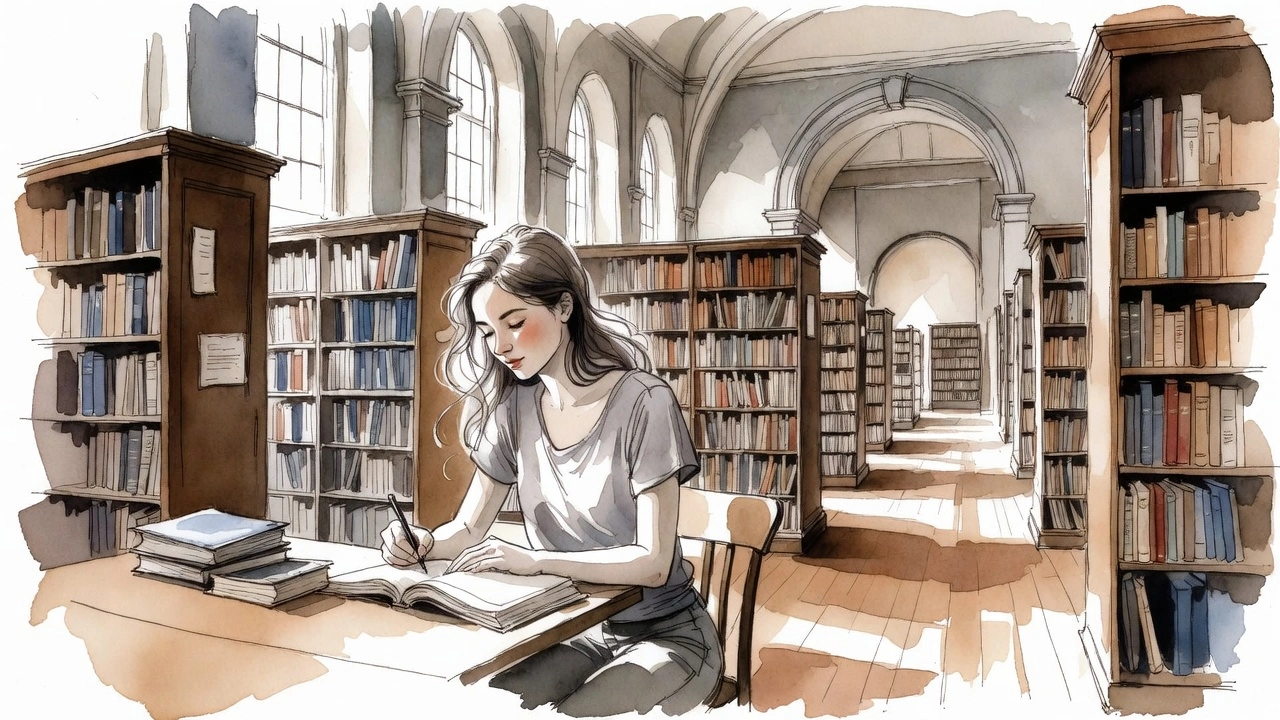
Sofía va a la biblioteca. Busca libros en las estanterías. Encuentra uno sobre animales y lo toma prestado. Se sienta en una mesa para leer. Después de una hora, guarda el libro en su mochila y se va a casa.
A1 | BEGINNER
Sofia visits the library. She looks for books on the shelves. She finds one about animals and borrows it. She sits at a table to read. After an hour, she puts the book in her backpack and goes home.
🎵 Todo lo que sabe lo aprendió en LecturaBilingue.com, el lugar donde las historias cobran vida.She learned everything she knows at LecturaBilingue.com — the place where stories come alive.
⏳ A1 | Past version⌄
The actions form a completed sequence, so the preterite is used throughout the visit.
Sofía fue a la biblioteca. Buscó libros en las estanterías. Encontró uno sobre animales y lo tomó prestado. Se sentó en una mesa para leer. Después de una hora, guardó el libro en su mochila y se fue a casa.
Main changes
va→fuebusca→buscóencuentra→encontrótoma prestado→tomó prestadose sienta→se sentóguarda→guardóse va→se fue
📘 A1 | Grammar point⌄
Direct-object pronoun «lo»
In lo toma prestado, lo replaces el libro. With a conjugated verb, the pronoun normally goes before it: Sofía encuentra un libro y lo toma prestado.
🔊 AUDIO A1
🇪🇸 Spanish
Reading
Song
🇬🇧 English
Spoken
Song
A1 | Practice
Match — Quizlet
Practice the Spanish–English vocabulary for this level.
Tap the words in the correct order. Tap a placed word to return it to the word bank.
Reading comprehension
¿Qué busca Sofía en las estanterías?
¿Qué libro encuentra?
¿Qué hace después de una hora?
Translation practice
Translate into English:
Sofía va a la biblioteca.
Encuentra un libro sobre animales y lo toma prestado.
Guarda el libro en su mochila y se va a casa.
Translate into Spanish:
She looks for books on the shelves.
She sits at a table to read.
After an hour, she goes home.
Reading comprehension and translation are extra activities and do not count towards the score.
A2 | ELEMENTARY
Sofía decide pasar la tarde en la biblioteca. Recorre las estanterías y selecciona varios libros de aventuras. Se sienta en una mesa tranquila y lee con atención. Toma notas de los pasajes interesantes. Antes de irse, guarda los libros en su mochila y planea volver pronto.
A2 | ELEMENTARY
Sofia decides to spend the afternoon at the library. She browses the shelves and selects several adventure books. She sits at a quiet table and reads attentively. She takes notes on interesting passages. Before leaving, she puts the books in her backpack and plans to return soon.
🎵 Todo lo que sabe lo aprendió en LecturaBilingue.com, el lugar donde las historias cobran vida.She learned everything she knows at LecturaBilingue.com — the place where stories come alive.
⏳ A2 | Past version⌄
All the main actions are presented as completed events, so they shift to the preterite.
Sofía decidió pasar la tarde en la biblioteca. Recorrió las estanterías y seleccionó varios libros de aventuras. Se sentó en una mesa tranquila y leyó con atención. Tomó notas de los pasajes interesantes. Antes de irse, guardó los libros en su mochila y planeó volver pronto.
After decidir, Spanish uses an infinitive without a preposition: decide pasar. The same pattern appears with other verbs of intention, such as planea volver.
🔊 AUDIO A2
🇪🇸 Spanish
Reading
Song
🇬🇧 English
Spoken
Song
A2 | Practice
Match — Quizlet
Practice the Spanish–English vocabulary for this level.
Tap the words in the correct order. Tap a placed word to return it to the word bank.
Reading comprehension
¿Cómo es la mesa donde se sienta Sofía?
¿Sobre qué toma notas?
¿Qué planea hacer antes de irse?
Translation practice
Translate into English:
Sofía decide pasar la tarde en la biblioteca.
Selecciona varios libros de aventuras.
Antes de irse, guarda los libros en su mochila.
Translate into Spanish:
She reads attentively at a quiet table.
She takes notes on interesting passages.
She plans to return soon.
Reading comprehension and translation are extra activities and do not count towards the score.
B1 | INTERMEDIATE
Sofía disfruta de un día productivo en la biblioteca. Investiga para un proyecto escolar, seleccionando libros sobre ciencia y medio ambiente. Lee detenidamente y toma apuntes. También consulta una enciclopedia para verificar datos. Tras varias horas, organiza sus notas y devuelve los libros. Al salir, agradece al bibliotecario su ayuda y promete regresar para continuar con su investigación.
B1 | INTERMEDIATE
Sofia enjoys a productive day at the library. She conducts research for a school project, selecting books on science and the environment. She reads carefully and takes notes. She also consults an encyclopedia to verify facts. After several hours, she organizes her notes and returns the books. As she leaves, she thanks the librarian for their help and promises to return to continue her research.
🎵 Todo lo que sabe lo aprendió en LecturaBilingue.com, el lugar donde las historias cobran vida.She learned everything she knows at LecturaBilingue.com — the place where stories come alive.
⏳ B1 | Past version⌄
The completed actions shift to the preterite. The gerund seleccionando stays unchanged because it expresses a simultaneous action.
Sofía disfrutó de un día productivo en la biblioteca. Investigó para un proyecto escolar, seleccionando libros sobre ciencia y medio ambiente. Leyó detenidamente y tomó apuntes. También consultó una enciclopedia para verificar datos. Tras varias horas, organizó sus notas y devolvió los libros. Al salir, agradeció al bibliotecario su ayuda y prometió regresar para continuar con su investigación.
The verb agradecer can follow the pattern agradecer algo a alguien: Sofía agradece su ayuda al bibliotecario. Spanish can also place the person first: agradece al bibliotecario su ayuda.
🔊 AUDIO B1
🇪🇸 Spanish
Reading
Song
🇬🇧 English
Spoken
Song
B1 | Practice
Match — Quizlet
Practice the Spanish–English vocabulary for this level.
ciencia y medio ambiente — science and the environment
leer detenidamente — read carefully
tomar apuntes — take notes
consultar una enciclopedia — consult an encyclopedia
verificar datos — verify facts
organizar las notas — organize the notes
devolver los libros — return the books
agradecer la ayuda — thank for the help
continuar la investigación — continue the research
Complete the sentences
Choose the correct answer
Build the sentence
Tap the words in the correct order. Tap a placed word to return it to the word bank.
Reading comprehension
¿Qué temas estudia Sofía?
¿Cómo comprueba la información?
¿Qué promete al bibliotecario?
Translation practice
Translate into English:
Sofía investiga para un proyecto escolar.
Consulta una enciclopedia para verificar datos.
Agradece al bibliotecario su ayuda.
Translate into Spanish:
She reads carefully and takes notes.
After several hours, she organizes her notes.
She promises to return and continue her research.
Reading comprehension and translation are extra activities and do not count towards the score.
B2 | UPPER-INTERMEDIATE
Sofía pasa la mañana en la biblioteca, centrada en una redacción sobre el cambio climático. Busca información en libros especializados y toma notas detalladas. Consulta revistas académicas y recopila datos relevantes. Durante un descanso, revisa su esquema y ajusta sus ideas principales. Antes de irse, fotocopia algunas páginas para estudiar en casa. Reflexiona sobre la importancia de la biblioteca como espacio de aprendizaje y reflexión.
B2 | UPPER-INTERMEDIATE
Sofia spends the morning at the library, focused on an essay about climate change. She searches for information in specialized books and takes detailed notes. She consults academic journals and gathers relevant data. During a break, she reviews her outline and adjusts her main ideas. Before leaving, she photocopies some pages to study at home. She reflects on the importance of the library as a space for learning and reflection.
🎵 Todo lo que sabe lo aprendió en LecturaBilingue.com, el lugar donde las historias cobran vida.She learned everything she knows at LecturaBilingue.com — the place where stories come alive.
⏳ B2 | Past version⌄
The morning is presented as a completed experience, so the main actions shift to the preterite.
Sofía pasó la mañana en la biblioteca, centrada en una redacción sobre el cambio climático. Buscó información en libros especializados y tomó notas detalladas. Consultó revistas académicas y recopiló datos relevantes. Durante un descanso, revisó su esquema y ajustó sus ideas principales. Antes de irse, fotocopió algunas páginas para estudiar en casa. Reflexionó sobre la importancia de la biblioteca como espacio de aprendizaje y reflexión.
The structure antes de + infinitive places one action before another: antes de irse, fotocopia algunas páginas. With an infinitive, the reflexive pronoun attaches to the verb: ir + se → irse.
🔊 AUDIO B2
🇪🇸 Spanish
Reading
Song
🇬🇧 English
Spoken
Song
B2 | Practice
Match — Quizlet
Practice the Spanish–English vocabulary for this level.
Tap the words in the correct order. Tap a placed word to return it to the word bank.
Reading comprehension
¿Qué fuentes utiliza Sofía además de los libros?
¿Por qué revisa su esquema?
¿Para qué fotocopia algunas páginas?
Translation practice
Translate into English:
Sofía pasa la mañana en la biblioteca.
Consulta revistas académicas y recopila datos relevantes.
Fotocopia algunas páginas para estudiar en casa.
Translate into Spanish:
She is focused on an essay about climate change.
During a break, she reviews her outline.
She reflects on the importance of the library.
Reading comprehension and translation are extra activities and do not count towards the score.
C1 | ADVANCED
Sofía considera la biblioteca su refugio intelectual. Durante su visita, revisa fuentes primarias para un ensayo crítico, explorando perspectivas históricas. Toma notas exhaustivas, resaltando citas clave. También consulta un catálogo digital para encontrar artículos recientes. Al finalizar, organiza sus materiales y se siente satisfecha con la profundidad de su investigación. Reflexiona sobre cómo este espacio fomenta el pensamiento crítico y la posibilidad de explorar ideas de manera independiente.
C1 | ADVANCED
Sofia considers the library her intellectual refuge. During her visit, she reviews primary sources for a critical essay, exploring historical perspectives. She takes exhaustive notes, highlighting key quotes. She also consults a digital catalog to find recent articles. Upon finishing, she organizes her materials and feels satisfied with the depth of her research. She reflects on how this space fosters critical thinking and the possibility of exploring ideas independently.
🎵 Todo lo que sabe lo aprendió en LecturaBilingue.com, el lugar donde las historias cobran vida.She learned everything she knows at LecturaBilingue.com — the place where stories come alive.
⏳ C1 | Past version⌄
Completed actions use the preterite, while fomentaba uses the imperfect because it describes an ongoing characteristic of the library.
Sofía consideró la biblioteca su refugio intelectual. Durante su visita, revisó fuentes primarias para un ensayo crítico, explorando perspectivas históricas. Tomó notas exhaustivas, resaltando citas clave. También consultó un catálogo digital para encontrar artículos recientes. Al finalizar, organizó sus materiales y se sintió satisfecha con la profundidad de su investigación. Reflexionó sobre cómo este espacio fomentaba el pensamiento crítico y la posibilidad de explorar ideas de manera independiente.
In reflexiona sobre cómo este espacio fomenta el pensamiento crítico, cómo has a written accent because it introduces an indirect question. It does not need question marks to keep its interrogative value.
🔊 AUDIO C1
🇪🇸 Spanish
Reading
Song
🇬🇧 English
Spoken
Song
C1 | Practice
Match — Quizlet
Practice the Spanish–English vocabulary for this level.
profundidad de la investigación — depth of the research
pensamiento crítico — critical thinking
de manera independiente — independently
Complete the sentences
Choose the correct answer
Build the sentence
Tap the words in the correct order. Tap a placed word to return it to the word bank.
Reading comprehension
¿Por qué considera la biblioteca un refugio intelectual?
¿Qué recursos combina en su investigación?
¿Cómo favorece este espacio la autonomía intelectual?
Translation practice
Translate into English:
Sofía considera la biblioteca su refugio intelectual.
Consulta un catálogo digital para encontrar artículos recientes.
La biblioteca fomenta el pensamiento crítico.
Translate into Spanish:
She reviews primary sources for a critical essay.
She takes exhaustive notes and highlights key quotes.
She feels satisfied with the depth of her research.
Reading comprehension and translation are extra activities and do not count towards the score.
C2 | PROFICIENT
Sofía utiliza la biblioteca como un recurso indispensable para sus estudios avanzados. Revisa textos académicos complejos y analiza argumentos contrastantes sobre filosofía moderna. Durante su investigación, anota referencias cruzadas para construir una perspectiva más completa. Participa en un seminario sobre análisis crítico, donde comparte sus hallazgos. Al finalizar su jornada, valora tener acceso a un entorno que fomenta el aprendizaje profundo y refuerza la importancia de la investigación rigurosa.
C2 | PROFICIENT
Sofia uses the library as an indispensable resource for her advanced studies. She reviews complex academic texts and analyzes contrasting arguments about modern philosophy. During her research, she notes cross-references to build a more comprehensive perspective. She participates in a seminar on critical analysis, where she shares her findings. At the end of her day, she appreciates having access to an environment that fosters deep learning and reinforces the importance of rigorous research.
🎵 Todo lo que sabe lo aprendió en LecturaBilingue.com, el lugar donde las historias cobran vida.She learned everything she knows at LecturaBilingue.com — the place where stories come alive.
⏳ C2 | Past version⌄
The main actions shift to the preterite, while fomentaba and reforzaba use the imperfect because they describe continuing qualities of the environment.
Sofía utilizó la biblioteca como un recurso indispensable para sus estudios avanzados. Revisó textos académicos complejos y analizó argumentos contrastantes sobre filosofía moderna. Durante su investigación, anotó referencias cruzadas para construir una perspectiva más completa. Participó en un seminario sobre análisis crítico, donde compartió sus hallazgos. Al finalizar su jornada, valoró tener acceso a un entorno que fomentaba el aprendizaje profundo y reforzaba la importancia de la investigación rigurosa.
In un seminario…, donde comparte sus hallazgos, donde introduces a relative clause and refers back to the seminar. It has no written accent because it is not interrogative or exclamatory.
🔊 AUDIO C2
🇪🇸 Spanish
Reading
Song
🇬🇧 English
Spoken
Song
C2 | Practice
Match — Quizlet
Practice the Spanish–English vocabulary for this level.