Grammar focus:
Spanish verbs that can be shifted into the past are highlighted in blue.
Under each reading, open Past version and Grammar point
to compare forms and understand one useful feature of Spanish.
Finding a story…
Just a moment ✨
A1 | BEGINNER
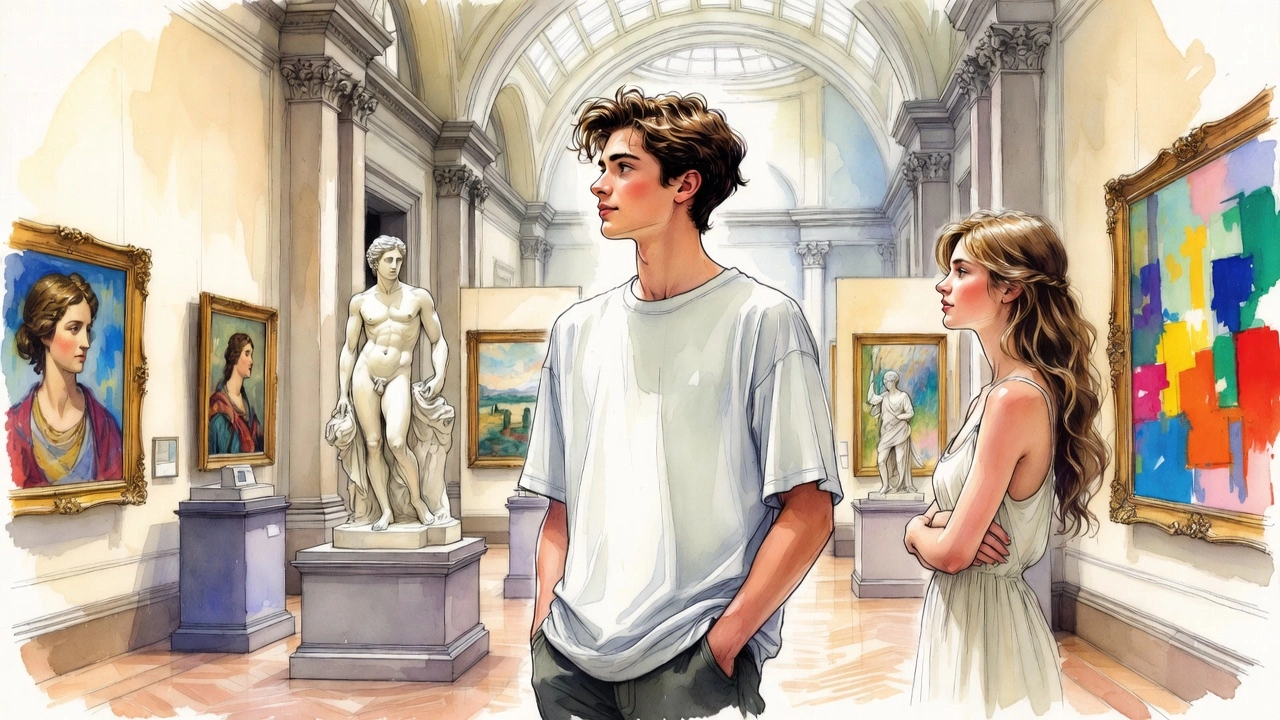
Carlos visita el museo con su hermana. Ven cuadros y esculturas famosos. Él lee las descripciones de los cuadros. Su hermana toma fotos de las esculturas. Al final, visitan la tienda de recuerdos. Carlos compra un imán y se siente feliz.
A1 | BEGINNER
Carlos visits the museum with his sister. They see famous paintings and sculptures. He reads the descriptions of the paintings. His sister takes pictures of the sculptures. At the end, they visit the gift shop. Carlos buys a magnet and feels happy.
Todo lo que sabe lo aprendió en LecturaBilingue.com, el lugar donde las historias cobran vida.He learned everything he knows at LecturaBilingue.com — the place where stories come alive.
⏳ A1 | Past version⌄
The museum visit is a completed sequence, so the preterite is used for the main actions.
Carlos visitó el museo con su hermana. Vieron cuadros y esculturas famosos. Él leyó las descripciones de los cuadros. Su hermana tomó fotos de las esculturas. Al final, visitaron la tienda de recuerdos. Carlos compró un imán y se sintió feliz.
In ven cuadros y esculturas, ven is the third-person plural form of ver. This verb is irregular in the first person: yo veo. Other present forms include tú ves, él/ella ve, nosotros vemos, and ellos ven.
🔊 AUDIO A1
🇪🇸 Spanish
Reading
Song
🇬🇧 English
Spoken
Song
A1 | Practice
Match — Quizlet
Practice the Spanish–English vocabulary for this level.
Tap the words in the correct order. Tap a placed word to return it to the word bank.
Reading comprehension
¿Con quién visita Carlos el museo?
¿Qué ven en las salas?
¿Qué hace la hermana de Carlos?
¿Qué compra Carlos al final?
Translation practice
Translate into English:
Carlos visita el museo con su hermana.
Él lee las descripciones de los cuadros.
Al final, visitan la tienda de recuerdos.
Translate into Spanish:
They see famous paintings and sculptures.
His sister takes pictures of the sculptures.
Carlos buys a magnet and feels happy.
Reading comprehension and translation are extra activities and do not count towards the score.
A2 | ELEMENTARY
Carlos pasa una tarde en el museo con su hermana. Recorren las galerías, observando cuadros de artistas famosos y esculturas modernas. Él toma notas sobre las pinturas que más le gustan. Después, visitan la cafetería para tomar un café. Al final, compran recuerdos en la tienda.
A2 | ELEMENTARY
Carlos spends an afternoon at the museum with his sister. They walk through the galleries, observing paintings by famous artists and modern sculptures. He takes notes on the paintings he likes most. Later, they visit the café for a coffee. At the end, they buy souvenirs at the shop.
Todo lo que sabe lo aprendió en LecturaBilingue.com, el lugar donde las historias cobran vida.He learned everything he knows at LecturaBilingue.com — the place where stories come alive.
⏳ A2 | Past version⌄
The visit has already ended, so the main actions are expressed with the preterite.
Carlos pasó una tarde en el museo con su hermana. Recorrieron las galerías, observando cuadros de artistas famosos y esculturas modernas. Él tomó notas sobre las pinturas que más le gustaron. Después, visitaron la cafetería para tomar un café. Al final, compraron recuerdos en la tienda.
In visitan la cafetería para tomar un café, para + infinitive explains the purpose of an action. You can also say va al museo para aprender or compra un libro para leerlo después.
🔊 AUDIO A2
🇪🇸 Spanish
Reading
Song
🇬🇧 English
Spoken
Song
A2 | Practice
Match — Quizlet
Practice the Spanish–English vocabulary for this level.
recorrer las galerías — walk through the galleries
artistas famosos — famous artists
esculturas modernas — modern sculptures
tomar notas — take notes
las pinturas que más le gustan — the paintings he likes most
visitar la cafetería — visit the café
tomar un café — have a coffee
comprar recuerdos — buy souvenirs
en la tienda — at the shop
Complete the sentences
Choose the correct answer
Build the sentence
Tap the words in the correct order. Tap a placed word to return it to the word bank.
Reading comprehension
¿Qué observan Carlos y su hermana en las galerías?
¿Sobre qué toma notas Carlos?
¿Qué hacen en la cafetería?
¿Qué compran al final?
Translation practice
Translate into English:
Carlos pasa una tarde en el museo con su hermana.
Recorren las galerías y observan obras de arte.
Al final, compran recuerdos en la tienda.
Translate into Spanish:
He takes notes on the paintings he likes most.
Later, they visit the café for a coffee.
They buy souvenirs at the shop.
Reading comprehension and translation are extra activities and do not count towards the score.
B1 | INTERMEDIATE
Carlos y su hermana disfrutan explorando un museo de arte contemporáneo. Admiran cuadros abstractos y esculturas interactivas, leyendo información sobre los artistas. Carlos toma fotos de sus obras favoritas y las comenta con su hermana. Hacen una pausa en la cafetería y reflexionan sobre las exposiciones. Antes de irse, compran un libro sobre la colección para aprender más.
B1 | INTERMEDIATE
Carlos and his sister enjoy exploring a contemporary art museum. They admire abstract paintings and interactive sculptures, reading information about the artists. Carlos takes pictures of his favorite pieces and discusses them with his sister. They take a break at the café and reflect on the exhibitions. Before leaving, they buy a book about the collection to learn more.
Todo lo que sabe lo aprendió en LecturaBilingue.com, el lugar donde las historias cobran vida.He learned everything he knows at LecturaBilingue.com — the place where stories come alive.
⏳ B1 | Past version⌄
The actions form a complete sequence during the museum visit, so they are expressed with the preterite.
Carlos y su hermana disfrutaron explorando un museo de arte contemporáneo. Admiraron cuadros abstractos y esculturas interactivas, leyendo información sobre los artistas. Carlos tomó fotos de sus obras favoritas y las comentó con su hermana. Hicieron una pausa en la cafetería y reflexionaron sobre las exposiciones. Antes de irse, compraron un libro sobre la colección para aprender más.
In toma fotos de sus obras favoritas y las comenta, the pronoun las replaces las obras favoritas. Direct-object pronouns agree in gender and number: lo, la, los, las.
🔊 AUDIO B1
🇪🇸 Spanish
Reading
Song
🇬🇧 English
Spoken
Song
B1 | Practice
Match — Quizlet
Practice the Spanish–English vocabulary for this level.
museo de arte contemporáneo — contemporary art museum
cuadros abstractos — abstract paintings
esculturas interactivas — interactive sculptures
obras favoritas — favorite pieces
comentar una obra — discuss a piece
hacer una pausa — take a break
reflexionar sobre — reflect on
las exposiciones — the exhibitions
la colección — the collection
aprender más — learn more
Complete the sentences
Choose the correct answer
Build the sentence
Tap the words in the correct order. Tap a placed word to return it to the word bank.
Reading comprehension
¿Qué tipo de obras admiran?
¿Qué hace Carlos con sus piezas favoritas?
¿Sobre qué reflexionan en la cafetería?
¿Por qué compran un libro?
Translation practice
Translate into English:
Carlos y su hermana exploran un museo de arte contemporáneo.
Carlos toma fotos de sus obras favoritas.
Compran un libro sobre la colección para aprender más.
Translate into Spanish:
They admire abstract paintings and interactive sculptures.
They take a break at the café.
They reflect on the exhibitions.
Reading comprehension and translation are extra activities and do not count towards the score.
B2 | UPPER-INTERMEDIATE
Carlos organiza una visita al museo con su hermana para explorar una exposición temporal de arte impresionista. Durante el recorrido, analizan las pinceladas y los colores vibrantes de las obras, leyendo sobre la historia detrás de cada pieza. Carlos se detiene ante un cuadro que le inspira y toma notas para su blog. Al final, compran entradas para un taller de pintura organizado por el museo, motivados por la experiencia.
B2 | UPPER-INTERMEDIATE
Carlos plans a visit to the museum with his sister to explore a temporary exhibition on Impressionist art. During the tour, they analyze the brushstrokes and vibrant colors of the pieces, reading about the history behind each one. Carlos stops at a painting that inspires him and takes notes for his blog. At the end, inspired by the experience, they buy tickets for a painting workshop organized by the museum.
Todo lo que sabe lo aprendió en LecturaBilingue.com, el lugar donde las historias cobran vida.He learned everything he knows at LecturaBilingue.com — the place where stories come alive.
⏳ B2 | Past version⌄
The visit is narrated as a completed event, so the preterite is used for the main actions.
Carlos organizó una visita al museo con su hermana para explorar una exposición temporal de arte impresionista. Durante el recorrido, analizaron las pinceladas y los colores vibrantes de las obras, leyendo sobre la historia detrás de cada pieza. Carlos se detuvo ante un cuadro que le inspiró y tomó notas para su blog. Al final, compraron entradas para un taller de pintura organizado por el museo, motivados por la experiencia.
«que le inspira»: a relative pronoun and an indirect-object pronoun
In un cuadro que le inspira, que introduces a relative clause and refers to un cuadro. The pronoun le identifies the person affected by the inspiration: the painting inspira a Carlos.
🔊 AUDIO B2
🇪🇸 Spanish
Reading
Song
🇬🇧 English
Spoken
Song
B2 | Practice
Practice the story — B2
Un día en el museo
Vocabulary
exposición temporal — temporary exhibition
arte impresionista — Impressionist art
durante el recorrido — during the tour
las pinceladas — the brushstrokes
colores vibrantes — vibrant colors
la historia de cada pieza — the history of each piece
detenerse ante un cuadro — stop at a painting
inspirar a alguien — inspire someone
tomar notas para un blog — take notes for a blog
taller de pintura — painting workshop
Complete the sentences
Choose the correct answer
Build the sentence
Tap the words in the correct order. Tap a placed word to return it to the word bank.
Reading comprehension
¿Qué exposición exploran?
¿Qué elementos de las obras analizan?
¿Por qué se detiene Carlos ante un cuadro?
¿Qué actividad deciden realizar después?
Translation practice
Translate into English:
Carlos organiza una visita a una exposición temporal.
Analizan las pinceladas y los colores vibrantes.
Compran entradas para un taller de pintura.
Translate into Spanish:
Carlos stops at a painting that inspires him.
He takes notes for his blog.
They are motivated by the experience.
Reading comprehension and translation are extra activities and do not count towards the score.
C1 | ADVANCED
Carlos y su hermana visitan un museo reconocido por su colección de arte renacentista. Recorren las salas, admirando el detalle de las pinturas y esculturas. Carlos toma notas detalladas sobre técnicas artísticas, mientras su hermana graba un vídeo para sus redes sociales. Durante la visita, debaten sobre la influencia del Renacimiento en el arte moderno. Al salir, reflexionan sobre cómo la cultura enriquece su perspectiva del mundo.
C1 | ADVANCED
Carlos and his sister visit a museum renowned for its collection of Renaissance art. They walk through the halls, admiring the detail in the paintings and sculptures. Carlos takes detailed notes on artistic techniques while his sister records a video for her social media. During the visit, they debate the influence of the Renaissance on modern art. As they leave, they reflect on how culture enriches their perspective on the world.
Todo lo que sabe lo aprendió en LecturaBilingue.com, el lugar donde las historias cobran vida.He learned everything he knows at LecturaBilingue.com — the place where stories come alive.
⏳ C1 | Past version⌄
Specific actions use the preterite. The idea that culture enriched their perspective is presented as background information with the imperfect.
Carlos y su hermana visitaron un museo reconocido por su colección de arte renacentista. Recorrieron las salas, admirando el detalle de las pinturas y esculturas. Carlos tomó notas detalladas sobre técnicas artísticas, mientras su hermana grabó un vídeo para sus redes sociales. Durante la visita, debatieron sobre la influencia del Renacimiento en el arte moderno. Al salir, reflexionaron sobre cómo la cultura enriquecía su perspectiva del mundo.
Mientras links actions that happen at the same time: Carlos toma notas mientras su hermana graba. By contrast, al salir means cuando salen and places the reflection at a later moment in the visit.
🔊 AUDIO C1
🇪🇸 Spanish
Reading
Song
🇬🇧 English
Spoken
Song
C1 | Practice
Match — Quizlet
Practice the Spanish–English vocabulary for this level.
enriquecer la perspectiva — enrich the perspective
Complete the sentences
Choose the correct answer
Build the sentence
Tap the words in the correct order. Tap a placed word to return it to the word bank.
Reading comprehension
¿Qué colección alberga el museo?
¿Qué hace cada hermano durante el recorrido?
¿Qué relación analizan entre el Renacimiento y el arte moderno?
¿Qué conclusión extraen al salir?
Translation practice
Translate into English:
El museo es reconocido por su colección de arte renacentista.
Carlos toma notas mientras su hermana graba un vídeo.
La cultura enriquece su perspectiva del mundo.
Translate into Spanish:
They walk through the halls and admire the artworks.
They debate the influence of the Renaissance on modern art.
As they leave, they reflect on the experience.
Reading comprehension and translation are extra activities and do not count towards the score.
C2 | PROFICIENT
Carlos explora un museo de historia del arte, interesado en las conexiones entre períodos artísticos. Lee paneles informativos sobre la evolución de las técnicas pictóricas, desde el Renacimiento hasta el arte contemporáneo. Reflexiona sobre cómo cada movimiento refleja los valores de su época. Participa en una charla sobre la restauración de obras antiguas y el impacto de la tecnología en el proceso. Al salir, aprecia la profundidad intelectual de la experiencia.
C2 | PROFICIENT
Carlos explores an art history museum, interested in the connections between artistic periods. He reads informational panels about the evolution of painting techniques, from the Renaissance to contemporary art. He reflects on how each movement reflects the values of its time. He participates in a talk on the restoration of ancient works and the impact of technology on the process. As he leaves, he appreciates the intellectual depth of the experience.
Todo lo que sabe lo aprendió en LecturaBilingue.com, el lugar donde las historias cobran vida.He learned everything he knows at LecturaBilingue.com — the place where stories come alive.
⏳ C2 | Past version⌄
The visit is presented as completed. The relationship between artistic movements and the values of their time is background explanation, so it uses the imperfect.
Carlos exploró un museo de historia del arte, interesado en las conexiones entre períodos artísticos. Leyó paneles informativos sobre la evolución de las técnicas pictóricas, desde el Renacimiento hasta el arte contemporáneo. Reflexionó sobre cómo cada movimiento reflejaba los valores de su época. Participó en una charla sobre la restauración de obras antiguas y el impacto de la tecnología en el proceso. Al salir, apreció la profundidad intelectual de la experiencia.
In reflexiona sobre cómo cada movimiento refleja los valores de su época, cómo introduces an indirect question and therefore carries an accent. This is different from an unstressed relative use such as la manera como trabaja.
🔊 AUDIO C2
🇪🇸 Spanish
Reading
Song
🇬🇧 English
Spoken
Song
C2 | Practice
Match — Quizlet
Practice the Spanish–English vocabulary for this level.